
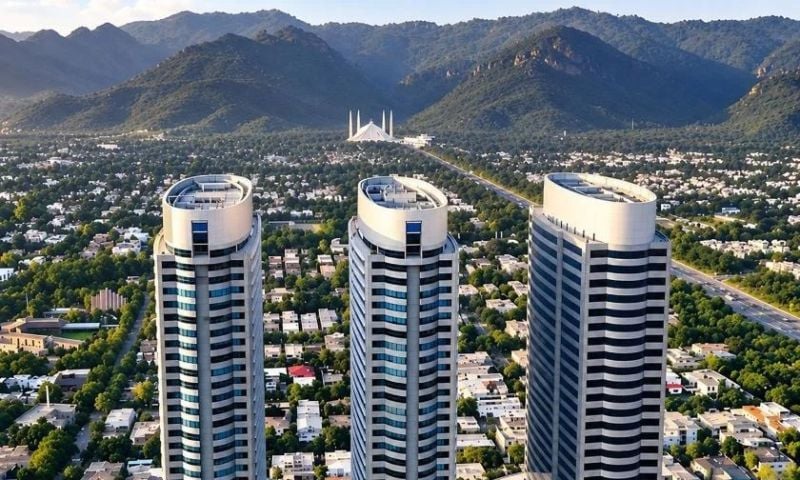
ISLAMABAD: Islamabad has ranked ahead of London, New York and Paris in Numbeo’s 2026 Mid-Year Quality of Life Index, placing Pakistan’s capital among cities offering a comparatively attractive balance of living costs, safety and climate.
With a score of 140.7, Islamabad outperformed some of the world’s most recognisable metropolitan centres, challenging the assumption that globally renowned cities necessarily offer a better overall quality of life.
The ranking highlights how factors beyond wealth and international prestige can shape the experience of urban living.
According to Numbeo, Paris scored 138.8, New York 137.3 and London 135.8, while Kuala Lumpur recorded approximately 135.3. Islamabad also ranked ahead of Budapest, Johannesburg and several other international cities in the mid-year comparison.
However, the figures do not mean that Islamabad performs better in every aspect of daily life. Instead, they reflect a combination of indicators, including living costs, safety, healthcare, climate, pollution, traffic and purchasing power.
Islamabad’s affordability gives it an edge
One of Islamabad’s strongest advantages is its comparatively low cost of living. Numbeo assigned the capital a Cost of Living Index score of 25.3, far below New York’s 100, London’s 88.2 and Paris’s 78.6.
Islamabad Outranks London Paris and New York in Quality Of Life Index!!!!! 🇵🇰🇵🇰🇵🇰🇵🇰🇵🇰🇵🇰 https://t.co/PG6coRLiye
— TAHIRMKHAN (@Huseeb59) October 19, 2026
The difference suggests that everyday expenses in Islamabad are considerably lower than in these international financial and cultural hubs. For residents earning locally, however, affordability also depends on income levels, household needs and access to essential services.
Safety adds to Islamabad’s appeal. The capital recorded a Safety Index score of 69.2, alongside a healthcare index of 63.7 and a climate score of 76.9. Its pollution index stood at 41.5, while its traffic commute time index was 35.9.
Read Also: Global Safety Index Ranks Pakistan Safer Than India, US, UK
Yet the picture is not entirely rosy. Islamabad’s Purchasing Power Index score of 43.7 indicates that residents’ ability to buy goods and services relative to local costs remains an important consideration. Its Property Price-to-Income Ratio of 14.3 also highlights the pressure that housing costs can place on households.
Islamabad versus major global cities
According to the figures provided from Numbeo’s 2026 mid-year index, the comparison places Islamabad ahead of several prominent cities:
- Islamabad, Pakistan: 140.7
- Paris, France: 138.8
- Budapest, Hungary: 138.6
- Johannesburg, South Africa: 138.1
- New York, United States: 137.3
- London, United Kingdom: 135.8
- Kuala Lumpur, Malaysia: 135.3
Within Pakistan, the capital also recorded a substantially higher score than Lahore, at 98.4, and Karachi, at 76.1, according to the supplied mid-year figures.
A strong ranking, but not the global leader
Despite its performance against several major cities, Islamabad is far from the top of Numbeo’s global rankings. The Hague led the supplied figures with 221.5, followed by Eindhoven at 210.7 and Seattle at 182.5. Mangalore in India and Turin in Italy also edged ahead of Islamabad, scoring 142.1 and 142.0, respectively.
Read Also: Pakistan’s Heart Lahore Ranked Safer Than London, New York, and Paris
The distinction matters: Islamabad’s achievement is not that it has the world’s highest quality of life, but that it scores above several internationally prominent cities in this particular comparison.
Numbeo is a Serbia-founded global online database that compares the cost of living, safety, healthcare, pollution and quality of life across cities and countries, using largely crowdsourced data.
Numbeo’s index combines multiple indicators to estimate overall quality of life, drawing largely on crowdsourced information and user perceptions rather than relying exclusively on official government statistics. Its scores are therefore best understood as comparative indicators, not definitive scientific measurements of living standards.
For Islamabad, the results offer an encouraging picture of a capital whose relatively low living costs, safety score and climate contribute to its international standing. But purchasing power, housing affordability, healthcare access, transport and employment opportunities remain essential to understanding how comfortably residents actually live.