UNITED NATIONS, New York: Pakistan has urged the United Nations Security Council to strengthen and modernise peacekeeping operations, calling for advanced technologies to improve the safety and effectiveness of missions without replacing the human presence essential to maintaining peace on the ground.
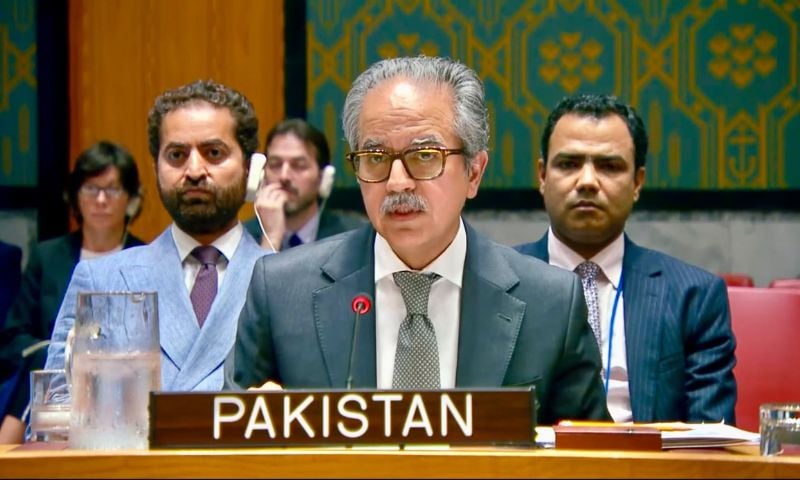
Speaking during a Security Council debate on UN Peacekeeping Operations, Pakistan’s Permanent Representative to the UN, Ambassador Asim Iftikhar Ahmad, said peacekeepers were increasingly working in complex and hostile environments while facing expanding responsibilities and limited resources.
He stressed that effective peacekeeping required political backing, clear and credible mandates, sustainable financing, adequate capabilities, cooperation from host countries and a sustained commitment from UN member states.
Pakistan highlights decades of peacekeeping contributions
Ambassador Asim Ahmad noted that Pakistan has remained one of the UN’s major troop-contributing countries for more than six decades.
“Over six decades, Pakistan has remained amongst the largest troop contributors to UN peacekeeping,” he said, adding that more than 170,000 Pakistanis had served under the UN flag.
He said 183 Pakistani peacekeepers had made the ultimate sacrifice in the cause of international peace.
Pakistan also hosts the United Nations Military Observer Group in India and Pakistan (UNMOGIP), which is mandated to observe the ceasefire in Jammu and Kashmir.
Drawing on Pakistan’s experience in the Security Council, the ambassador said the country had contributed to the Council’s adoption of presidential statements and resolutions on peacekeeping over the past two decades.
“This experience gives us a practical appreciation of what peacekeeping requires,” he said.
Pakistan warns against resource-driven retrenchment
The Pakistani envoy said UN peacekeeping was facing significant pressure, pointing out that no new peacekeeping mission had been established since 2014 while several existing missions had been closed amid mounting political and financial constraints.
He cautioned against interpreting the reduction in missions as declining international support for peacekeeping, noting that UN operations had experienced periods of expansion and retrenchment since the 1960s.
“As peacekeeping realigns, focused mandates must mean better peacekeeping, not less peacekeeping,” he stressed.
He also urged member states not to determine the size and scope of missions solely on the basis of financial ceilings.
“We must not start with a financial ceiling and then shrink the mission to fit it,” he said, warning that the international community should avoid dismantling capabilities that could again become essential in future crises.
Read Also: Pakistan Rejects India’s Bid for Permanent UN Security Council Seat
Guterres calls for reset of UN peace operations
UN Secretary-General Antonio Guterres told the Council that peacekeeping should remain a political instrument that supports political solutions rather than becoming a substitute for them.
He warned that conflicts were becoming increasingly complicated, while peace agreements were becoming less common and attacks on civilians and peacekeepers were increasing. He also highlighted emerging challenges from technologies such as drones and AI-driven disinformation, alongside declining resources.
“The ground has shifted. Too often, our mandates have not,” Guterres said, calling for a comprehensive reset of UN peace operations.
The UN chief identified five priorities: placing peacemaking first, developing stronger partnerships with host states, adapting mandates to current realities, providing peace operations with adequate resources and technology, and strengthening cooperation with regional organisations.
Guterres stressed that the UN could not sustain peace where there was no peace to preserve and urged the Security Council to remain united in preventing conflicts and advancing political solutions.
Concluding his remarks, he said lasting peace could not be imposed from outside and called for renewed investment in peace, accountability and collective international action.