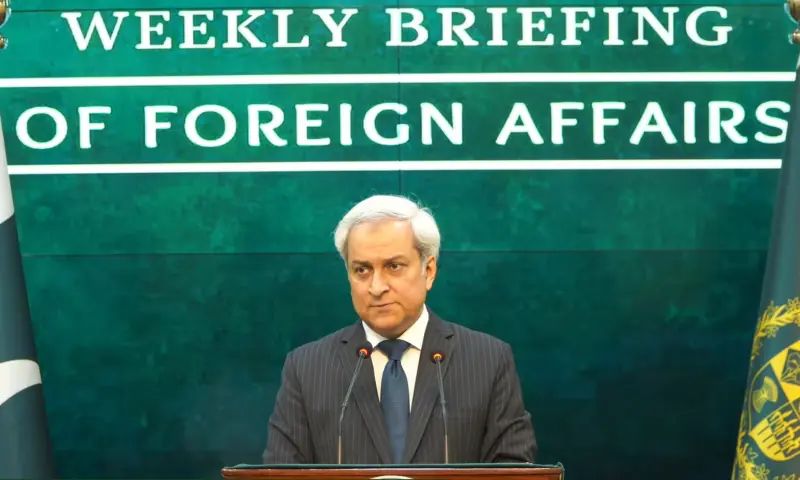
ISLAMABAD: Pakistan has renewed its call for all parties to exercise maximum restraint and avoid any actions that could further undermine peace and stability amid renewed tensions between the United States and Iran.
Speaking at the weekly media briefing in Islamabad on Thursday, Foreign Office Spokesperson Tahir Andrabi said the Islamabad Memorandum of Understanding (MoU) remains an enduring framework for promoting peace, mutual respect, and shared prosperity.
The remarks came as hostilities continued on Thursday, with the United States striking Iranian coastal defence systems and missile sites. At the same time, Iran retaliated by targeting US military installations in neighbouring Gulf states.
The Islamabad MoU was signed on June 18 by US President Donald Trump, Iranian President Masoud Pezeshkian, and Prime Minister Shehbaz Sharif, following Pakistan’s brokering of a ceasefire between Washington and Tehran.
Under the Islamabad MoU, the US and Iran committed to halt military operations, reopen the Strait of Hormuz to commercial shipping, and negotiate a comprehensive agreement covering Iran’s nuclear programme, US sanctions, and a permanent ceasefire within 60 days.
Weekly Press Briefing by the Spokesperson @TahirAndrabi
On Escalation in the Gulf Region, Islamabad MoU & Pakistan’s Efforts for Peace. pic.twitter.com/fxXV31FrSQ
— Ministry of Foreign Affairs – Pakistan (@ForeignOfficePk) July 16, 2026
Tahir Andrabi, while acknowledging that the implementation of the MoU has encountered challenges, stressed that Pakistan would continue to encourage all sides to end hostilities and resume technical-level talks in line with the MoU and the Pakistan-Qatar Joint Statement of 22 June.
Also Read: Pakistan Urges Immediate US-Iran De-escalation and Adherence to Islamabad MoU
He expressed hope that all parties would remain committed to dialogue and diplomacy as the most effective means of resolving outstanding issues.
Pakistan actively engaged in peace efforts
Tahir Andrabi added that, despite the prevailing tensions, Pakistan has remained actively engaged with key regional and international partners in support of efforts aimed at de-escalation, dialogue, and a peaceful resolution of the crisis.
He highlighted the wider global impact of the current tensions, noting that many countries, particularly in the Global South, are being adversely affected by developments in the Strait of Hormuz. He said Pakistan recognises the urgent need to address disruptions to global energy supplies, trade, and food security.
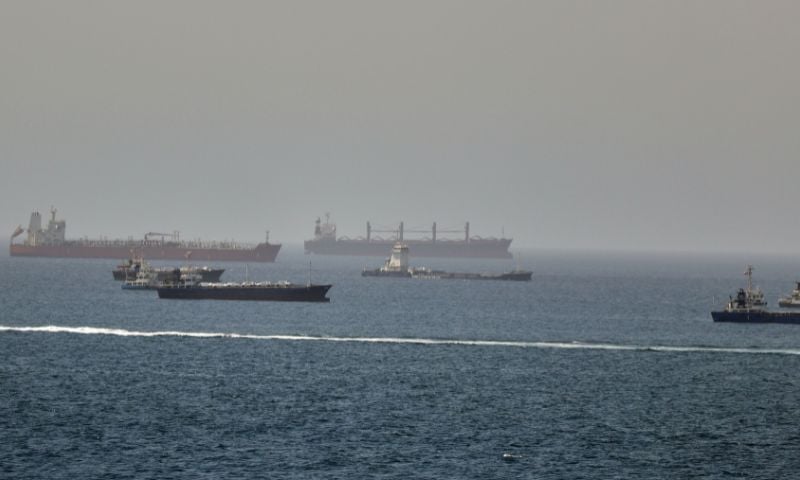
He also expressed hope for the early normalisation of the situation in the Strait of Hormuz and underscored the importance of ensuring the continued safety, security, and freedom of maritime navigation.
Pakistan condemns India’s charge sheet against Hurriyat leaders
Responding to a media question, the Foreign Office spokesperson strongly condemned and rejected the latest charge sheet filed by India’s National Investigation Agency (NIA) against senior leaders of the All Parties Hurriyat Conference in connection with an incident dating back more than three decades.
He described the move as another example of India’s continued use of politically motivated legal proceedings to target the Kashmiri political leadership and undermine what Pakistan regards as the legitimate indigenous struggle for the right to self-determination, as recognised by United Nations Security Council resolutions.
Andrabi maintained that no amount of politically driven prosecutions, retrospective investigations, or attempts to discredit the Kashmiri leadership could alter the internationally recognised disputed status of Jammu and Kashmir, diminish the Kashmiri people’s right to self-determination, or obscure the need for a peaceful and just settlement of the dispute in accordance with the aspirations of the people of Jammu and Kashmir and relevant UN Security Council resolutions.
Pakistan’s rejects India’s allegations linking the country to Pahalgam attack
The spokesperson also firmly rejected India’s allegations linking Pakistan to the Pahalgam attack, describing them as baseless and politically motivated.
He said such accusations reflected a recurring pattern of attempts to malign Pakistan while diverting attention from the facts.
He reiterated that Pakistan had repeatedly called for an independent, transparent, and credible investigation into the incident, adding that India has yet to present any credible or verifiable evidence to support its claims.
Andrabi further argued that, instead of making unfounded allegations against others, India should undertake a sincere assessment of its own record, including its policies and actions in Indian Illegally Occupied Jammu and Kashmir, as well as what Pakistan alleges is India’s continued sponsorship of terrorist activities, an issue Islamabad says it has consistently raised with the international community.
Concluding the briefing, the spokesperson said lasting peace and stability in the region could only be achieved through adherence to international law, respect for the United Nations Charter, and a genuine commitment to dialogue and the peaceful resolution of disputes, rather than through politically motivated accusations aimed at domestic audiences.