ISLAMABAD: Pakistan and Türkiye have taken a significant step toward strengthening their academic partnership, with both sides agreeing to expand cooperation in cutting-edge fields such as artificial intelligence, cybersecurity, and digital transformation.
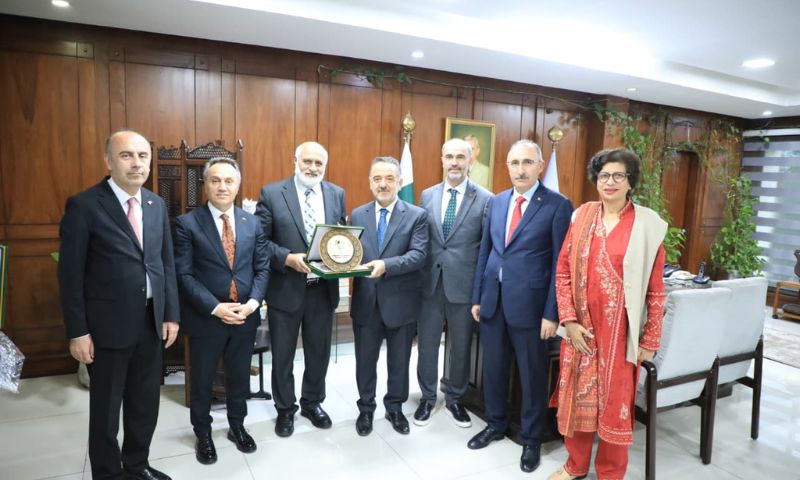
A high-level delegation of Turkish universities, led by Türkiye’s Ambassador to Pakistan İrfan Neziroğlu, met with Chairman of the Higher Education Commission (HEC) Dr. Niaz Ahmad Akhtar and senior officials in Islamabad, according to an official statement issued on Tuesday.
The visiting delegation included prominent academics from Tokat Gaziosmanpaşa University, Adıyaman University, Fırat University, and Bayburt University, reflecting a broad institutional commitment to collaboration.
During the discussions, both sides emphasized the importance of fostering joint research across a wide spectrum of disciplines. Key areas identified included medicine, agriculture, physics, biotechnology, pharmaceuticals, and social sciences, alongside the promotion of linguistic and cultural studies in Urdu and Turkish.
The meeting also highlighted the need to enhance academic mobility. Proposals were discussed to expand student and faculty exchange programmes, develop joint and dual degree initiatives, and introduce collaborative online learning modules. Plans for organising conferences, summer exchange programmes, and specialised visiting scholar opportunities were also put forward.
A notable outcome of the meeting was the proposal to establish a shared pool of experts from Pakistan and Türkiye. This network would focus on collaborative work in natural, biological, and social sciences, as well as strategic studies, defence research, and policy development addressing global challenges.
Both sides agreed to compile a list of subject specialists who could serve as visiting faculty, delivering lectures both in person and online while contributing to joint research efforts.
Reaffirming Pakistan’s commitment, Dr. Niaz Ahmad Akhtar underscored HEC’s dedication to advancing higher education and strengthening the long-standing fraternal ties between the two countries. Ambassador Neziroğlu echoed this sentiment, emphasizing the potential for deeper academic integration to benefit both nations in an increasingly knowledge-driven world.