ISLAMABAD: Pakistan has taken steps towards strengthening its electoral framework, with the government proposing a cross-party parliamentary committee on electoral reforms and the Election Commission of Pakistan (ECP) setting February 7, 2027, for the first phase of local government elections in Punjab.
The parallel developments reflect efforts to promote political consultation, improve the electoral process and advance local democratic representation, although preparations for local government elections in Khyber Pakhtunkhwa (KP) have been suspended until further orders following a federal government decision.
Read Also: Political Leaders Urge for New Provinces with Empowered Local Governments in Pakistan
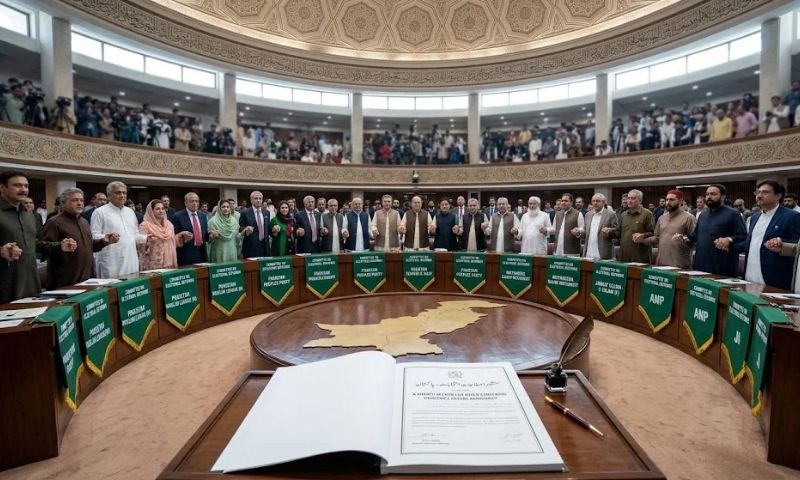
The proposed Parliamentary Committee on Electoral Reforms (PCER) is expected to bring major political parties, including the government and opposition, together to discuss improvements to the electoral system.
Major political parties to get representation on reform committee
Parliamentary Affairs Minister Tariq Fazal Chaudhry announced on Thursday that the ruling Pakistan Muslim League-Nawaz (PML-N), its coalition partner Pakistan Peoples Party (PPP) and opposition Pakistan Tehreek-e-Insaf (PTI) would each receive two seats in the Senate representation of the proposed committee.
The Awami National Party (ANP), Balochistan Awami Party (BAP), National Party and Jamiat Ulema-i-Islam-Fazl (JUI-F) would each be allocated one seat, he said in a post on X.
انتخابی اصلاحات کمیٹی کے لیے سینیٹ میں نشستوں کی تقسیم کے تحت پاکستان مسلم لیگ (ن) اور پاکستان پیپلز پارٹی کو دو، دو جبکہ پاکستان تحریک انصاف کو بھی دو نشستیں دی جائیں گی۔ اس کے علاوہ اے این پی، بلوچستان عوامی پارٹی (BAP)، نیشنل پارٹی اور جمعیت علمائے اسلام (ف) کو ایک، ایک نشست ملے گی۔
کمیٹی کے ارکان کے ناموں کا حتمی فیصلہ قائدِ ایوان و نائب وزیراعظم سینیٹر اسحاق ڈار اپوزیشن، حکومتی اتحادی جماعتوں اور متعلقہ پارلیمانی قیادت سے مشاورت کے بعد کریں گے۔
— Dr. Tariq Fazal Ch. (@DrTariqFazal) November 5, 2026
Chaudhry said the final selection of committee members would be made by the prime minister and deputy prime minister after consultations with opposition parties, coalition partners and relevant parliamentary leadership.
The government has recently approached its allies and opposition parties to seek nominations for the proposed committee, aiming to ensure broader parliamentary participation in the electoral reform process.
The PPP has submitted the names of its legislators, while the government has also contacted the Muttahida Qaumi Movement-Pakistan (MQM-P) and PTI for representation.
PTI, however, has sought equal representation for the government and opposition, with its chief whip in the National Assembly, Aamir Dogar, expressing reservations about the proposed composition.
Electoral reforms, once again. But will anything really change?
As Parliament considers another round of electoral reforms, @ABMPildat highlights the gaps in existing laws, from campaign financing and ECP independence to local government elections and caretaker governments. The real challenge is not simply making new laws, but ensuring that existing ones are implemented and electoral interference is addressed.
Watch the full discussion here – https://t.co/tXUsdjLKoh
— PILDAT, Pakistan (@Pildat) November 4, 2026
PPP calls for parliamentary engagement
The PPP has encouraged the opposition to participate in the proposed committee, emphasising the importance of dialogue and consultation among parliamentary parties.
Last week, PPP Chairman Bilawal Bhutto-Zardari urged National Assembly Opposition Leader Mehmood Khan Achakzai to use the authority delegated to him by incarcerated PTI founder Imran Khan to facilitate opposition participation in parliamentary committees.
Bilawal also asked Achakzai to nominate opposition representatives for the electoral reforms committee and submit their names to the Speaker’s Office.
Read Also: Islamabad Local Bodies Election on December 20
A PPP delegation subsequently met Achakzai and Senate Opposition Leader Raja Nasir Abbas, inviting them to join the initiative and contribute to discussions on improving the electoral system.
The proposed committee could provide a parliamentary platform for political parties to discuss electoral procedures, address concerns and develop consensus on future reforms.
Punjab local government elections scheduled for February 7
In another significant development, the ECP has fixed February 7, 2027, for the first phase of local government elections in Punjab, taking into account seasonal conditions and administrative requirements.
The commission had initially proposed December 14 for the polls. However, the Punjab government requested that elections be held after January 20, preferably in phases, due to dense winter fog, shorter daylight hours and transportation challenges.
During Thursday’s hearing, Punjab Chief Secretary informed the commission that the provincial administration was prepared to conduct the elections and had completed the necessary arrangements.
He said the government had submitted the required information regarding the appointment of returning officers and district returning officers and had no objection to the announcement of the election schedule.
The chief secretary also explained that additional time would help the administration arrange transportation and make school buildings available as polling stations.
After considering the request, the ECP accepted the proposed timing and announced February 7, 2027, as the polling date for the first phase.
The commission said the decision was taken in light of its constitutional responsibility to ensure elections are conducted honestly, fairly and in accordance with the law.
ECP reviews electoral arrangements in KP
Meanwhile, the ECP has temporarily suspended preparations for local government elections in KP following a federal government order extending the suspension of Article 140-A of the Constitution to the entire province.
The commission reviewed the federal government’s Order No. 3, issued on November 4, 2026, and examined its implications for the ongoing local government electoral process.
Earlier, on October 28, the ECP had decided to hold local government elections in KP, excluding 12 districts facing serious security challenges. An Area Representative and Development Council (ARDC) had also been established to oversee arrangements in those areas under special emergency measures.
However, after reviewing the latest federal order, the commission concluded that the electoral process in the remaining districts could not proceed under the prevailing constitutional framework.
Read Also: Pakistan Needs New Provinces and Major Governance Reforms, Says Interior Minister
It subsequently directed that all preparations for local government elections in the province remain suspended until further orders.
The federal government had imposed an emergency in KP on October 11 and introduced governor’s rule, citing concerns over the provincial administration’s alleged disengagement from counterterrorism efforts.
Renewed opportunity for local democratic representation
Punjab’s forthcoming local government elections will mark an important step towards restoring elected local representation after years of delays.
The province last held local government elections in phases between October and December 2015 under the Punjab Local Government Act, 2013. The elected councils assumed office in 2017 following indirect elections for mayors and chairpersons.
The PTI government dissolved the local bodies in April 2019 before their tenure ended. The Supreme Court later struck down the decision and ordered their restoration, with the councils completing their term on December 31, 2021.
Read Also: Why Pakistan’s Mainstream Parties Avoid Local Government Polls
Under Article 140-A of the Constitution and the Elections Act, local government elections are required to be held within 120 days of the expiry of local bodies’ terms. The Punjab polls were therefore due by April 2022 but have faced repeated postponements.
Successive provincial governments amended or replaced local government laws, requiring the ECP to restart preparations, including delimitation and election planning.
The latest timetable offers a fresh opportunity to move the process forward in Punjab, while the proposed parliamentary committee could help build political consensus on electoral reforms and strengthen democratic institutions across Pakistan.