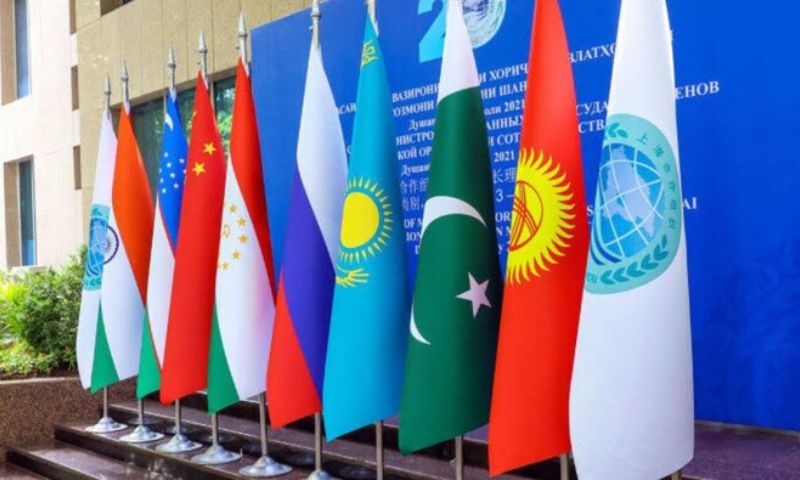
ISLAMABAD: Pakistan will assume the rotating chairmanship of the Shanghai Cooperation Organisation (SCO) Council of Heads of State on 1 September 2026, when Kyrgyzstan formally hands over the presidency at the conclusion of the SCO Heads of State Summit in Bishkek.
The 2026 SCO Summit will be held in the Kyrgyz capital from 31 August to 1 September, bringing together the leaders of the organisation’s ten member states for high-level deliberations on regional security, economic integration, connectivity, trade, energy cooperation, digital transformation, and people-to-people exchanges.
Preparations for the summit are already in full swing under Kyrgyzstan’s chairmanship, with a series of ministerial, senior officials’, and expert-level meetings being held throughout 2026 to finalise the summit agenda and key policy initiatives.
The SCO comprises China, Russia, Pakistan, India, Kazakhstan, Kyrgyzstan, Tajikistan, Uzbekistan, Iran and Belarus.
Collectively, the bloc represents around 40 per cent of the world’s population and accounts for a substantial share of global economic output, making it one of the largest regional organisations by geographic coverage and population.
Pakistan’s Prime Minister invited to attend SCO summit
Pakistan’s Prime Minister Shehbaz Sharif and Indian Prime Minister Narendra Modi have both been invited to attend the summit, making it one of the year’s most closely watched diplomatic engagements amid persistent tensions between the two nuclear-armed neighbours.
The gathering is expected to provide opportunities for bilateral interactions on the sidelines, alongside consultations with other regional leaders.
The summit is expected to be attended by Chinese President Xi Jinping, Russian President Vladimir Putin, Iranian President Masoud Pezeshkian, Kazakh President Kassym-Jomart Tokayev, Kyrgyz President Sadyr Japarov, Tajik President Emomali Rahmon, Uzbek President Shavkat Mirziyoyev, and Belarusian President Aleksandr Lukashenko, in addition to the SCO Secretary-General and representatives of observer states and dialogue partners.
Also Read: Pakistan Reaffirms Commitment to Advancing Shanghai Cooperation Organisation Objectives
During its chairmanship, Kyrgyzstan has prioritised strengthening regional economic integration, enhancing transport and connectivity corridors, reinforcing collective security mechanisms, promoting environmental sustainability, and expanding cultural and humanitarian cooperation across the SCO region.
The Bishkek summit is expected to assess progress on these priorities while endorsing a new roadmap aimed at deepening regional cooperation and accelerating integration.
For Pakistan, assuming the SCO chairmanship represents a landmark diplomatic achievement and a reflection of its growing stature within the Eurasian bloc. Islamabad has indicated that its tenure will prioritise economic cooperation, regional connectivity, trade facilitation, investment promotion, and result-oriented collaboration among member states.
Pakistan to host 2027 SCO Council of Heads of State Summit
Pakistan is also expected to host the 2027 SCO Council of Heads of State Summit, placing Islamabad at the centre of the organisation’s highest decision-making process and reinforcing its role as a key stakeholder in shaping the SCO’s future agenda.
Since becoming a full member in 2017, Pakistan has steadily strengthened its engagement within the organisation. It successfully hosted the SCO Council of Heads of Government Meeting in Islamabad in 2024 and is currently holding the chairmanship of the SCO Regional Anti-Terrorist Structure (RATS) for 2025-26.
On Wednesday, Deputy Prime Minister and Foreign Minister Ishaq Dar on Wednesday reaffirmed Pakistan’s commitment to promoting the objectives of SCO. The Deputy PM made the remarks during a meeting with SCO Secretary General Nurlan Yermekbayev in Islamabad.
Pakistan has also played an active role within the organisation, including hosting the SCO Council of Heads of Government meeting in Islamabad in October 2024. The country is currently chairing the SCO Regional Anti-Terrorist Structure for the 2025-26 term.
Islamabad has consistently advocated greater regional integration through infrastructure development, customs cooperation and simplified trade procedures.
The country’s strategic location also aligns with the SCO’s broader objective of enhancing connectivity between East Asia, Central Asia, South Asia and the Middle East, giving Pakistan an important role in facilitating regional commerce.
The forthcoming assumption of the SCO Council of Heads of State chairmanship marks another significant milestone in Pakistan’s diplomatic trajectory, further consolidating its influence within one of Eurasia’s most consequential multilateral organisations.