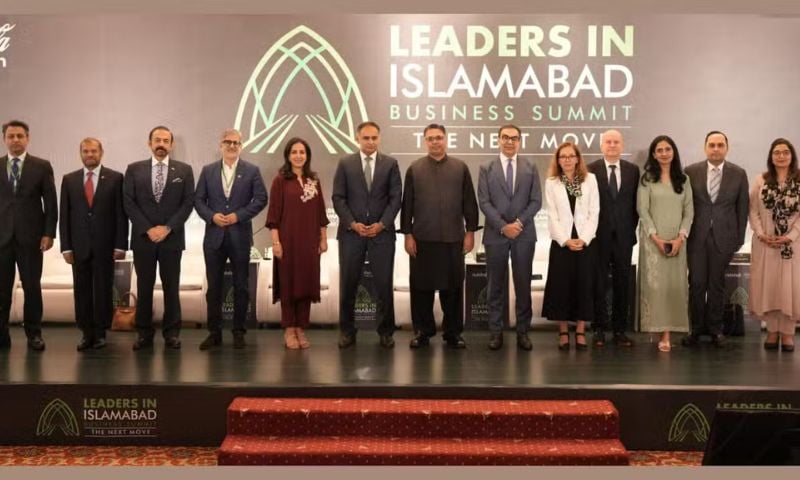
ISLAMABAD: Pakistan’s economic potential can be transformed into sustained growth through structural reforms, stronger exports, technology, investment and greater private-sector participation, policymakers and business leaders said as the ninth edition of the Leaders in Islamabad Business Summit (LIIBS) 2026 concluded in Islamabad on Thursday.
Held under the theme “The Next Move,” the summit brought together federal ministers, global institutional leaders, corporate executives and thought leaders to examine Pakistan’s economic, technological and geopolitical direction.
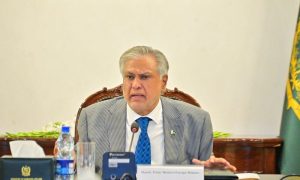
Pakistan Finance Minister Senator Muhammad Aurangzeb said Pakistan recorded around 3.7% GDP growth in the last fiscal year, with momentum continuing into the current year. He said large-scale manufacturing had turned around, while remittances and IT exports were supporting the external account.
Aurangzeb stressed the need to move away from consumption-led growth towards an economy driven by sustainable and productive activity. He also highlighted structural reforms, macroeconomic stability, investment and exports as key priorities for the next phase of economic development.
Finance Minister Addresses Leaders in Islamabad Business Summit, Outlines Priorities for Stability, Sustainable Growth and Investment
Federal Minister for Finance and Revenue, Senator Muhammad Aurangzeb, addressed the 9th Edition of the Leaders in Islamabad Business Summit 2026,… pic.twitter.com/dXt6Za2OKW
— Ministry of Finance, Government of Pakistan (@Financegovpk) September 17, 2026
Minister of State for Finance and Railways Bilal Azhar Kayani called for structural reforms, better governance and closer coordination between federal and provincial governments. He stressed the need to expand exports, improve financing for agriculture and small and medium-sized enterprises, and strengthen engagement between the government and private sector.
He said Pakistan needed to break the cycle of uncontrolled spending followed by dependence on international lending, while improving institutions and creating conditions for businesses to invest and expand.
Read Also: Pakistan, UK Pledge to Expand Trade and Business Ties
Former caretaker prime minister Senator Anwar-ul-Haq Kakar, speaking during the closing session, said Pakistan’s security challenges needed to be addressed but argued that the country’s deeper economic constraints were structural.
He said the experience of other countries facing serious security challenges showed that violence alone could not explain weak economic performance, making it necessary to examine and address the underlying economic constraints.
The second session of #LIIBS2026, “THE NEXT MOVE: GEOPOLITICS, GEOECONOMICS & PAKISTAN,” is underway with the strategic dialogue “FROM GLOBAL SHIFTS TO ECONOMIC OPPORTUNITY.” Moderated by Sajjeed Aslam, Partner, Sustainadility USA (@sustainadility)#TheNextMove #LeadersinISB pic.twitter.com/ser3vRr0rD
— Nutshell Group (@NutshellGroup) September 17, 2026
Federal Minister for Climate Change and Environmental Coordination Senator Dr Musadik Malik stressed the importance of policy continuity, merit and a level playing field.
He said policies shaped by elite capture could lead to exploitation and called for greater opportunities for skilled young people, particularly graduates of universities, to contribute to the economy without unnecessary barriers.
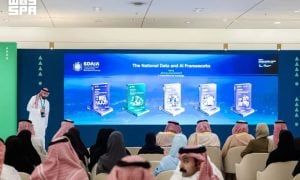
The summit examined Pakistan’s strategic choices across geopolitics, geoeconomics, business, technology, artificial intelligence, digital transformation, capital and finance. Sessions also explored investment confidence, climate resilience, new competitive landscapes, digital economic value and ways to mobilise domestic and international capital.
Read Also: South Asian Nations Gather at Islamabad Summit to Equip Youth with 21st Century Skills
Discussions on artificial intelligence and digital transformation focused on their impact on productivity, customer experiences, business models and competitiveness, while the capital and finance session examined ways to strengthen financial markets and create opportunities for long-term investment.
The summit concluded with a focus on Pakistan’s need to translate economic potential into practical outcomes through reforms, investment, technology and stronger partnerships rather than waiting for greater certainty.
The event was organised by the Nutshell Group at Islamabad Serena Hotel and featured senior representatives from international institutions, multinational companies, financial organisations and Pakistan’s corporate sector.