
Key Points
- KSE-100 sheds 1.3pc during the week
- Sharp sell-off followed by midweek recovery
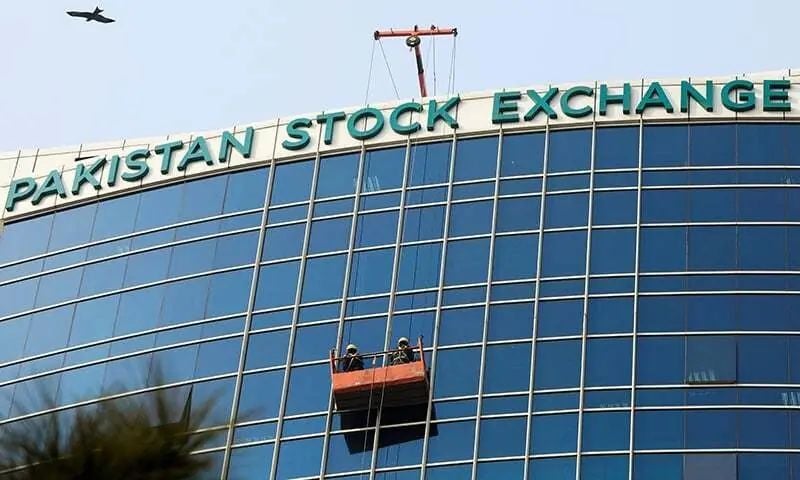
ISLAMABAD: The Pakistan Stock Exchange (PSX) closed lower for the second consecutive week as heightened geopolitical tensions, volatile oil prices and sustained profit-taking in heavyweight stocks kept investors on the defensive.
The benchmark KSE-100 Index ended the week at 175,802.78 points, down 2,320.78 points, or 1.3 per cent, from the previous week’s close of 178,123.56 points.
The week began on a positive note, with the benchmark index closing at 179,927.05 points on Monday as investors extended buying interest in banking, fertiliser and energy stocks.
However, sentiment deteriorated sharply on Tuesday when the market plunged to 173,518.81 points, marking the steepest decline of the week as investors reacted to growing concerns over regional security developments and their potential impact on global energy markets, according to Investing.com.
Buying interest returned on Wednesday, helping the KSE-100 recover to around 175,285.78 points.
The rebound gained momentum on Thursday when broad-based buying lifted the index by 2,837.78 points, or 1.62 per cent, to 178,123.56 points. Market participants cited attractive valuations after the earlier sell-off and renewed interest in blue-chip stocks.
The recovery proved short-lived, however, as investors resumed profit-taking on Friday. The benchmark index lost 2,320.78 points during the session to settle at 175,802.78 points, erasing much of the previous day’s gains.
The market touched an intraweek high of 178,694.48 points and a low of 175,790.62 points, according to the Pakistan Stock Exchange.
Analysts said uncertainty surrounding developments in the Middle East remained the principal driver of investor behaviour throughout the week.
Concerns that prolonged tensions could disrupt energy supplies and push oil prices higher prompted investors to reduce exposure to risk assets. Banking, oil and gas, and other index-heavy sectors bore the brunt of the selling pressure.
Despite the volatility, trading activity remained healthy. Weekly volume stood at 267.06 million shares, indicating continued participation from institutional and retail investors.
Analysts noted that the market’s underlying fundamentals remain supportive, citing easing inflation, improving macroeconomic indicators and expectations of policy continuity.
As we advance, investors are expected to monitor regional developments, international oil prices and the corporate earnings season for fresh direction. Any easing in geopolitical tensions could support a recovery in equities, while further escalation may keep the market under pressure.
Weekly Stocks Statistics
- KSE-100 close: 175,802.78 points
- Weekly change: -2,320.78 points (-1.3%)
- Previous week’s close: 178,123.56 points
- Weekly high: 178,694.48 points
- Weekly low: 175,790.62 points
- Volume: 267,055,616 shares
- One-year change: +26.78%
- Year-to-date change: +1.00%
The market remained volatile throughout the week, with investors reducing exposure to riskier assets amid concerns over the potential economic fallout from rising oil prices and regional instability.
During the week, the market came under sustained pressure from profit-taking in banking, energy and blue-chip stocks, erasing gains recorded earlier in the month.
The index had traded above the 178,000-point level during the week before retreating sharply in the final sessions, according to the Pakistan Stock Exchange.
Market participants remained focused on developments in the Middle East, particularly the renewed confrontation between the US and Iran and its implications for global energy markets.
Prime Minister Shehbaz Sharif also warned that escalating regional tensions could affect Pakistan’s economy through higher energy costs and external sector pressures, adding to investor caution.
Despite the decline in share prices, trading activity remained healthy.
Analysts said the market’s longer-term outlook remains supported by improving macroeconomic indicators, easing inflation and expectations of continued policy stability.
However, near-term direction is likely to remain tied to developments in global oil markets and regional geopolitical risks. Investors are also expected to closely monitor upcoming corporate earnings announcements and economic data releases for fresh cues.
The PSX has remained one of the better-performing frontier markets over the past year despite recent volatility, with the benchmark index still posting gains of more than 27 per cent on a year-on-year basis.