
Key Points
- KSE-100 extended losses after plunging more than 3,000 points on Thursday
- Rising crude prices are renewing inflation and external-account concerns
- Regional equities also fell as the Middle East energy shock spread across markets
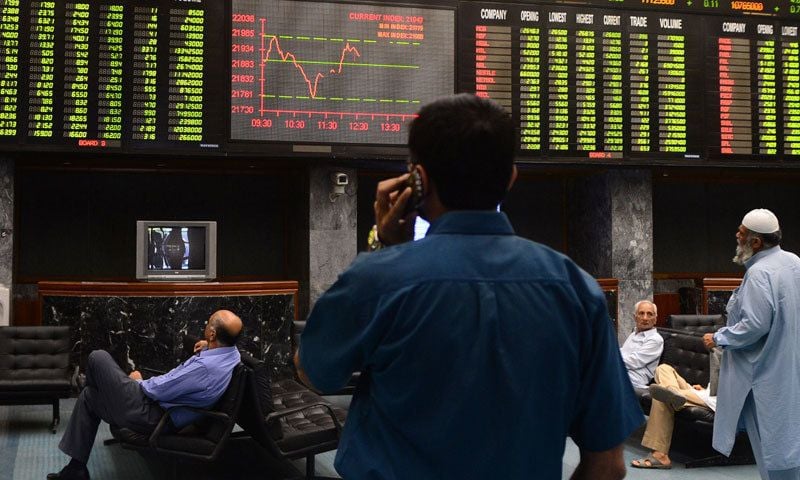
ISLAMABAD: Pakistani stocks faced continued selling pressure on Friday at the Pakistan Stock Exchange, with the benchmark KSE-100 Index shedding nearly 2,600 points in early trading.
Investors reacted to a fresh surge in international oil prices and growing risks from the Middle East conflict.
The index extended its steep decline after losing 3,078.56 points, or 1.79 per cent, on Thursday to close at 168,865.04.
Trading volume on Thursday jumped to 628.67 million shares, while traded value rose to Rs27.02 billion from Rs22.64 billion a session earlier.
The latest sell-off came after another sharp rise in global crude prices.
Brent crude climbed above $108 a barrel on Friday, while US West Texas Intermediate approached $103, putting both benchmarks on course to finish the week above $100 for the first time since May.
For Pakistan, the oil shock is particularly significant because the country remains heavily dependent on imported energy.
A sustained increase in crude prices could raise the import bill, put pressure on the current account and increase domestic inflationary risks.
A notable decline in Asian stocks weakened investor sentiment, as Japan’s Nikkei 225 fell 2.8 per cent and South Korea’s Kospi dropped 2.3 per cent, while India’s benchmark indices also declined amid higher oil prices that raised concerns about inflation and interest rates.
The Pakistani market has now entered a period of pronounced volatility after the KSE-100 stood at 175,328.82 on September 4.
It fell to 173,636.07 on September 7, 172,642.16 on September 8 and 171,943.59 on September 9 before Thursday’s much steeper decline to 168,865.04.
The pressure has been broad-based. On Thursday, 406 stocks declined against only 58 that advanced, while the KSE-30 Index fell 1.84 per cent and the KMI-30 Index, which has a heavy energy-sector weighting, dropped 2.18 per cent.
READ ALSO: Pakistan Stocks Post Weekly Loss Amid Geopolitical Jitters
The immediate trigger remains the worsening regional energy shock. Oil prices have risen sharply after attacks on shipping linked to the Iran-US conflict. The risks around the Strait of Hormuz and the Red Sea have intensified. Brent touched $109.97 in global trading before easing from its peak.
The rise in oil prices is also feeding concerns about global interest rates. Higher energy costs could prolong inflation and encourage central banks to keep monetary policy tighter, raising the cost of capital and reducing appetite for equities.
For Pakistan, the combination of expensive oil, geopolitical uncertainty and renewed pressure on risk assets presents a particularly difficult backdrop for stocks after the market’s strong gains earlier in the year.
The KSE-100 is now facing its fourth consecutive session of pressure, with investors closely watching oil prices, developments around the Strait of Hormuz and the response of global financial markets for direction.
Global stocks
Global stocks came under renewed pressure as surging oil prices, rising bond yields and persistent inflation concerns unsettled investors.
US stocks fell for a fourth consecutive session on Thursday, with the Dow Jones Industrial Average, S&P 500 and Nasdaq Composite each losing about 0.6 per cent.
European stocks also weakened, while Asian equities followed Wall Street lower, with Japan and South Korea among the major decliners as oil prices remained above $100 a barrel.
The central concern is that higher energy costs could revive inflation and force central banks to keep interest rates higher for longer.
Rising Treasury yields have added to pressure on equity valuations, while investors have become more cautious about corporate earnings and economic growth.
The combination of expensive energy, tighter financial conditions and escalating geopolitical tensions has created a difficult backdrop for risk assets, with markets remaining particularly sensitive to developments in the Middle East and the direction of crude oil prices.