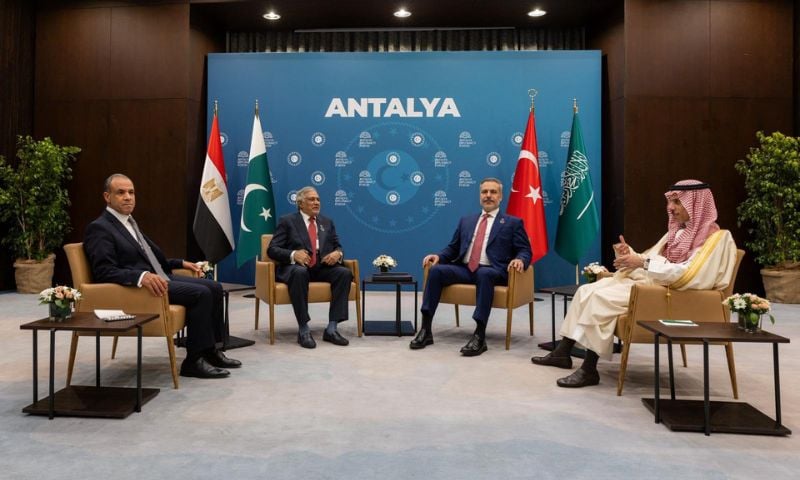



ANTALYA, Turkiye: The foreign ministers of Pakistan, Saudi Arabia, Turkiye and Egypt on Saturday held consultations on “evolving regional dynamics”, reaffirming the importance of dialogue and diplomacy amid ongoing diplomatic efforts to resolve the Middle East conflict.
The meeting took place on the sidelines of the Antalya Diplomacy Forum and brought together Pakistan’s Deputy Prime Minister and Foreign Minister Ishaq Dar, Saudi Foreign Minister Prince Faisal bin Farhan, Turkish Foreign Minister Hakan Fidan, and Egyptian Foreign Minister Badr Abdelatty, Pakistan’s Foreign Office (FO) said.
In a post on X, the Foreign Office said the ministers “exchanged views on evolving regional dynamics, reaffirming the vital role of dialogue and diplomacy in promoting peace, stability and shared prosperity”.
“The foreign ministers expressed a shared commitment to advancing this partnership, deepening coordination and expanding collaboration across key areas of mutual interest,” the Foreign Office added.
Foreign Ministers of Pakistan, Saudi Arabia, Türkiye, and Egypt held their third consultative meeting in Antalya, on the sidelines of #AntalyaDiplomacyForum
They exchanged views on evolving regional dynamics, reaffirming the vital role of dialogue and diplomacy in promoting… pic.twitter.com/4wVS94rQCG
— Ministry of Foreign Affairs – Pakistan (@ForeignOfficePk) April 18, 2026
The meeting comes amid Pakistan’s intensified diplomatic efforts to resolve the Middle East conflict involving the US, Israel and Iran.
The four countries had already held two rounds of consultations before the announcement of a ceasefire, which is set to expire on April 22.
The first meeting took place in Riyadh on the sidelines of a consultative ministerial gathering, while the second was hosted in Islamabad.
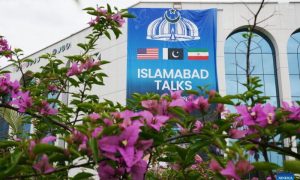
Pakistan has emerged as a key diplomatic facilitator in recent weeks. It hosted direct talks between the United States and Iran in Islamabad on April 11 — the highest-level engagement between the two sides since the Iranian Revolution.
Both delegations left the Pakistani capital without reaching an agreement, but talks continued without a breakdown.
Diplomatic sources have indicated that a second round of negotiations could take place in Islamabad in the coming week.
Push for peace agreement
Meanwhile, Egypt’s foreign minister Badr Abdelatty said on Saturday that Cairo was working closely with Islamabad on a framework aimed at securing a lasting peace agreement between the US and Iran.
He said Egypt, Turkiye, Pakistan and Saudi Arabia were coordinating a broader regional effort to prevent renewed escalation and to lay the groundwork for a post-war security arrangement.
Abdelatty stressed the need to safeguard Gulf states and stabilise global energy markets, supply chains and food security, highlighting the wider economic implications of the conflict.
Pakistan seeks ‘permanent’ end to war
Pakistan has called for a “permanent termination” of the US-Israeli war on Iran, urging both Washington and Tehran to demonstrate flexibility as diplomatic efforts move closer to a potential agreement.
Speaking at the Antalya Diplomacy Forum in Türkiye, Foreign Minister Ishaq Dar said Islamabad’s objective goes beyond extending the current ceasefire, focusing instead on securing a durable and comprehensive end to the conflict, reports Turkish news agency Anadolu,
Pakistan wants a “permanent termination” of the US-Israeli war on Iran, Foreign Minister Ishaq Dar told Antalya Diplomacy Forum on Friday, calling on Washington and Tehran to “show flexibility.”
Pakistan has been actively mediating between the United States and Iran since the war began on February 28, hosting the highest-level talks between the two sides since they severed diplomatic ties in 1979.
Islamabad’s “objective is not ceasefire extension. Our main objective is the permanent termination of war,” Dar said, stressing the need for a formal agreement between the parties.
Providing an update on the progress of negotiations, Dar expressed confidence that a breakthrough could be within reach.
About Pakistan’s ongoing mediation, Dar said: “More than 80% of the work has been done. And a couple of things are (remaining)… both parties have to show flexibility.”
Pakistan intensifies diplomatic efforts
Pakistan had earlier secured a 14-day ceasefire between the United States and Iran on April 8, helping stabilise a situation that had severely disrupted global energy supplies and maritime traffic.
Tehran on Friday declared the Strait of Hormuz “completely open” for commercial shipping for the first time since the war began, a move seen as a significant confidence-building measure.
The strategic waterway had been restricted by Iran following the launch of US and Israeli military operations on February 28, raising concerns over global oil flows and supply chains.
At #ADF2026, DPM/FM @MIshaqDar50 addressed the panel “Trading Trust: The Future of Economic Integration and Stability in South Asia,” noting that despite vast economic potential, the region remains one of the least economically integrated due to a deficit of trust.
He emphasized… pic.twitter.com/uXjVrB9knP
— Ministry of Foreign Affairs – Pakistan (@ForeignOfficePk) April 17, 2026
Pakistan has continued high-level engagement with regional stakeholders, including recent meetings in Tehran between Army Chief Field Marshal Asim Munir and Iran’s top leadership, aimed at sustaining dialogue and narrowing differences.
Pakistan’s role as a mediator has drawn increasing international attention, with officials and analysts noting its ability to maintain communication with both sides and facilitate talks at a time of heightened tensions.
As negotiations continue, Islamabad has positioned itself at the centre of diplomatic efforts to transform the fragile ceasefire into a lasting peace agreement, with Dar reiterating that flexibility from both sides will be key to ending the conflict permanently.