Key Points
- Pakistan seeks Russian technology transfer beyond finished product imports.
- Schelkovo Agrohim offers seeds, pesticides and biological agricultural products.
- Field trials of Russian seeds and pesticides are being considered.
- Wheat seed trials could begin during the coming sowing season.
ISLAMABAD: Pakistan has opened discussions with a leading Russian agricultural and agrochemical company on field trials of Russian seeds and pesticides, technology transfer, local production and potential joint investment as Islamabad seeks to modernise its agricultural sector.
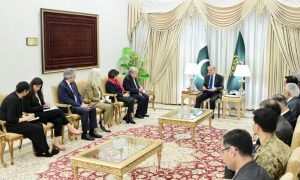
Pakistan’s Federal Minister for National Food Security and Research Rana Tanveer Hussain held talks with a delegation from Schelkovo Agrohim, accompanied by the Second Secretary and other officials of the Russian Embassy.
The discussions covered seed development, crop protection, pesticides, micronutrients, advanced fertilisers, agricultural research, technology transfer and investment.
Rana Tanveer said Pakistan wanted agricultural cooperation with Russia to go beyond importing finished products and instead create opportunities for technology transfer, local production, joint research, breeding programmes and capacity building of Pakistani experts.
He said Pakistan needed advanced agricultural technologies and high-quality seeds capable of increasing productivity while providing greater resistance to drought, diseases, pests and climate-related stresses.
From imports to technology
The Russian delegation briefed the minister on Schelkovo Agrohim’s pesticides, advanced pesticide formulations, micronutrients, micro-fertilisers, biological products and seeds for different crops.
The company also presented its research and production capabilities involving wheat, maize, sugar beet, rapeseed or canola and sorghum seeds and hybrids. The delegation said its maize seeds were non-GMO.
Schelkovo Agrohim is research and development company and manufacturer of pesticides and agrochemicals, with activities in crop protection products and seeds.
The meeting identified pest and disease management in cotton, rice, sugarcane and vegetables as potential areas of cooperation.
The two sides also discussed micronutrients and alternative plant-nutrition solutions that could improve nutrient-use efficiency and potentially reduce reliance on conventional fertilisers, particularly phosphorus fertilisers and diammonium phosphate (DAP).
Focus on climate resilience
Rana Tanveer said climate change was becoming an increasingly serious challenge for Pakistan’s agricultural production and that climate-resilient technologies and crop varieties, therefore, needed to be prioritised.
He said Pakistan required seeds that could deliver higher yields while withstanding drought, pests, diseases and other climatic pressures.
The minister said these priorities made cooperation with international agricultural technology companies potentially important, provided new products were scientifically evaluated under local conditions.
Russian seeds to be tested
Discussions focused particularly on possible field trials of Russian seed varieties and pesticide products in Pakistan.
With the wheat sowing season approaching, the participants proposed early provision of suitable Russian wheat seed material for trials.
The proposed trials would examine yield potential, adaptability to Pakistani conditions, resistance to pests and diseases and performance under different climatic and agronomic conditions.
Pakistani officials emphasised that future seed cooperation should not be confined to importing finished seed. Instead, they proposed access to suitable Russian germplasm, joint breeding programmes, technology transfer, seed traceability and local multiplication.
The establishment of a Russian seed company or a Russian-Pakistani partnership in Pakistan was also discussed.
The Pakistan Agricultural Research Council (PARC) and National Agricultural Research Centre (NARC) were proposed as key platforms for evaluating Russian technologies.
Rana Tanveer stressed that new agricultural technologies and products should undergo scientific assessment under Pakistan’s climatic, soil and agronomic conditions before being introduced on a wider scale.
Pesticide registration
The meeting also reviewed regulatory issues surrounding the possible introduction of Russian pesticides into Pakistan.
The Russian delegation was informed that it had already held discussions with the Department of Plant Protection (DPP) regarding Pakistan’s registration procedures, testing requirements, necessary studies and other regulatory requirements for pesticide products.
The availability of internationally accredited testing laboratories in Pakistan was also discussed, along with the possibility of establishing or making such facilities available.
Rana Tanveer assured the Russian company that the government would facilitate business-to-business matchmaking with potential Pakistani partners.
Several possible cooperation models were discussed, including local distribution arrangements, joint ventures, public-private partnerships, local seed production, research and development and the establishment of a Russian agricultural-input or seed company in Pakistan.
The minister said Pakistan wanted to diversify its sources of agricultural technologies, seeds and inputs.
He added that Russian products could find opportunities in Pakistan’s large agricultural market if they demonstrated scientific effectiveness under local conditions and remained commercially competitive.
Towards formal cooperation
Rana Tanveer said Pakistan welcomed Russian investment, local manufacturing, research collaboration, technology transfer and long-term business partnerships.
The two sides also considered possible frameworks, including a Memorandum of Understanding (MoU) or Letter of Intent (LoI), to formalise and advance future cooperation.
The immediate objectives include identifying potential commercial partners, advancing technical and regulatory engagement, facilitating local testing of Russian products and seed varieties and exploring viable research and investment projects.