ISLAMABAD: Pakistan remains engaged alongside its brotherly states in sincere efforts to resolve the ongoing crisis in the Middle East and the Gulf, the Foreign Office said on Wednesday.
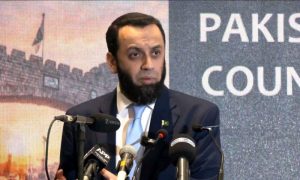
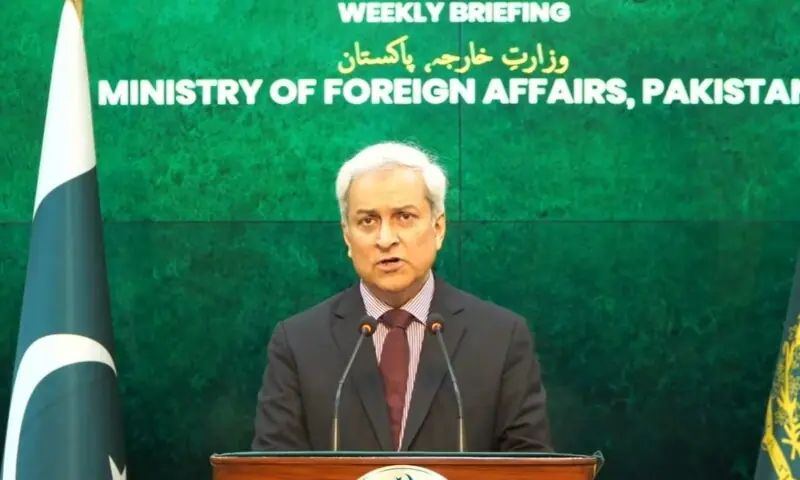
Foreign Office spokesperson Tahir Andrabi said Islamabad was making “all-out efforts” to bring the parties concerned to the negotiating table and promote a peaceful resolution to outstanding issues.
Addressing his weekly news briefing in Islamabad, Andrabi said Pakistan remained engaged in sincere diplomatic efforts aimed at restoring peace and stability in the region.
He said Pakistan would continue to use both direct and indirect channels to address attempts to undermine the dialogue process and facilitate constructive engagement among the parties.
Naqvi’s Iran visit focuses on bilateral and regional issues
The spokesperson said Interior Minister Mohsin Naqvi’s visit to Iran was aimed at discussing bilateral relations, security-related matters and regional developments, with particular emphasis on peace and stability.
Naqvi arrived in Tehran on Tuesday and held meetings with senior Iranian officials. He was received by Iranian Interior Minister Eskandar Momeni and subsequently met Iranian Foreign Minister Abbas Araghchi and President Masoud Pezeshkian.
Andrabi said the visit provided Pakistan and Iran with an opportunity to discuss bilateral relations, security concerns and developments in the region, as well as ways of encouraging peace, stability and constructive engagement.
According to a diplomatic source, the visit was also intended to follow up on the Islamabad Memorandum of Understanding and Pakistan’s efforts to facilitate dialogue between Iran and the United States.
Pakistan backs maritime security in Red Sea
Responding to a question about the attack on a commercial vessel in the Red Sea, Andrabi said Pakistan supported freedom of navigation and the security of international waterways in accordance with international law.
He said Pakistan was a signatory to a maritime coalition announced by Saudi Arabia and was prepared to assist Saudi Arabia and other coalition partners in implementing the coalition’s communique.
According to the spokesperson, Pakistan’s objective was to contribute to the safety and security of maritime traffic and the global supply chain.
The comments came amid continuing concerns over attacks on commercial shipping in the Red Sea and the wider impact of regional tensions on international maritime trade.
Makkah defence agreement described as ‘purely defensive’
Turning to the Makkah Joint Defence Agreement involving Pakistan, Saudi Arabia and Türkiye, Andrabi described the accord as “purely defensive in nature”. He said the agreement provided for unified efforts to confront threats and security challenges facing its member states.
The agreement, signed in Makkah last week, reflects the close and longstanding relations among the three countries and their shared commitment to regional security, according to the Pakistani side.
Andrabi said the accord was intended to strengthen collective security and contribute to peace and stability in the region and beyond. He also recalled Deputy Prime Minister and Foreign Minister Ishaq Dar’s earlier statement that the agreement was defensive in nature and was not directed against any particular country.
Pakistan rejects Indian remarks on Azad Kashmir
The Foreign Office also rejected recent remarks by India’s Ministry of External Affairs concerning developments in Azad Jammu and Kashmir (AJK), describing them as “baseless”.
Andrabi said India’s portrayal of developments in Azad Jammu and Kashmir was misleading and accused New Delhi of politicising the situation. He argued that India’s criticism could not divert attention from serious human rights concerns in Indian Illegally Occupied Jammu and Kashmir (IIOJK).
“India’s professed concerns for human rights in AJK are disingenuous given its own well-documented record,” Andrabi said, referring to allegations of excessive use of force, arbitrary detention and restrictions on political freedoms in IIOJK. Pakistan, he said, remained committed to protecting fundamental rights and democratic freedoms in AJK.
Islamabad reiterates Kashmir position
Andrabi further urged India to honour the country’s founding leadership concerning the future of Jammu and Kashmir. He called on New Delhi to support the right of the people of IIOJK to determine their future through a UN-administered plebiscite in accordance with relevant United Nations Security Council resolutions.
Pakistan has consistently maintained that the Kashmir dispute should be resolved in accordance with the wishes of the Kashmiri people and relevant UN resolutions.