ISLAMABAD: Pakistan has strongly rejected India’s criticism of its recent cross-border military actions in Afghanistan, calling New Delhi’s remarks “absurd, unwarranted and deeply hypocritical.” The response comes amid heightened tensions following Pakistan’s ongoing counter-terrorism campaign along its western frontier.
In a statement issued Sunday, Pakistan’s Foreign Office dismissed allegations by India’s Ministry of External Affairs that Pakistani strikes inside Afghanistan caused civilian casualties and constituted an act of aggression. The criticism from India was voiced a day earlier by Ministry of External Affairs spokesperson Randhir Jaiswal.
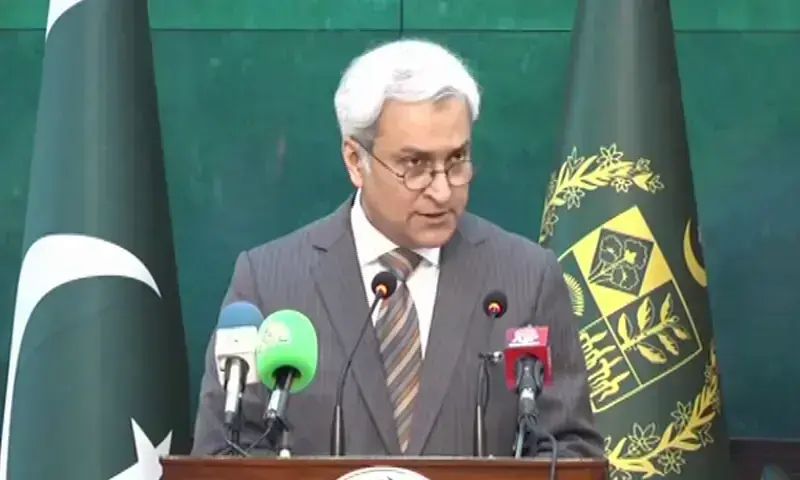
Pakistan’s Foreign Office spokesperson Tahir Andrabi defended the operations, describing them as “legitimate, precise and targeted actions against terrorist hideouts and logistical bases inside Afghanistan.”
🔊PR No.6️⃣8️⃣/2️⃣0️⃣2️⃣6️⃣
Statement by the Spokesperson in Response to Media Queries Regarding Pakistan’s Response to the Statement Issued by the Ministry of External Affairs of India
🔗⬇️ pic.twitter.com/dbJ2k9thNJ— Ministry of Foreign Affairs – Pakistan (@ForeignOfficePk) March 14, 2026
He said the strikes were part of Operation Ghazab lil-Haq, a campaign launched in late February after what Pakistan described as unprovoked firing by Afghan Taliban across the border.
Islamabad accuses India of backing terrorist groups
Andrabi also held India responsible for supporting terrorist groups operating from Afghan territory against Pakistan. According to the statement, New Delhi has provided backing to groups referred to by the Pakistani government as Fitna-al-Khawarij and Fitna-al-Hindustan.
Pakistani authorities use the term Fitna-al-Khawarij to describe terrorists linked to the banned Tehreek-e-Taliban Pakistan (TTP), while Fitna-al-Hindustan refers to terrorist organizations active in Balochistan.
The spokesperson said India’s reaction reflects frustration following what Pakistan says is the dismantling of terrorist networks with Indian links in Afghanistan.
Escalating diplomatic tensions
The diplomatic exchange follows a tense debate on Afghanistan at the United Nations Security Council (UNSC) on March 10, where Pakistan also rejected India’s criticism of its security operations.
Pakistan’s Permanent Representative to the UN, Ambassador Asim Iftikhar Ahmad, argued that India’s Afghan policy has been driven by hostility toward Pakistan and held New Delhi of supporting groups such as the TTP and the Baloch Liberation Army (BLA).
Broader accusations
In its latest statement, Pakistan also criticized India’s human-rights record and its governance in Indian-Illegally Occupied Jammu and Kashmir (IIOJK), describing India as a “serial violator of international law.” The Foreign Office further accused New Delhi of marginalizing minorities domestically and destabilizing the wider region.
Pakistan urged India to refrain from what it called attempts to “stoke terrorism inside Pakistan from Afghan soil.”
Pakistan vows continued self-defence
Islamabad emphasized that it will continue to take measures to protect its citizens from terrorist threats. The Foreign Office stated that Pakistan’s actions are carried out in accordance with international law and the UN Charter, which recognizes the right of self-defence.
The issue of India’s role in terrorist activity in Afghanistan has also surfaced in previous statements by Pakistani officials. In October last year, Defence Minister Khawaja Asif claimed that India was conducting a “low-intensity war” against Pakistan through proxies operating from Afghan territory.