
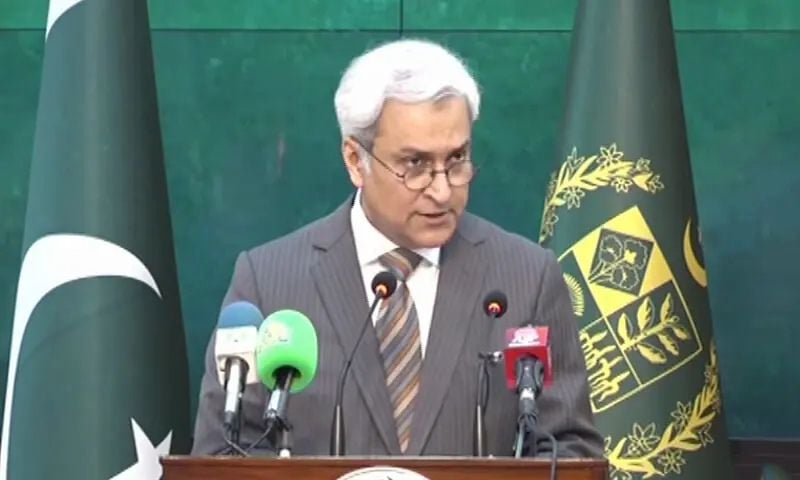
ISLAMABAD: Pakistan on Thursday rejected any attempt to link it with convicted Rochdale grooming gang ringleader Shabbir Ahmed, saying the case was entirely Britain’s responsibility and had no connection with Pakistan.
Speaking at the weekly media briefing, Foreign Office spokesperson Tahir Andrabi said Pakistan strongly condemned child sexual abuse and rejected any association with Ahmed or decisions regarding his imprisonment and release.
“Shabbir Ahmed was born, raised, lived and acted in the UK. He must be treated according to the laws of the country where he was brought up and it has nothing to do with Pakistan,” Andrabi said.
Weekly Press Briefing by the Spokesperson @TahirAndrabi
On UK-related Query pic.twitter.com/aGL8uLAc8R
— Ministry of Foreign Affairs – Pakistan (@ForeignOfficePk) July 16, 2026
The spokesperson said perpetrators of child sexual abuse must be investigated, prosecuted and punished to the fullest extent of the law, irrespective of their race, ethnicity or religion.
Andrabi said Ahmed had spent his adult life in Britain, committed his crimes on British soil and was convicted by a British court. Pakistan, therefore, regarded the matter as an internal British issue, the spokesperson said.
“The Government of Pakistan has no connection whatsoever with this matter,” the spokesperson said, adding that Islamabad could not be associated with decisions concerning Ahmed’s release or his treatment under British law.
The spokesperson said that responsibility rested with the society in which he had grown up, been raised and had been “spoiled”.
Andrabi added that Ahmed’s crimes required serious introspection in Britain.
Ahmed, 73, was convicted in 2012 as the ringleader of the Rochdale grooming gang and sentenced to 22 years in prison after being found guilty of rape and sexual offences. He was released earlier this month after serving 14 years of his sentence.
Ahmed held British citizenship at the time of his offences. He was later stripped of that citizenship, but his deportation has been blocked under Section 7 of the UK’s Immigration Act 1971.