Key points
- Government finalising incentives for domestic battery manufacturing
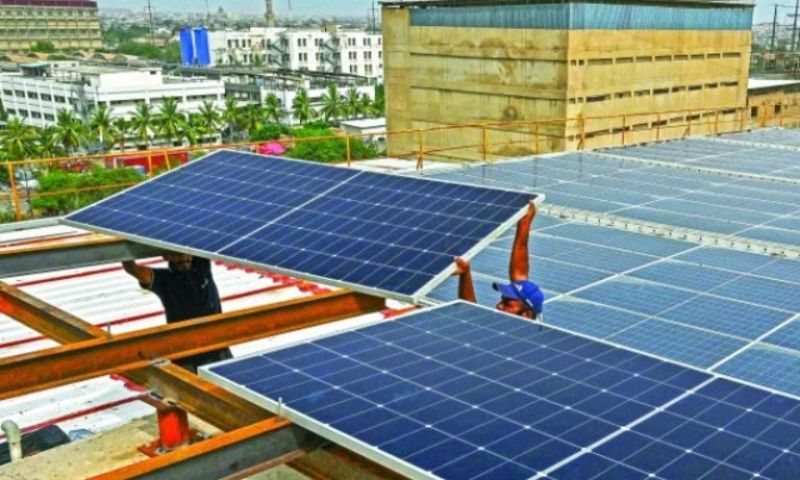
- Solar capacity nears 38,000MW amid rapid consumer-led expansion
- Pakistan targets 90 per cent clean energy by 2035
- Experts call for inclusive reforms and storage investment
ISLAMABAD: Pakistan is moving to develop a domestic battery energy storage industry and overhaul its power system as a rapid, consumer-led solar expansion shifts the country’s central electricity challenge from generation shortages.
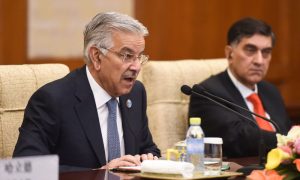
Power Minister Sardar Awais Ahmad Khan Leghari said the government was finalising a policy framework to incentivise local manufacturing of battery energy storage systems (BESS). The Ministry of Industries and Production was working on measures to encourage domestic producers and reduce dependence on imported systems, he added.
Speaking at the two-day Solar, Storage, Flexibility 2026 conference in Islamabad, Leghari said Pakistan needed to develop expertise not only in installing imported batteries but also in designing, integrating and eventually manufacturing battery systems locally.
He said universities would have an important role in developing the skilled workforce required to service, maintain and manufacture battery systems. According to the minister, the government seeks to build a domestic ecosystem around energy storage.
ALSO READ: Pakistan Withdraws Solar Net-Metering Licence Fee for Small Consumers
The conference, organised by Renewables First, the Global Solar Council and the Pakistan Solar Association, brought together policymakers, regulators, utilities, investors, technology providers and international experts to discuss the implications of Pakistan’s rapid solar expansion.
Leghari said Pakistan’s clean-energy sources — including hydropower, nuclear, wind and solar — now account for around 55 per cent of electricity generation, with the government targeting a 90 per cent clean-energy share by 2035.
The minister has described the country’s challenge as a “flexibility problem” rather than a generation problem. The inability to shift abundant solar electricity generated during the day to the evening period when demand rises, is the real challenge, he pointed out.
Pakistan’s distributed solar capacity has approached 38,000MW, according to Leghari, dramatically changing the country’s electricity demand pattern.
The rapid growth has been driven largely by households, businesses and industry seeking relief from expensive and unreliable grid electricity.
Leghari said battery storage was therefore becoming a strategic requirement rather than simply another power-sector technology. Storage would allow surplus solar generation to be retained during daylight hours and supplied during evening peaks, reducing curtailment and giving grid operators greater flexibility.
He also linked battery storage to energy security, citing Pakistan’s exposure to international fuel markets. The minister pointed to disruptions to liquefied natural gas supplies from Qatar in April, which contributed to nighttime load-shedding despite adequate electricity availability during daylight hours because of widespread solar generation.
The government has also established a National Steering Committee on BESS, bringing together regulators, transmission and distribution companies and technical experts. Technical and regulatory working groups have been formed to develop a coordinated approach to storage.
Pilot BESS projects at distribution companies have been approved, with the data expected to inform future regulatory frameworks. The government is also working on national standards covering battery safety, grid connectivity and investment mechanisms.
The discussions at the conference extended beyond storage to the broader restructuring of Pakistan’s power market.
Leghari said the government had been engaging with the International Monetary Fund (IMF) for several months to secure approval for a time-based electricity tariff that could offer cheaper power during periods of abundant daytime solar generation.
He said the proposed daytime marginal tariff of around Rs6 per kilowatt-hour had not been approved.
Lower daytime prices, he argued, could encourage consumers to increase electricity use during hours of surplus solar generation and charge batteries for use during more expensive evening periods.
Such a mechanism could also help flatten the so-called “duck curve” — the widening gap between high daytime solar generation and evening electricity demand.
The minister said Pakistan would continue discussions with the IMF and present data and justification for the proposed tariff structure.
The conference also highlighted the social and economic dimensions of the solar transition.
Senator Sherry Rehman said Pakistan’s rooftop solar expansion represented an extraordinary people-led energy transition, driven largely by ordinary households seeking greater control over their electricity supply in response to high prices and unreliable grid power.
She called for policies that remain aligned with communities and argued that the government should act as an enabler of solar adoption rather than merely as a regulator. She also stressed the need for a stable and predictable energy market and for equity to remain central to energy planning.
Other experts warned that Pakistan’s solar transition could deepen inequalities unless financing and access were broadened. Sustainable-development expert Fiza Farhan said solar access remained uneven and called for grassroots financing, stressing that renewable energy must also make economic sense for consumers.
Pakistan’s regulatory strcutures
Experts also argued that the country’s regulatory and market structures must catch up with the speed of the solar expansion.
The conference organisers said its objectives included developing pathways for distributed renewable integration, prosumer regulation and flexibility markets, as well as frameworks for utility-led storage and evolving utility business models.
The second day of the conference focused on the next phase of the country’s energy transition, including future energy systems, virtual power plants, consumer and international momentum behind solar-storage adoption, and the development of industrial ecosystems for solar, storage and flexibility. The final sessions are focused on mobilising capital for the sector.
For Pakistan, the emerging policy challenge is therefore no longer simply how to add more generation capacity. It is how to integrate rapidly expanding distributed solar into the national grid, store excess electricity, modernise networks, establish viable market incentives and ensure that the benefits of the transition extend beyond consumers who can afford rooftop systems.
Leghari said the government’s first comprehensive energy plan would be unveiled by April next year, providing a longer-term roadmap for sustainable energy development.
The conference’s central message was that country’s solar expansion has already changed the country’s electricity system. The next phase will depend on whether storage, grid modernisation, market reform, financing and local manufacturing can develop at a comparable pace.