
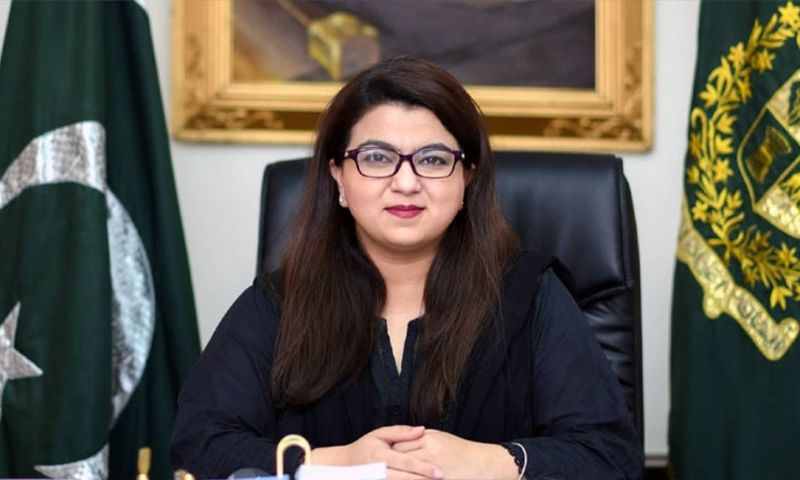
ISLAMABAD: Pakistan is in the final stages of preparing a regulatory framework for satellite internet services, Federal Minister for Information Technology and Telecommunication Shaza Fatima Khawaja said on Tuesday, signalling the government’s efforts to expand connectivity and attract investment in the sector.
Addressing the APT Symposium on Digital Transformation and the Universal Service Fund (USF), the minister said the framework for Fixed Satellite Service (FSS) would be finalised soon following consultations with relevant institutions.
She said the government would provide a favourable, business-friendly environment for companies seeking to invest in Pakistan’s satellite internet sector.
The minister highlighted progress in expanding digital connectivity, upgrading internet infrastructure and reducing the gender gap in mobile internet usage.
Citing the GSMA, she said the gap had narrowed from 38 per cent to 8 per cent, marking the world’s fastest progress in reducing the disparity over the past two years.
Pakistan has also strengthened its international internet connectivity, with three new submarine internet cables landing in the country over the past two and a half years. Work is continuing on alternative routes and additional cable connections to improve network resilience and capacity, she added.
Through the USF, more than 17,000 kilometres of optical fibre have been laid across the country. Fibre broadband home passes – the number of homes that fibre networks can potentially serve – have increased from fewer than three million in 2024 to more than five million, the minister said.
The proportion of mobile towers connected to fibre has also risen from less than 15 per cent to more than 19 per cent. The government aims to increase this figure to at least 60 per cent, she added.
Pakistan introduced fifth-generation (5G) mobile technology through an auction of 480 megahertz of spectrum in March 2026, Shaza Fatima said, stressing that fibre connectivity to mobile towers was essential for delivering effective 5G services.

The government is also seeking to expand opportunities for local entrepreneurs to provide internet services at district level through Class Value Added Services (CVAS) licences.
A new business model is being developed to enable people in rural areas to become internet service providers, she added. The minister said Prime Minister Shehbaz Sharif chaired fortnightly meetings to review progress on the National Connectivity Plan.
READ ALSO: New Satellite Launch to Help Pakistan in Disaster Management
Highlighting the role of technology in public service delivery, she said more than 10 million people had received fuel subsidies through a technology-based system.
Smartphones had not been made mandatory for accessing the subsidy to ensure that the programme remained accessible to as many citizens as possible.
Shaza Fatima noted that around 2.2 billion people worldwide still lacked internet access, while approximately 48 per cent of the Asia-Pacific population remained unconnected – a proportion higher than the global average.
Digital connectivity was no longer a facility for a limited section of society but had become essential for education, healthcare, disaster management, economic development and national security, she said.
The minister added that the USF had invested $1 billion over the years to extend internet access to underserved and unserved areas of Pakistan. The fund has completed 158 projects, bringing connectivity to around 38.4 million people across the country.