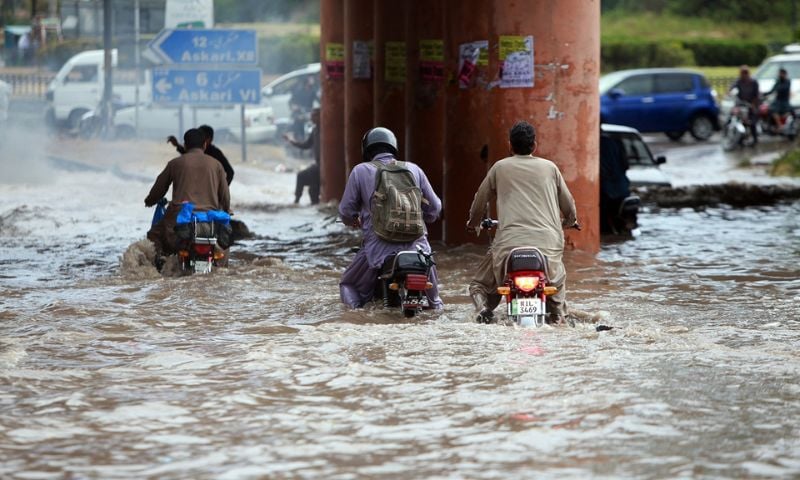
ISLAMABAD: Pakistan’s devastating monsoon season continues to exact a heavy toll, with the death toll surging to 159 and injuries climbing to 473 across the country, according to the latest data from the National Disaster Management Authority (NDMA).
As the country braces for another spell of heavy rains, authorities have issued urgent flood alerts for major cities including Islamabad, Rawalpindi, Lahore and Peshawar, with the weather system showing no signs of relenting.
Pakistan Meteorological Department has forecast more rain-wind and thundershowers across the country from tonight until August 20, with warnings of urban flooding in low-lying areas and flash floods in local nullahs.
Heavy rainfall is expected during the next 24 hours across Islamabad/Rawalpindi, KP and parts of Punjab.
Flash flooding and landslides are possible in vulnerable areas. Stay alert and follow official PMD updates.#PMD #HeavyRain #Monsoon2026 #FlashFlood #LandslideAlert pic.twitter.com/sfKun2Lq2m— Pak Met Department محکمہ موسمیات (@pmdgov) August 17, 2026
The weather alert comes as Islamabad recorded significant rainfall in the past 24 hours, with Golra receiving 146mm, Bokra 138mm and Zero Point 48mm, highlighting the intensity of the current monsoon spell. Rawalpindi also experienced heavy downpours, with Pirwidahi recording 107mm, Gawalmandi 80mm and Chaklala 74mm, raising concerns about urban flooding in the twin cities.
Urban flooding and flash flood warnings
The meteorological department has warned that heavy rains may cause urban flooding in low-lying areas of Islamabad, Rawalpindi, Mardan, Swabi, Peshawar, Nowshera, Gujranwala, Gujrat, Sialkot and Lahore. Authorities have particularly cautioned residents of Islamabad and Rawalpindi about potential flash flooding in local nullahs during the forecast period.
Latest Level of Reservoirs (August 17, 2026)
Source: Dam Authorities#PMD #DamUpdate #ReservoirUpdate #PakistanDams #WaterLevelReport #TarbelaDam #ManglaDam #KhanpurDam #SimlyDam #RawalDam #WaterResources #DamSafety #hydrologyreport@CDAthecapital @wapda_pr pic.twitter.com/zxzDN9knfI— Pak Met Department محکمہ موسمیات (@pmdgov) August 17, 2026
The heavy rainfall in the past 24 hours has already inundated several low-lying areas, with waterlogging reported in various parts of the twin cities. Municipal authorities have been placed on high alert to manage drainage systems and respond to emergency situations. Rescue teams have been deployed in affected areas to assist stranded residents and evacuate those in danger zones.
Read Also: Pakistan to Receive Sixth Monsoon Wave from August 17 to 21
Landslide risk in hilly areas
In addition to urban flooding, the meteorological department has warned of landslides in hilly areas of Khyber Pakhtunkhwa, Gilgit-Baltistan, Murree, Galliyat and Kashmir during the forecast period. Heavy rains are expected in these regions, increasing the risk of road closures and disruptions to transportation.
Residents in these areas have been advised to exercise caution and avoid unnecessary travel during periods of intense rainfall. Local administrations have been directed to monitor vulnerable slopes and take precautionary measures to ensure public safety. Several roads in hilly areas have already been blocked due to landslides, affecting connectivity and supply chains.
Glacier Lake Monitoring Update: Air Temperatures Observed Across Glaciated Valleys on August 17, 2026 at 2000PST.#PMD #GLOFMonitoring #GlacierLakeMonitoring #PakistanWeather #AirTemperatureUpdate #GlaciatedValleys #GilgitBaltistan #KhyberPakhtunkhwa #NorthernPakistan pic.twitter.com/I3gdaBFci1
— Pak Met Department محکمہ موسمیات (@pmdgov) August 17, 2026
Regional weather forecast
Islamabad and the Pothohar region will experience more rain-wind and thundershowers with heavy falls throughout the forecast period. The city recorded a maximum temperature of 29 degrees Celsius and a minimum of 22 degrees Celsius over the past 24 hours.
Khyber Pakhtunkhwa will see rain-wind and thundershowers with isolated heavy falls in Dir, Swat, Kohistan, Malakand, Shangla, Battagram, Buner, Khyber, Bajaur, Mohmand, Mansehra, Abbottabad, Haripur, Mardan, Swabi, Nowshera, Peshawar, Hangu, Orakzai, Karak, Kurram and Kohat. Hot and humid weather is expected in other districts of the province.
Read Also: Pakistan’s Monsoon Death Toll Rises to 151 as Fifth Rain Spell Approaches
Punjab is likely to experience rain-wind and thundershowers with isolated heavy falls in Rawalpindi, Murree, Galliyat, Attock, Chakwal, Talagang, Gujrat, Jhelum, Mangla, Gujranwala, Hafizabad, Mandi Bahauddin, Sialkot, Narowal, Lahore, Kasur, Sheikhupura, Okara, Mianwali and Faisalabad.
Sindh and Balochistan will remain mostly hot and humid, with partly cloudy conditions likely in southern parts of Sindh and northeastern districts of Balochistan along with coastal areas.
Kashmir and Gilgit-Baltistan will experience partly cloudy weather with rain-wind and thundershowers, with heavy falls expected in Kashmir during the period.
Precautionary measures advised
The meteorological department has advised authorities to remain vigilant and take necessary precautionary measures to mitigate the impact of heavy rains and potential flooding. Residents in affected areas have been urged to avoid unnecessary travel during heavy rainfall, stay away from nullahs and drainage channels, keep emergency contact numbers handy and monitor weather updates regularly.
Official tourist weather forecast update issued by the Pakistan Meteorological Department (PMD) for August 17 to August 21, 2026 [00:00:00]. 🌤️ CURRENT CONDITIONS: Currently, partly cloudy conditions prevail across most tourist destinations in Northern Pakistan .. pic.twitter.com/6CmpbRip16
— Pak Met Department محکمہ موسمیات (@pmdgov) August 17, 2026
The NDMA has also activated emergency response protocols across all provinces, with relief supplies being dispatched to affected districts. The authority has appealed to citizens to cooperate with rescue teams and follow official instructions during emergency situations.