
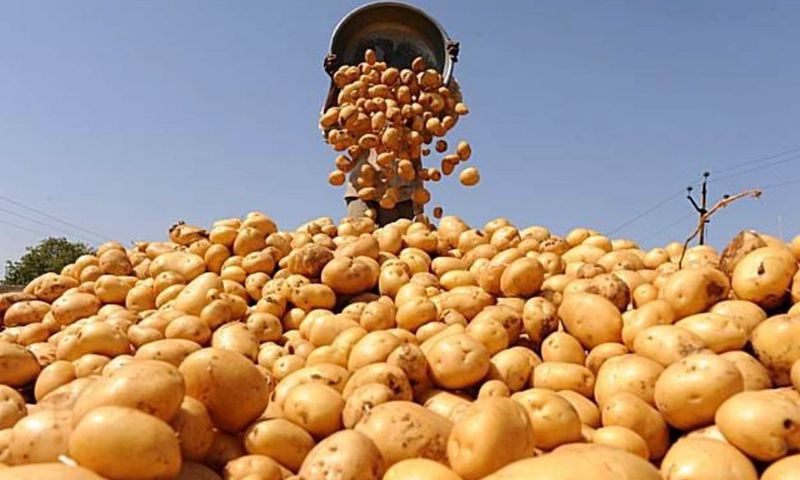
ISLAMABAD: Pakistani potatoes have secured export market access to 36 countries worldwide, marking a significant milestone for the country’s agricultural sector as the Ministry of National Food Security intensifies efforts to expand global reach and streamline phytosanitary compliance for exporters.
According to official documents from the Department of Plant Protection (DPP), a comprehensive Market Access and Sanitary and Phytosanitary (SPS) Compliance Matrix has been compiled covering all 36 destinations where Pakistani potatoes currently enjoy export access, with varying requirements ranging from routine certification to country-specific conditions.
Three-tier market access framework
Of the 36 markets, exports to 17 countries can be undertaken through routine phytosanitary certification without additional SPS conditions, providing a smooth pathway for traders.
For 10 countries, a valid import permit issued by the importing country’s authorities is mandatory before the issuance of the phytosanitary certificate, adding an extra layer of compliance.
The remaining nine countries have specified import conditions, including additional declarations on the phytosanitary certificate, certification of pest-free production areas, disinfestation of packing materials and shipping containers, and compliance with country-specific phytosanitary requirements.
From local farms to global markets 🥔🌎
Pakistan produces premium-quality potatoes in diverse varieties, meeting both domestic and global demand.
With growing opportunities in value addition, processing, and exports, the potato sector offers strong investment potential.… pic.twitter.com/pBv8eJ5tCB
— SIFC | Special Investment Facilitation Council🇵🇰 (@sifcpakistan) July 8, 2026
Round-the-clock support for exporters
To facilitate exporters during the peak potato export season, DPP staff has been deployed round-the-clock at major potato production, storage, and processing clusters, including Okara, Depalpur, Kasur, and Pakpattan.
The DPP has also nominated a focal person for potato export facilitation and grievance redressal, ensuring that exporters have a dedicated point of contact for resolving issues promptly.
The department has strengthened export facilitation through enhanced coordination with national plant protection organizations of importing countries, streamlined phytosanitary certification, pest surveillance and monitoring, stronger inspection and quarantine services, compliance with international phytosanitary standards, and continuous engagement with stakeholders to address market access issues.
Russia lifts ban on Punjab potatoes
In April this year, Russia lifted its ban on the import of potatoes from Punjab, Pakistan, which had been imposed over concerns regarding the alleged presence of Potato Tuber Moth and Tomato Wilt Virus.
Read Also: Pakistan’s Potato Export to Russia Resumes After Ban Lifted
The DPP engaged with its Russian counterpart and provided scientific evidence supporting Pakistan’s phytosanitary system and pest-free status concerning the organisms of concern.
Following sustained diplomatic and technical efforts and bilateral consultations between the two National Plant Protection Organisations, Russian authorities acknowledged Pakistan’s technical justifications and evidence, restoring market access for Pakistani potato exports to Russia.
Cambodia grants market access in record time
Cambodia has emerged as a positive market-access case, with Pakistan sending a market access request in February 2026 and receiving approval on February 28, 2026, in what officials described as a remarkably swift process.
For Vietnam, pest risk assessment comments were submitted in February 2026, with a response received in April 2026 indicating that the Plant Production and Protection Department of Vietnam was working on potato in priority order, along with citrus and mango.
China shows interest in value-added potato products
The General Administration of Customs of China (GACC) has shown greater interest in value-added potato products, particularly processed commodities such as potato chips and potato starch, owing to relatively simpler quarantine requirements and more efficient market access procedures.
This shift in focus presents new opportunities for Pakistani exporters to diversify their product offerings and tap into the lucrative Chinese market with processed potato goods.
Read Also: Scientists Discover Tomato Is the ‘Mother’ of Potato
Ongoing engagements with global markets
The documents further show that Mexico, Japan, Argentina, Thailand, the Philippines, and the European Union are also part of ongoing Pest Risk Assessment or market-access engagement, indicating Pakistan’s active pursuit of expanding its potato export footprint to new and demanding markets.
The measures combine country-specific SPS requirements, round-the-clock certification support, technical engagement with importing countries, and a dedicated grievance-redressal mechanism for potato exporters, creating a comprehensive ecosystem to support and grow Pakistan’s potato export sector.