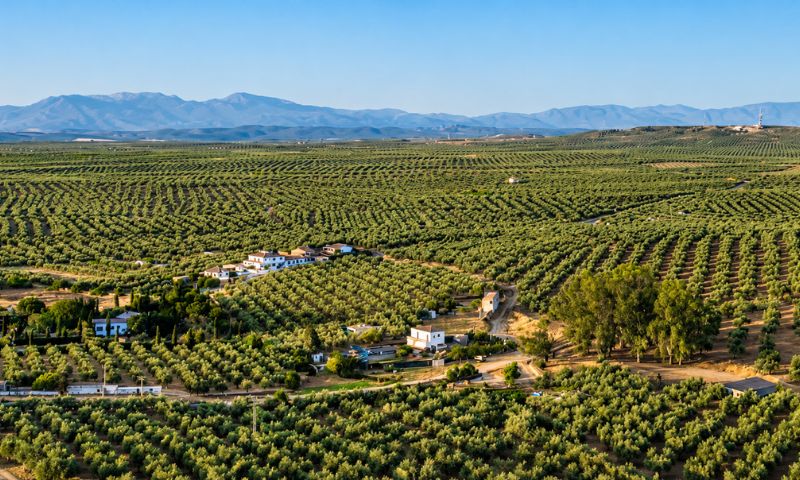
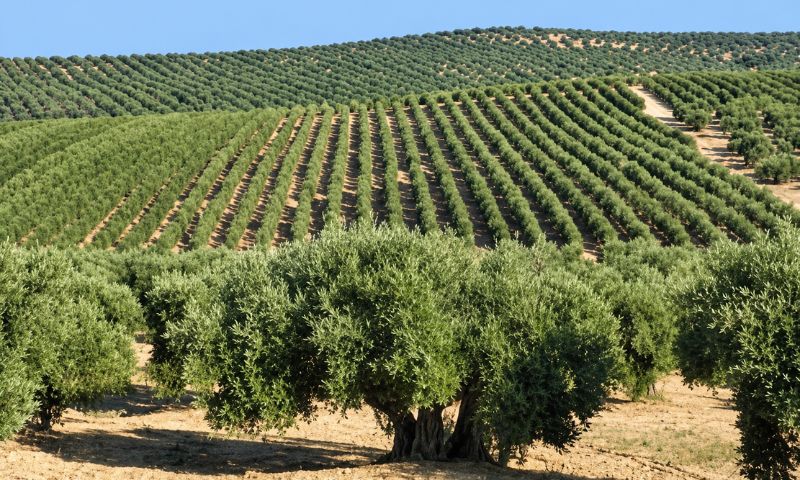
ISLAMABAD: Pakistan is rapidly expanding olive cultivation as it seeks to reduce a multibillion-dollar edible oil import bill and turn olives into a high-value agricultural and export industry, with the number of trees rising from about 500,000 in 2016 to nearly seven million today.
The expansion is centred on Potohar, north-western Pakistan and parts of Balochistan, where officials and industry experts say the soil and climate offer favourable conditions for commercial olive production.
Dr Muhammad Tariq, project director for the Promotion of Olive Cultivation on a Commercial Scale, told Arab News that the expansion was already helping reduce Pakistan’s dependence on imported olive oil.
“Due to our interventions and with government support over the past four to five years, our olive oil imports have decreased by about half, dropping from 400,000 tons to approximately 200,000 tons,” he said, adding that exports were also steadily increasing.
In financial terms, olive oil import expenditure fell from $14 million to about $9 million in the 2024-25 financial year, he said.
“Looking at the current pattern, I think over the next three to four years our olive oil imports will be substituted by local production,” Mr Tariq added.
Olive Cultivation Surges
Olive cultivation currently covers about 60,000 acres, according to Mr Tariq, while the government plans to bring another 15,000 acres under cultivation over the next three years.
The campaign gained fresh momentum last month when Prime Minister Shehbaz Sharif launched the National Olive Value Chain Policy, designed to develop the industry from cultivation and processing to quality control, branding and exports.
Silent olive revolution is the talk of the town. Pakistan, now on the list as 19th member of the International Olive Council. According to Juan Vilar, the International #Olive Analyst said that 🇵🇰produces 1,500 tons of olive oil per year and 830 tons of table olives. pic.twitter.com/gmR2pxcKRG
— Gwadar Pro Official (@Gwadar_Pro) May 11, 2022
At the launch, Mr Sharif said Pakistan spends about $4 billion a year importing crude edible oil and argued that even a partial reduction in that bill through domestic production could generate substantial savings.
He said saving $400 million in a single year would be a “monumental service” to the country, while setting a longer-term goal of achieving complete self-sufficiency.
The government also plans to send 100 young agricultural graduates to Italy for advanced training in olive cultivation, processing, quality control and marketing.
From Wild To Commercial
Pakistan’s olive programme dates back more than two decades, although commercial cultivation has accelerated in recent years.
Dr Faiyaz Alam, general secretary of the Olive Council, Sindh, said wild olive trees had existed for centuries in the hilly regions of Punjab, Khyber Pakhtunkhwa, Balochistan and Azad Kashmir, as well as around Gorakh Hill in Sindh.
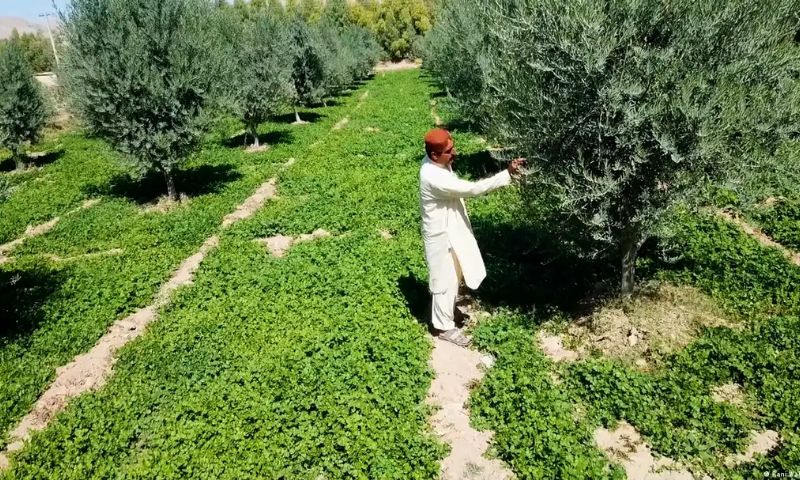
Efforts to commercially develop indigenous varieties through grafting began around 2000 on a limited scale. The first olive extraction machine was installed at Tarnab Farm in Peshawar, with commercial production gathering pace in subsequent years.
“Public awareness grew significantly after videos highlighting Pakistan’s wild olive resources emerged in 2020,” he said. “Government plantation programs subsequently accelerated the spread of commercial olive cultivation.”
Pakistan Targets Global Market
The ambition now extends beyond replacing imports. Industry leaders believe Pakistan could become a significant producer in the international olive oil market if cultivation expands on a much larger scale.
“We have only seven million trees at the moment … We can plant 100 million trees and join the billion-dollar club of the global economy,” said Shaukat Rasool, founder and chief executive of Loralai Olives.
Rasool said Pakistan was producing extra virgin olive oil with competitive quality characteristics, including high polyphenol content and low acidity.
His company has received four international recognitions over the past two years, including awards in New York, Dubai, Berlin and London.
He estimates the global olive oil market at about $22 billion and believes Pakistan could secure a substantially larger share if plantations expand.
“I think there is a huge potential for Pakistan,” he said. “We have four million hectares of land available, and the good thing is that olive is not in competition with other crops. So, we can grow as many olives as we can.”
For Pakistan, the olive drive represents more than an agricultural diversification programme. If the government can expand orchards, improve processing and quality standards and develop reliable export channels, olives could become a new source of import savings and agricultural earnings.