ISLAMABAD: Pakistan on Thursday condemned New Delhi for evading questions on human rights in Indian Ilegally Occupied Jammu and Kashmir and the treatment of minorities.
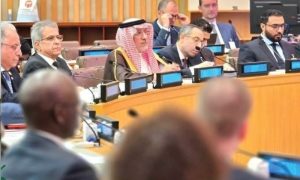
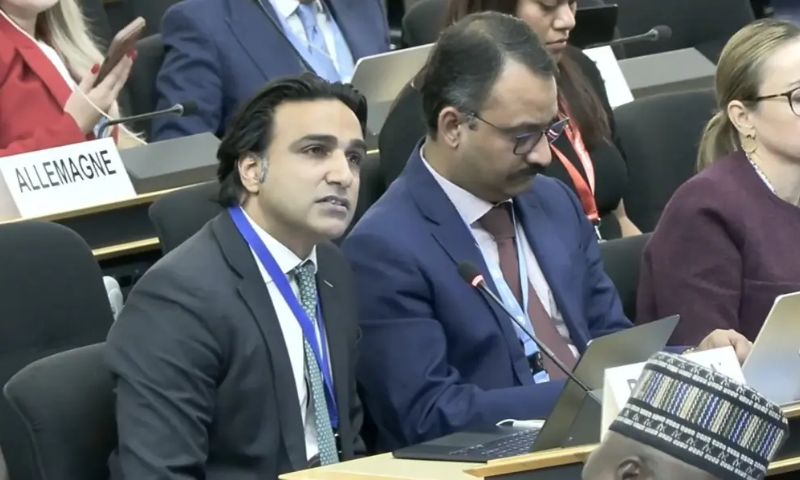
In exercising the right of reply to India at the 63rd session of the United Nations Human Rights Council in Geneva, First Secretary Adeel M. Khokhar said India had adopted a “familiar pattern” of changing the subject and invoking Pakistan when confronted with uncomfortable facts.
“Let us make it clear: Jammu and Kashmir is not, and has never been, an integral part of India. It is a disputed territory, as recognised by the relevant Security Council resolutions. Repeated denials and unilateral measures cannot alter this reality,” he said.
Khokhar said India has avoided holding a free and impartial plebiscite under UN auspices in Jammu and Kashmir. “A state confident in its claim would not fear the people it claims to govern,” he added.
Khokhar highlighted that extrajudicial killings, arbitrary detention and torture of Kashmiris by Indian forces had been documented in international reports, such as those by the Office of the High Commissioner for Human Rights.
He questioned the continued enforcement of the Armed Forces Special Powers Act, which he said shielded security forces from prosecution without government approval and amounted to a “licence for impunity”.
Exercising the right of reply to India, First Secretary @adeelmkhokhar made the following points at the 63rd session of the Human Rights Council in Geneva:
• Kashmir is not an integral part of India. It remains an internationally recognized disputed territory, as per relevant… pic.twitter.com/oCXtfxNErY
— Pakistan Mission Geneva (@PakUN_Geneva) September 30, 2026
The Pakistani delegate also criticised measures taken by India since Aug 5, 2019, including changes to domicile and land laws and delimitation of constituencies in Indian Illegally Occupied Jammu and Kashmir (IIOJK).
“Kashmir cannot be resolved by changing who Kashmiris are,” he said.
Pakistan highlights India’s minority rights violations
On minority rights in India, Khokhar referred to the destruction of Muslim places of worship from Babri Masjid to Ujjain and alleged that such acts were carried out under state patronage.
He also cited the Citizenship Amendment Act of 2019, which he said introduced a religion-based pathway to citizenship while expressly excluding Muslims.
READ ALSO: Pakistan Condemns Attempt to Demolish Mosque in India
The Bharatiya Janata Party government, in power since 2014, had failed to elect a single Muslim MP on its ticket in 2014 and 2019, and fielded minimal Muslim representation in 2024, he noted, adding that its human rights record “deserves the same score: zero”.
Pakistan has also hit back at remarks made by the Indian representative at the UN General Assembly last week.
READ ALSO: Pakistan Condemns Attempt to Demolish Mosque in India
Counsellor Saima Saleem accused India of having “elevated propaganda into statecraft”, embraced disinformation as diplomacy and “exported terrorism as an instrument of policy”.
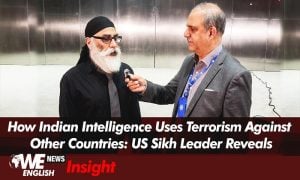
She said India’s “terrorist exports have gone from regional to global”, citing former Indian naval commander Kulbhushan Jadhav, convicted in Pakistan on terrorism and espionage charges, and Nikhil Gupta, who pleaded guilty in the United States for plotting the murder of a Sikh leader at the direction of the Indian government.
Recently, following controversial remarks by US Ambassador to India Sergio Gor, the US assured Pakistan that its position on the Kashmir dispute remains unchanged and that Washington continues to regard the region as a disputed territory, according to diplomatic sources.
Human rights concerns in India have been documented by United Nations mechanisms and US government reports, covering arbitrary detention, excessive use of force, torture, home demolitions, forced evictions and restrictions on media and expression, particularly in the IIOJK.
UN experts have also raised concerns over discriminatory treatment of Kashmiris and Muslims.
US human-rights reporting has recorded allegations of extrajudicial killings, custodial abuses and restrictions on peaceful assembly.
US Senate reports have also documented attacks against religious minorities and concerns over accountability for official misconduct.