UNITED NATIONS: Pakistan has called for a more effective and revitalised United Nations General Assembly, urging the implementation of its resolutions in letter and spirit and demanding that the body be empowered to fully exercise its authority under the UN Charter.
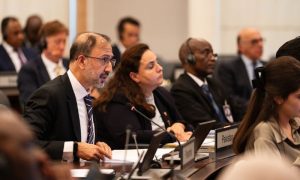
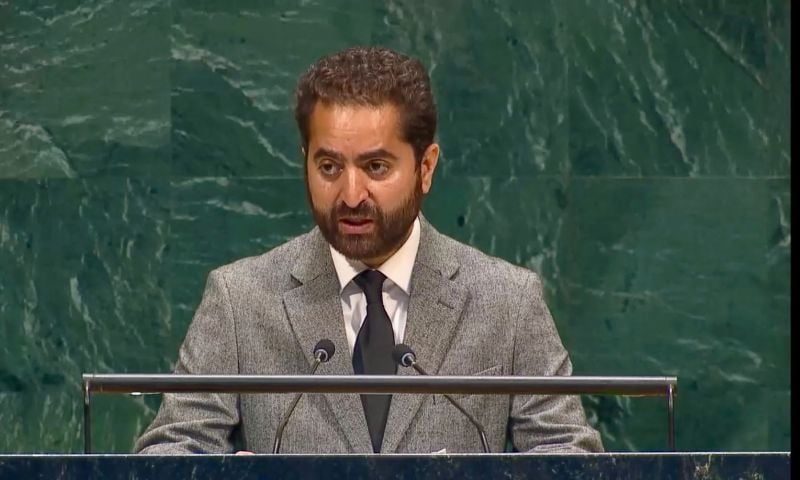
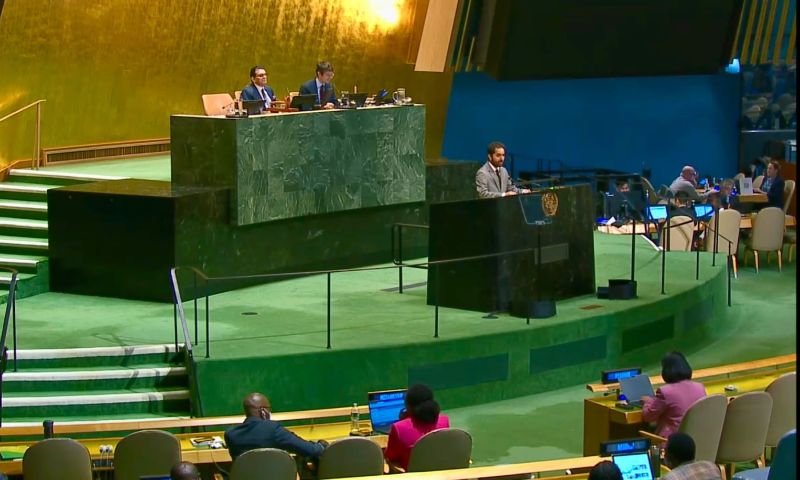
Speaking at a UN General Assembly plenary meeting on the implementation of UN resolutions and the revitalisation of the Assembly’s work, First Secretary Ansar Shah highlighted its unique status as the only principal UN organ with universal membership, reflecting the principles of sovereign equality and inclusivity.
He said revitalisation was not merely a procedural exercise but a political endeavour to restore balance, equity and democratic participation within the United Nations.
Statement by First Secretary Ansar Shah
At the UNGA Plenary meeting; Joint Debate on Implementation of the resolutions of the UN [Item 123]; and Revitalization of the work of the General Assembly [Item 124]
(8 Oct 2026)
******Mr. President,
I thank you for convening this timely joint debate on the implementation of United Nations resolutions and the revitalization of the General Assembly’s work.
It is imperative that every institution must continuously renew itself to remain relevant and effective.
Pakistan aligns itself with the statement delivered by Algeria on behalf of the Non-Aligned Movement and wishes to add the following remarks in its national capacity.
The General Assembly occupies a unique and indispensable place in the architecture of the United Nations. As the only principal organ with universal membership, it embodies the principles of sovereign equality and inclusivity that lie at the heart of the UN Charter.
Mr. President,
Revitalization is not a procedural exercise alone; it is a political endeavour aimed at restoring balance, equity, and democratic participation in the Organization’s work.
Pakistan supports efforts to make the Assembly’s work more efficient through rationalizing the agenda, streamlining resolutions, improving report quality, and promoting action-oriented outcomes. The Assembly’s limitations do not arise from procedure but from the reluctance of some Member States to allow it to fully exercise its Charter-based authority.
The Working Group on the Strengthening and Revitalizing of the Work of the General Assembly, established pursuant to Resolution 79/327, must therefore address these political constraints and reaffirm the Assembly’s central role within the United Nations. We appreciate the co-chairs – PR of Romania and Saint Kitts and Nevis for their sterling leadership of the working group.
Mr. President,
The General Assembly’s role in maintaining international peace and security is broad, and complementary to that of the Security Council. When the Council is unable or unwilling to act, the Assembly is fully empowered to assume its responsibilities under the Charter.
The work also extends to addressing the root causes of conflict and promoting the peaceful settlement of disputes, including through mediation and arbitration, in line with the Charter’s principles.
For the Assembly to remain credible, its resolutions must be implemented in both letter and spirit. They carry not only moral authority but also legal and political weight, reflecting the collective will of the international community.
All organs and Member States must therefore respect and implement these decisions.
Pakistan reiterates its proposal to establish a dedicated mechanism to monitor the implementation of General Assembly resolutions, supported by regular, detailed Secretariat reporting. Such a mechanism would strengthen the Assembly’s effectiveness, accountability, and relevance.
We also reaffirm that resolutions remain valid until their mandates have been fully implemented – a principle that underscores the enduring authority and continuing relevance of the Assembly’s decisions.
Mr. President,
Pakistan attaches great importance to strengthening the institutional relationship between the General Assembly and the Security Council. The Council must report to the Assembly more frequently and substantively, especially when acting under Chapter VII of the Charter.
In this regard, we welcome the continued implementation of resolution 76/262, which provides for convening the Assembly within ten days following the use of a veto in the Council. Such mechanisms are vital to promoting transparency, accountability, and the democratization of the United Nations system.
The Assembly’s role in norm-setting and the progressive development of international law remains one of its defining strengths. It has long served as the most inclusive and legitimate forum for building international consensus and codifying global norms.
Norm-making; the development and codification of International Law, must remain within this universal, participatory framework.
While Pakistan supports efforts to streamline the Assembly’s work to enhance efficiency and avoid duplication, such measures must not result in privileging one UN pillar over another. The three pillars – peace and security, development, and human rights – are interdependent and merit balanced attention in the Assembly’s agenda. It is therefore essential to ensure coherence between the UN80 Initiative and the Revitalization of the General Assembly.
We further emphasize the need for transparency in the relationship between the General Assembly and the Security Council, and for predictable and adequate resources for the Office of the President of the General Assembly. A well-resourced Presidency is essential for an inclusive and effective Assembly.
On the appointment of the Secretary-General and executive heads, Pakistan reaffirms the principles of transparency, inclusivity, gender parity, and equitable regional representation. We hope that the process of the selection of the Secretary General will be concluded expeditiously to allow for a smooth transition.
In revitalizing the General Assembly, we must also look to the future. The world confronts emerging challenges, from the governance of digital technologies and artificial intelligence to the sustainable use of outer space and the global commons. The Assembly must remain at the centre of these discussions to ensure that global governance remains inclusive, equitable, and reflective of the priorities of all Member States.
Mr. President,
A revitalized General Assembly is essential to a revitalized United Nations. It must embody the collective will of Member States and ensure that no organ acts beyond the limits of the Charter.
Pakistan remains firmly committed to constructive engagement in this process to restore the Assembly’s rightful place as the principal deliberative, policymaking, and representative organ of the United Nations.
I thank you.
— Permanent Mission of Pakistan to the UN (@PakistanUN_NY) October 8, 2026
He called for strengthening the Assembly’s role in maintaining international peace and security, particularly when the Security Council is unable or unwilling to act. The diplomat also emphasised the Assembly’s role in promoting the peaceful settlement of disputes through mediation and arbitration, as well as addressing the root causes of conflicts.
Dedicated mechanism
Ansar Shah reiterated Islamabad’s proposal to establish a dedicated mechanism to monitor the implementation of General Assembly resolutions, supported by regular and detailed reporting by the UN Secretariat. He said the mechanism would enhance the Assembly’s effectiveness, accountability and relevance.
He supported measures to make the Assembly’s work more efficient, including rationalising its agenda, streamlining resolutions, improving the quality of reports and promoting action-oriented outcomes. At the same time, he stressed that the Assembly’s effectiveness was constrained less by procedures than by the reluctance of some Member States to allow it to fully exercise its Charter-based authority.
Ansar Shah also called for a stronger and more transparent institutional relationship between the General Assembly and the Security Council, including more frequent and substantive reporting by the Council to the Assembly.
Underscoring the Assembly’s central role in norm-setting and the development and codification of international law, he stressed that these processes must remain within a universal and participatory framework.
The First Secretary further emphasised the need for balanced attention to the three pillars of the United Nations—peace and security, development, and human rights—and for coherence between the UN80 Initiative and the revitalisation of the General Assembly.
On the selection of the Secretary-General and other executive heads of the Organisation, he reaffirmed the principles of transparency, inclusivity, gender parity and equitable regional representation, and expressed hope for an expeditious conclusion of the Secretary-General selection process to ensure a smooth transition.
The Pakistani delegate stressed that the General Assembly must remain at the centre of deliberations on emerging global challenges, including the governance of digital technologies and artificial intelligence, the sustainable use of outer space and the global commons.
Ansar Shah reaffirmed Pakistan’s commitment to constructive engagement towards restoring the Assembly’s rightful place as the principal deliberative, policymaking and representative organ of the United Nations.