
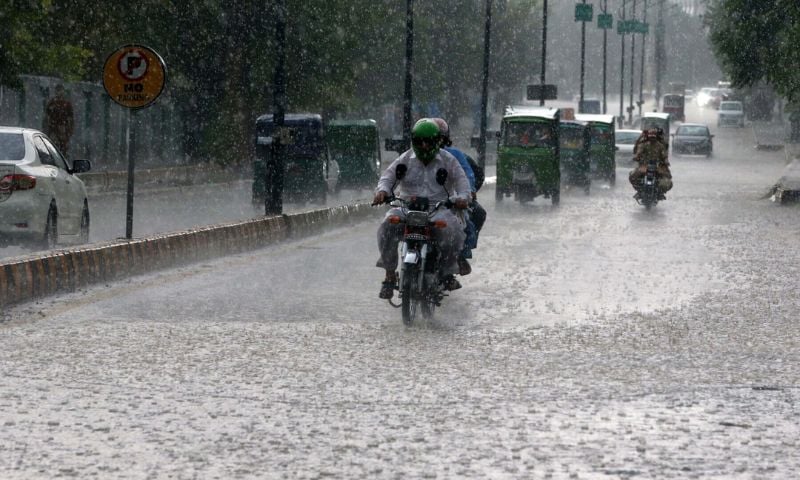
ISLAMABAD: A fresh spell of rain and thunderstorms is expected to affect northern and upper parts of Pakistan from Friday night through the first week of September, with the Pakistan Meteorological Department (PMD) warning of possible urban flooding, flash floods and landslides in vulnerable areas.
According to a PMD press release issued on Friday, monsoon currents are penetrating the upper parts of the country, while a westerly wave is also likely to approach from August 31 and may persist until September 5. The combined weather systems are expected to trigger widespread rain-wind and thundershowers, with isolated heavy rainfall in several areas.
🌦️ Press Release: Rain-wind/thundershowers are expected across the upper and central parts of Pakistan, with isolated heavy rainfall at some locations. Heavy rainfall may trigger urban flooding, flash flooding in local streams/nullahs, and landslides in vulnerable hilly areas. pic.twitter.com/sWMlnwrug2
— Pak Met Department محکمہ موسمیات (@pmdgov) August 28, 2026
Kashmir to receive prolonged rainfall
In Kashmir, rain-wind and thundershowers, accompanied by isolated heavy falls, are expected in Neelum Valley, Muzaffarabad, Rawalakot, Poonch, Hattian, Bagh, Haveli, Sudhanoti, Kotli, Bhimber and Mirpur from the evening/night of August 28 until September 6, with occasional gaps.
Islamabad, Punjab under rain threat
Islamabad, Rawalpindi and upper Punjab are also expected to experience rain and thunderstorms, with isolated heavy rainfall, from August 28 to September 5.
The affected areas include Islamabad, Rawalpindi, Murree, Galiyat, Jhelum, Chakwal, Talagang, Attock, Lahore, Sialkot, Sheikhupura, Narowal, Mandi Bahauddin, Gujrat, Gujranwala, Wazirabad and Hafizabad.
Rain is also expected in Kasur, Okara, Nankana Sahib, Sargodha, Khushab, Mianwali, Noor Pur Thal, Faisalabad, Jhang, Toba Tek Singh, Layyah, Bhakkar, Sahiwal and Pakpattan during the forecast period.
Heavy rain may trigger flooding
The PMD has warned that heavy rainfall could cause urban flooding in low-lying areas of Islamabad and Rawalpindi, as well as Mardan, Swabi, Gujranwala, Gujrat, Sialkot and Lahore from August 31 to September 5.
Heavy rainfall may also generate flash floods in local streams and nullahs in Kashmir, Murree, Galiyat, Islamabad and Rawalpindi.
Authorities have further been warned of a risk of landslides in the hilly areas of Khyber-Pakhtunkhwa, Gilgit-Baltistan, Murree, Galiyat and Kashmir during the forecast period.
Rain expected in KP and Gilgit-Baltistan
In Khyber-Pakhtunkhwa, rain-wind and thundershowers with isolated heavy falls are forecast in Peshawar, Dir, Chitral, Swat, Kohistan, Malakand, Mardan, Nowshera, Charsadda, Swabi, Shangla, Battagram, Buner, Kohat, Hangu, Karak, Bannu, Bajaur, Mohmand, Khyber, Orakzai, Mansehra, Abbottabad and Haripur from August 29 to September 5.
Glacier Lake Monitoring Update: Maximum Air Temperatures Observed Across Glaciated Valleys on August 28, 2026.#PMD #GLOFMonitoring #GlacierLakeMonitoring #PakistanWeather #AirTemperatureUpdate #GlaciatedValleys #GilgitBaltistan #KhyberPakhtunkhwa #NorthernPakistan #GlacierMelt pic.twitter.com/BbBYvEAAfm
— Pak Met Department محکمہ موسمیات (@pmdgov) August 28, 2026
Rain is also expected in Dera Ismail Khan, Bannu, Waziristan and surrounding areas from September 1 to September 4.
Gilgit-Baltistan is likely to receive rain-wind and thundershowers in Diamir, Astore, Ghizer, Skardu, Hunza, Gilgit, Ghanchay and Shigar from August 30 to September 6.
Meanwhile, mainly hot and humid weather is expected to prevail across most parts of Sindh and Balochistan during the forecast period.
The weather remained hot and humid across most parts of the country during the past 24 hours. However, isolated rain-wind and thundershowers were recorded in the Potohar region, Kashmir and upper Khyber-Pakhtunkhwa.
Rawalpindi received the highest rainfall in Punjab, with 25 millimetres recorded at Shamsabad, followed by 19mm at New Kattarian. Islamabad’s Saidpur Village recorded 7mm, while Golra received 3mm and Zero Point 2mm. Garhi Dupatta in Kashmir received 17mm, while Drosh in Khyber-Pakhtunkhwa recorded 1mm.
The highest maximum temperature of 43 degrees Celsius was recorded in Chilas and Dalbandin. Noorpur Thal, Dadu, Nokundi and Bunji recorded maximum temperatures of 42°C.
PMD urges caution
The PMD has advised tourists and travelers to remain cautious during the forecast period, particularly in vulnerable mountainous and hilly areas.
Farmers have also been advised to manage their crop activities while keeping the expected weather conditions in view.
ALSO READ: Pakistan’s Monsoon Death Toll Reaches 164 as Fresh Downpours Threaten More Devastation
The department urged all concerned authorities to remain vigilant and take necessary precautionary measures to avoid any untoward situation, particularly in areas exposed to flooding and landslides.
Pakistan most vulnerable to the impacts of climate change
Pakistan is among the countries most vulnerable to the impacts of climate change and has witnessed increasingly erratic weather patterns in recent years, including more frequent heatwaves, droughts and episodes of extreme monsoon rainfall.
The country has repeatedly faced devastating weather-related disasters. In 2025, above-normal monsoon rains and flooding claimed more than 1,000 lives and caused widespread damage to homes, roads, farmland and public infrastructure, with Punjab among the worst-affected provinces.
Pakistan suffered an even more catastrophic disaster in 2022, when record monsoon rains combined with glacial melt triggered massive floods. The disaster killed more than 1,700 people, affected over 33 million others and caused an estimated $30 billion in economic losses, ranking among the country’s worst natural disasters.