Key Points
- Approval includes handling of bulk and break-bulk cargo under transshipment arrangements
- Roll-on/roll-off vessels will be used for vehicle transshipment, including cars and SUVs
- Less-than-container-load (LCL) cargo has been allowed to improve small shipment logistics
- A plan is underway to establish a Pakistan Maritime Energy City (PMEC) for oil and LNG storage and re-export
- The energy city will be integrated with existing port infrastructure and is under early planning and land identification stage
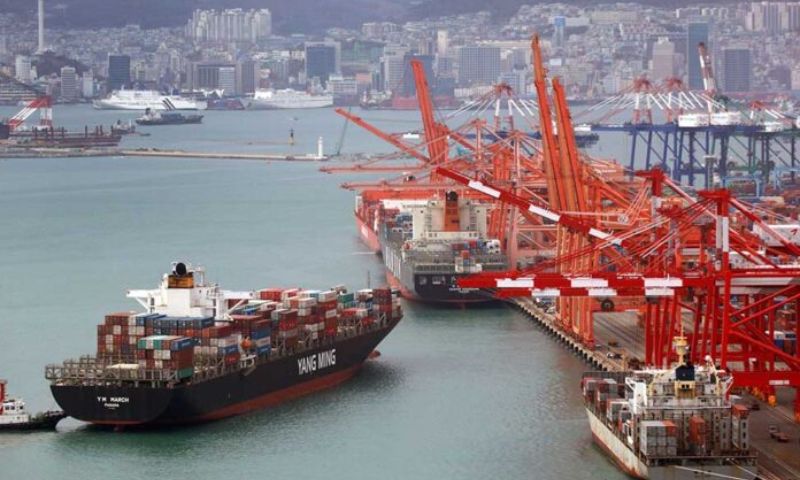
ISLAMABAD: The federal government has approved a comprehensive set of reforms aimed at expanding Pakistan’s transshipment capabilities and reinforcing the country’s position as an emerging maritime logistics hub amid shifting regional trade patterns and heightened geopolitical uncertainty.
The decisions were taken on the recommendations of a high-level committee formed by Prime Minister Shehbaz Sharif and chaired by Maritime Affairs Minister Junaid Anwar Chaudhry.
Officials said the reforms are designed to improve operational efficiency at ports, attract international shipping lines, and increase Pakistan’s share in regional cargo movement.
Under the new measures, authorities have authorised the handling of bulk and break-bulk cargo under transshipment arrangements. This step is expected to significantly raise port throughput while facilitating the movement of key commodities such as grains, coal, minerals, and large-scale project cargo.
Officials believe the move will also make Pakistani ports more attractive for global trade operators by offering faster and more flexible cargo handling solutions.
In a further development, the government has approved the use of roll-on/roll-off vessels for transshipment of vehicles, including cars, sport utility vehicles, and other wheeled transport. This is anticipated to reduce turnaround times at ports and open new opportunities in regional automotive logistics networks.
The authorities have also allowed the handling of less-than-container-load (LCL) shipments under transshipment operations. This will enable the consolidation and redistribution of smaller consignments, improving efficiency for traders and enhancing Pakistan’s appeal among international freight forwarders and logistics companies.
Speaking on the initiative, the maritime affairs minister said the reforms have been shaped in response to evolving global supply chain routes influenced by geopolitical tensions. He added that expanding cargo categories and improving operational flexibility would help Pakistan capture greater transshipment volumes in the coming years.
An official statement from the Ministry of Maritime Affairs highlighted that the reforms are expected to boost port revenues, increase foreign exchange earnings, and generate employment in logistics and allied industries.
It further noted that the measures would deepen Pakistan’s integration into global supply chains and enhance its strategic maritime presence.
Separately, the government is also moving forward with plans to establish the Pakistan Maritime Energy City, a large-scale infrastructure project designed to support energy storage and re-export activities.
The proposed facility will cater to oil, liquefied natural gas (LNG), and liquefied petroleum gas (LPG) storage needs for both domestic and international stakeholders.
Officials said the energy city would be integrated with existing port infrastructure, and a dedicated committee has already begun identifying suitable land for its development.
A detailed plan is being prepared, while consultations with provincial governments and other stakeholders will be undertaken before formal approval and launch.
The initiative is part of a broader strategy to strengthen Pakistan’s maritime economy and position its ports as key nodes in regional trade and energy logistics.