Key Points
- Pakistan and World Bank reviewed implementation of key economic reforms
- Government pushes ahead with technology-driven FBR restructuring
- Talks focused on debt markets, exports and private sector-led growth
- Both sides agreed to strengthen coordination on reform execution
ISLAMABAD: Pakistan and the World Bank agreed on Monday to accelerate coordination on tax administration reforms, debt market development and institutional restructuring as Islamabad seeks to strengthen fiscal stability and restore investor confidence.
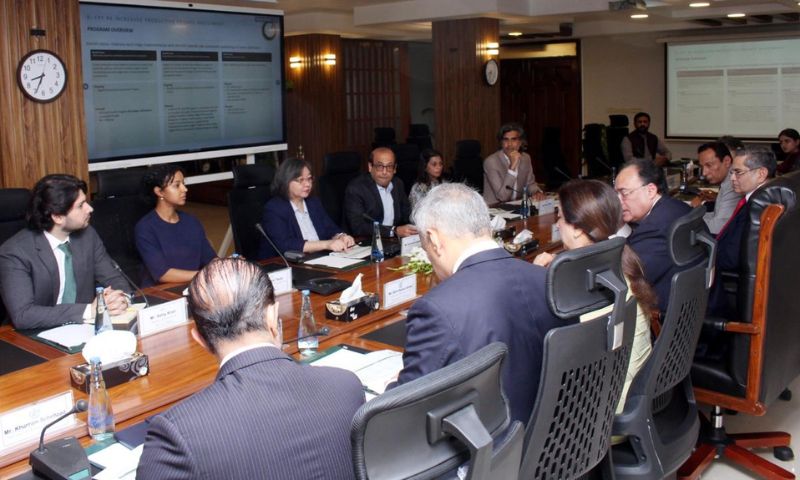
The understanding emerged during a meeting between Finance Minister Muhammad Aurangzeb and a World Bank delegation led by Bolormaa Amgaabazar at the Finance Division in Islamabad.
According to officials, the meeting reviewed implementation timelines and operational arrangements for several ongoing reforms under the World Bank Programme.
Major World Bank-supported reforms include public financial management reforms, debt management systems, institutional capacity building and tax administration modernisation.
The government also sought faster operational support for the ongoing transformation of the Federal Board of Revenue. During the meeting, discussions focused on automation, digitisation and technology-based monitoring systems intended to improve tax collection and reduce administrative inefficiencies.
Officials said Pakistan emphasised the need for “practical implementation support” and specialised international expertise rather than advisory engagement. Pakistan’s focus remains on execution as it attempts to move reforms from planning stages into operational delivery.
The World Bank team updated the government on technical assistance for Pakistan’s Medium-Term Revenue Strategy, the Tax Policy Office and overall Federal Board of Revenue (FBR) restructuring programme.
Both sides agreed to strengthen coordination mechanisms and speed up implementation of reform measures aligned with broader fiscal and governance targets.
The meeting also reviewed measures to expand domestic debt and capital markets, an area the government views as critical for reducing reliance on commercial bank financing and improving access to alternative funding channels.
Aurangzeb told the delegation that Pakistan was prioritising development of market-based financing avenues, investor outreach and reforms to improve the country’s investment profile in international financial markets.
Discussions further covered export competitiveness, regulatory reforms and the private sector’s development. These reforms reflect the government’s attempts to shift towards export-led growth after prolonged balance-of-payments pressures and repeated external financing challenges.
Labour market reforms, vocational training and workforce competitiveness were also discussed.
Officials from both sides also examined policies intended to align skills development programmes with changing market demands and overseas employment opportunities.
The World Bank reaffirmed its continued support for Pakistan’s reform agenda. The meeting unanimously renewed commitment to close engagement on implementation and institutional modernisation efforts.