HERAT: The Taliban have intensified their crackdown in the western Afghan city of Herat, eroding one of the country’s last pockets of quiet resistance to the group’s strict social restrictions, according to residents and rights advocates.
Residents say the campaign, directed by Taliban supreme leader Sheikh Haibatullah Akhundzada, has brought a wave of arrests, tighter enforcement of dress codes and growing intimidation in a city that had until recently retained a degree of social freedom despite nationwide restrictions.
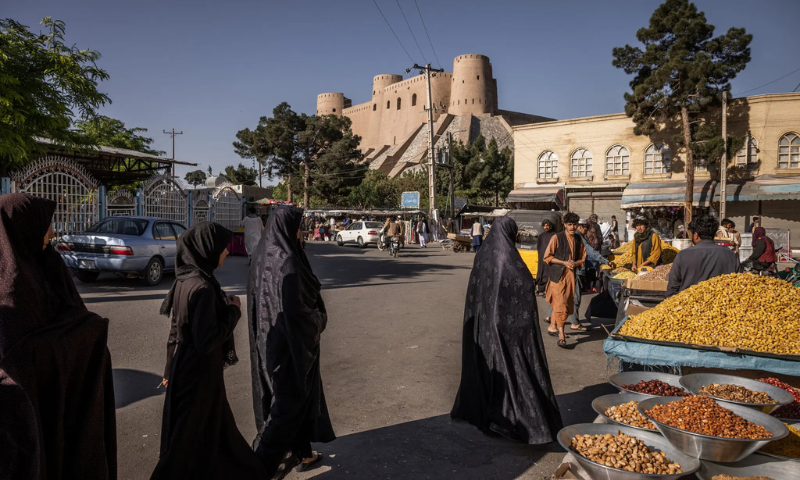
Since returning to power in 2021, the Taliban have imposed sweeping curbs on women’s education, employment, travel and public life, while enforcing strict rules on dress and religious practice. However, parts of Herat had continued to quietly defy some of those restrictions, with women wearing makeup, colourful clothing and high heels, and many men keeping short beards.
Residents say those freedoms are rapidly disappearing.
Fear Spreads Across the City
During recent weeks, Taliban morality police have reportedly arrested dozens of people accused of violating the group’s dress and behavioural codes.
Many women said they now avoid leaving their homes for fear of being detained, while residents described an atmosphere of fear and uncertainty across the city.
“They are spreading fear like a virus,” one Herat resident said, reflecting concerns shared by several residents interviewed about the deteriorating situation.
Most people who spoke about the crackdown requested anonymity or asked to be identified only by their first names, citing fears of retaliation by Taliban authorities.
End of Quiet Defiance
Herat, Afghanistan’s third-largest city, has historically been regarded as one of the country’s more cosmopolitan urban centres and has never been considered a traditional Taliban stronghold. It is home to a sizeable Shiite Muslim population, while the Taliban leadership is predominantly Sunni.
One neighbourhood in particular, Jebrail, has long symbolised quiet resistance to Taliban social restrictions. Home to thousands of Hazara families and an important centre for trade with neighbouring Iran, the district had remained relatively relaxed compared with other parts of Afghanistan.
Residents say cafés where young men and women once gathered freely, and markets where women moved about without strict enforcement, have now come under increasing scrutiny.
According to local accounts, Taliban morality police issued new directives to religious leaders in early June, warning that women who failed to comply with the requirement to wear full-body coverings, including face veils, could face arrest.
Warnings of Growing Tension
Critics warn that the Taliban’s increasingly rigid enforcement of social restrictions risks further destabilising Afghanistan.
Some residents reported that small protests had recently taken place in Herat against the arrests, but Taliban security forces quickly dispersed the gatherings.
Religious figures have also voiced concern over the growing pressure. Shiite cleric Ayatollah Gholam Abbas Waezi Zadeh recently warned that intensifying religious restrictions could provoke wider unrest, saying excessive pressure on society could ultimately trigger an explosion of public anger.
Residents say Herat’s remaining spaces for personal freedom are steadily disappearing as the Taliban strengthen their control over one of Afghanistan’s last centres of quiet social resistance.