
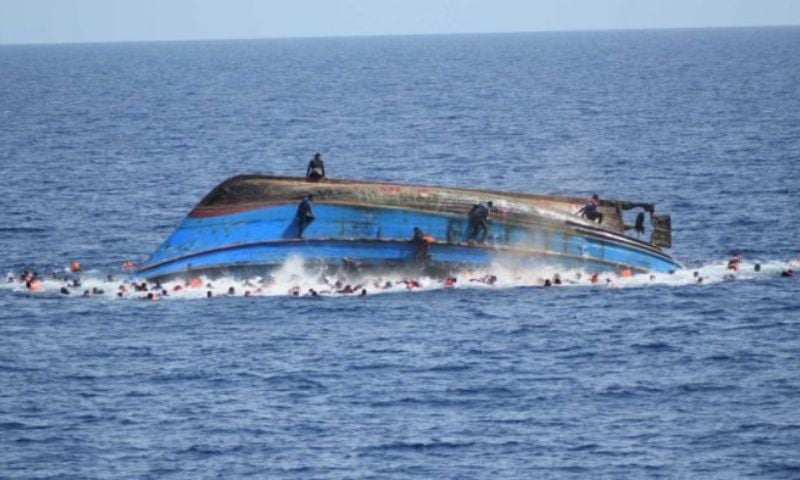
GENEVA: More than 500 people are feared dead after two boats carrying mostly Rohingya refugees reportedly capsized off the coast of Myanmar, prompting the United Nations to warn of one of the deadliest maritime tragedies involving the persecuted minority in recent years.
In a joint statement issued on Thursday, the UN Refugee Agency (UNHCR) and the International Organization for Migration (IOM) said they were deeply concerned by reports that two vessels carrying over 500 passengers had sunk after departing Myanmar’s conflict-ridden Rakhine State in late June.
According to preliminary information, the boats were transporting mainly Rohingya Muslims fleeing violence, persecution and worsening humanitarian conditions in Myanmar. Some passengers are also believed to have travelled from the sprawling refugee camps in Cox’s Bazar, Bangladesh, where more than one million Rohingya refugees continue to live in overcrowded and difficult conditions.
The first vessel, which was believed to have been carrying around 250 people, reportedly lost contact with authorities shortly after setting sail. The second boat, carrying an estimated 280 passengers, is believed to have sunk off Myanmar’s Ayeyarwady coast on July 8.
Although the incidents and the reported death toll have not yet been officially confirmed, both UN agencies warned that the potential scale of the disaster was deeply alarming.
The agencies noted that the voyages took place outside the normal sailing season, when rough seas and unpredictable weather significantly increase the dangers of maritime travel. Heavy rainfall and widespread flooding across the region in recent weeks are also believed to have heightened the risks.
If confirmed, the latest tragedy would add to the nearly 300 people who have already been reported dead or missing this year while attempting dangerous sea crossings across the Andaman Sea and the Bay of Bengal, including Rohingya refugees and Bangladeshi nationals.
The Rohingya, one of the world’s most persecuted minorities, frequently undertake hazardous sea journeys in overcrowded and poorly equipped boats in search of safety and better living conditions. Many of these voyages are organised by human trafficking and migrant smuggling networks that profit from vulnerable people fleeing conflict and poverty.
According to UNHCR, nearly 900 Rohingya refugees were reported dead or missing at sea in the northern Indian Ocean during 2025, out of more than 6,500 people who attempted similar crossings.
The UN agencies said the latest reported shipwrecks reflect the continuing consequences of prolonged conflict, displacement and the absence of durable solutions for the Rohingya population.
They warned that escalating violence in Myanmar, combined with shrinking humanitarian assistance and limited opportunities in Bangladesh’s refugee camps, is pushing more people to risk dangerous journeys across open waters.
The organisations also highlighted the growing influence of human smuggling and trafficking networks, which continue to exploit the desperation of displaced families seeking protection and a more secure future.
UNHCR and IOM called for stronger regional cooperation to improve search and rescue operations, ensure access to asylum and international protection for those fleeing persecution, and dismantle criminal networks involved in migrant smuggling and human trafficking.
The agencies also praised Bangladesh for hosting Rohingya refugees for many years, while urging the international community to provide sustained financial and humanitarian support to both the refugees and the communities sheltering them.