Key Points
- Brent crude rises above $91 a barrel
- WTI climbs above $86 amid supply concerns
ISLAMABAD: Oil prices rose on Tuesday as renewed fighting between the United States and Iran revived fears of disruptions to crude supplies from the Middle East.
Fresh exchange of strikes after a lull of over a month pushed Brent crude above $91 a barrel and kept the market focused on the Strait of Hormuz.
Brent crude futures were up around 0.7 per cent at $91.15 a barrel, while US West Texas Intermediate (WTI) crude gained about 0.8 per cent to $86.46.
The gains followed a nearly 3 per cent hike on Monday as military exchanges between Washington and Tehran intensified.
The latest escalation has increased concern that the security situation around the Strait of Hormuz could further restrict energy shipments.
The waterway is a critical route for global oil trade, and disruptions have already sharply reduced shipping activity.
According to preliminary ship-tracking data from Kpler, only five commodity vessels crossed the Strait of Hormuz on Monday, four entering and one leaving.
The 10-day average is about 14 vessels, and none of Monday’s vessels was a liquid tanker.
The reduced tanker traffic has strengthened the market’s risk premium because the Strait normally carries a significant share of global oil shipments.
READ ALSO: Oil Prices Jump More Than 2% as Hormuz Tensions Escalate
According to estimates, about one-fifth of global oil supply has been affected by the disruption.
A further escalation could put additional pressure on physical crude supplies and shipping costs, especially for Asian buyers that rely heavily on Middle Eastern producers.
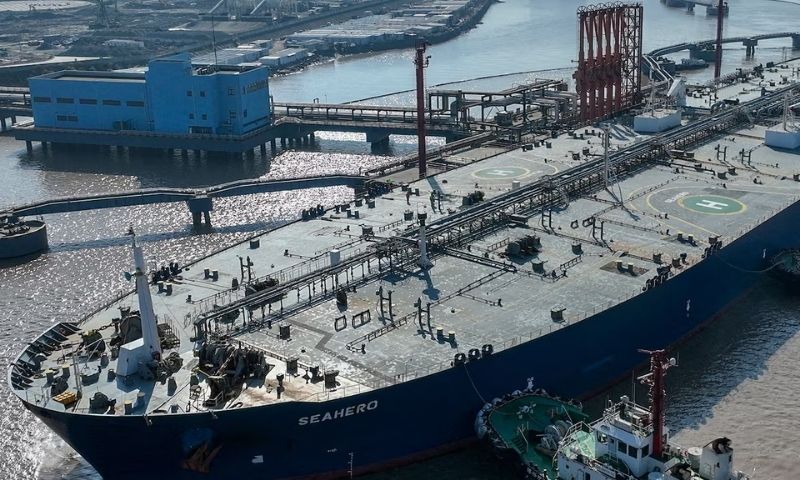
The market is also monitoring reports of incidents of ship attacks near the waterway. A tanker was hit by projectiles while exiting the Strait, although there were no reported injuries or environmental damage.
Oil market outlook
The immediate direction of oil prices is likely to remain tied to developments around the Strait of Hormuz and the prospect of further US-Iran military action.
Analysts expect prices to remain elevated as long as tanker movements remain restricted and uncertainty regarding waterway security.
The latest surge followed oil prices, having already risen sharply in August. Brent closed August at $90.12 a barrel, up $1.09, or 1.2 per cent, on the final trading day of the month, while WTI settled at $84.67.
Oil markets have experienced exceptional volatility in 2026 as the conflict involving Iran and the United States repeatedly disrupted expectations for Middle Eastern supply.
Brent briefly fell towards $72 in June as traders anticipated improved shipping flows. However, prices subsequently recovered as uncertainty around the Strait of Hormuz persisted.
Brent has now risen nearly 9 per cent over the past month and is about 32 per cent higher than a year earlier.