
Key Points
- Traders remained focused on supply risks and disruptions around the Strait of Hormuz
- Analysts said markets were unconvinced that geopolitical tensions had materially eased
ISLAMABAD: Global oil prices remained elevated on Tuesday despite US President Donald Trump’s remarks suggesting that the Iran war may “end quickly”, and traders continued to focus on supply disruptions and uncertainty surrounding critical energy shipping routes.
Brent crude traded above $110 a barrel, whereas US West Texas Intermediate crude remained near $107, holding close to recent highs after a sharp rally driven by fears of prolonged instability in the Middle East.
Oil trade did ease nominally by 0.4 percent immediately following the US President’s statement. However, inflation fears, higher bond yields, and Strait of Hormuz concerns kept the traders on their toes and prices elevated.
Brent crude oil futures fell 45 cents, or 0.4 per cent, to $110.83 a barrel by 0050 GMT, while US West Texas Intermediate futures were down 27 cents, or 0.3 per cent, to $103.88.
Market sentiment briefly improved after Trump said the war was “close to ending” and expressed optimism about diplomatic efforts aimed at restoring stability in the region.
The sentiment was reinforced with US President J.D. Vance saying Pakistan-mediated peace efforts were making significant progress.
However, analysts said investors remained unconvinced that the security situation had improved enough to ease pressure on global energy markets.
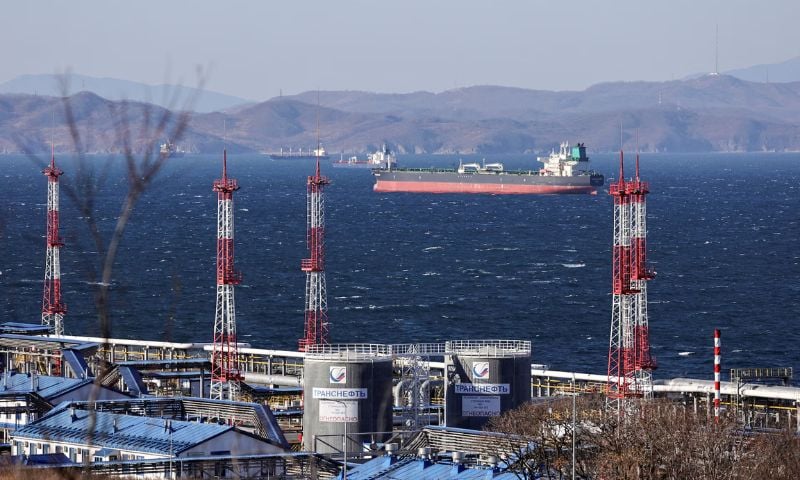
Traders continued to monitor developments around the Strait of Hormuz, through which roughly one-fifth of global oil and liquefied natural gas supplies pass.
Shipping disruptions and heightened military tensions in the Gulf have kept markets on edge in recent weeks.
“Investors are keen to gauge whether Washington and Tehran can actually find common ground and reach a peace agreement, with the U.S. stance shifting daily,” said Toshitaka Tazawa, an analyst at Fujitomi Securities.
“Oil prices are likely to remain elevated given the possibility of renewed US attacks on Iran and expectations that, even if a peace deal is reached, crude supply will not quickly return to pre-war levels,” he said.
Analysts said the persistence of elevated oil prices reflected concerns that even if direct hostilities ease, damage to infrastructure, higher insurance costs and restricted tanker movement could continue to affect supplies for some time.
The market also remained sensitive to the risk of further attacks on energy facilities following recent drone strikes and interceptions reported across the Gulf region.
Financial analysts noted that oil markets have become increasingly driven by geopolitical headlines, with sharp swings in prices reflecting uncertainty over the pace and credibility of diplomatic negotiations.
Higher crude prices have already intensified inflation concerns globally, especially among major oil-importing economies in Asia and Europe, where policymakers are attempting to contain price pressures and support slowing economic growth.
Economists warned that sustained oil prices above $100 a barrel could complicate monetary policy decisions worldwide and place additional strain on currencies and trade balances across emerging markets.