Key Points
- Brent crude rises 1.27 per cent to $105.64 a barrel
- WTI gains 0.76 per cent to $93.11 in Monday’s Asian trade
- Middle East crude exports reach 12.8 million barrels per day
ISLAMABAD: Oil prices rose more than 1 per cent on Monday after US President Donald Trump rejected an Iranian proposal aimed at resolving the conflict and reopening the Strait of Hormuz, keeping uncertainty over Middle East energy supplies high.
Brent crude futures rose $1.32, or 1.27 per cent, to $105.64 a barrel by 0036 GMT, while US West Texas Intermediate (WTI) crude gained 70 cents, or 0.76 per cent, to $93.11.
Iran presented its peace proposal at the United Nations General Assembly in New York last week after transmitting it to Washington through mediators. Trump said on Saturday that he had rejected the proposal, but later told Axios that US negotiators were expected to hold further talks this week.
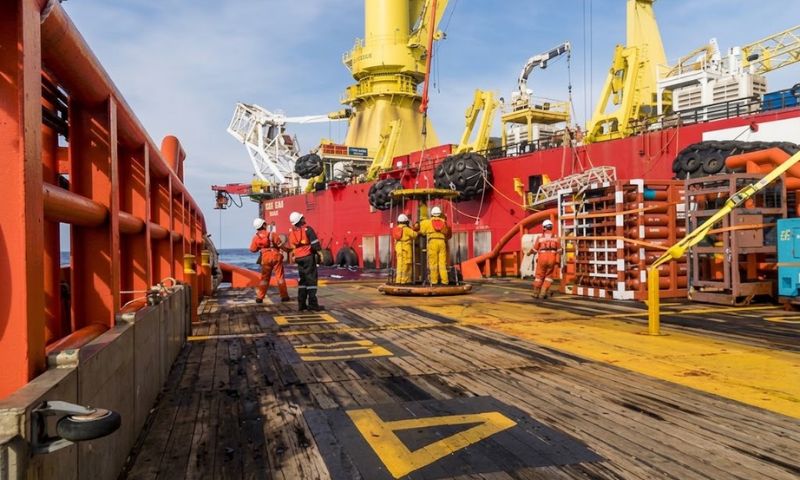
The Strait of Hormuz stays in traders’ focus for the oil market because it is a critical route for crude and refined fuel shipments from the Arabian Gulf.
Iran has said it could reopen the waterway within seven days if the United States eases military pressure and lifts its blockade on Iranian ports.
Signs that physical oil flows from the region have improved could not discount the sentimental rally triggered by President Trump’s rejection of the Iranian proposals.
Preliminary data from Kpler showed crude exports from key Middle Eastern producers rising to 12.8 million barrels per day in September, the highest level since the conflict began in February.
Shipments through the Strait of Hormuz were expected to reach about 7.4 million barrels per day this month, according to the data. Saudi Arabia and the United Arab Emirates increased exports as regional producers adjusted their shipping arrangements.
READ ALSO: Oil Prices Dip After 4pc Surge on Iran Diplomacy Hopes
Saudi Arabia also shifted some crude exports to its eastern Ras Tanura port after attacks damaged its East-West pipeline and disrupted shipments through Yanbu on the Red Sea.

The recent projectile attacks have heightened concerns about the security of oil production, pipelines, and shipping routes in the Gulf, even as crude exports have recovered from earlier disruptions.
Brent gained about 0.4 per cent last week, while WTI fell 7.9 per cent amid concerns over possible US restrictions on diesel exports. Record US diesel prices have increased inflation pressures and prompted renewed debate over limiting exports.
Any US restrictions on diesel exports could reduce supplies available to overseas markets, particularly Europe, while also affecting US refinery operations.
The oil market is therefore balancing improved physical crude flows against continuing geopolitical risks.
Any progress in US-Iran diplomacy could ease supply concerns, while renewed attacks or prolonged uncertainty over the Strait of Hormuz could keep pressure on prices.
Volatile oil swings
Oil prices have swung sharply in 2026, with geopolitical risks repeatedly overriding global supply and demand concerns.
Brent crude began the year near $61 a barrel and climbed to about $72 by late February as tensions between the United States and Iran intensified.
The conflict that began on February 28 triggered a much steeper rally as shipping through the Strait of Hormuz was disrupted. Brent briefly reached about $119.50 a barrel in March, while WTI also surged sharply.
By late March, Brent had risen about 53 per cent from its pre-war level, according to Reuters.
Prices subsequently eased as concerns over prolonged supply disruptions subsided and expectations of diplomatic contacts between Washington and Tehran emerged.
By September, Brent had again moved above $100 as attacks on regional energy infrastructure, uncertainty over Hormuz and the unresolved Iran conflict kept a geopolitical risk premium in the market.
The latest swings reflect the continuing tension between recovering physical oil flows and the risk that renewed conflict could disrupt production, exports or shipping through one of the world’s most important energy corridors.