Key Points
- WTI drops more than $1 as Strait of Hormuz remains a major supply risk
- Traders are more wary of Iran’s retaliatory statement vowing to disrupt entire Gulf trade
ISLAMABAD: Oil prices fell by more than $1 a barrel on Monday as investors took profits ahead of an expected US announcement on tougher sanctions against Iran; still, the threat of further disruption to Middle Eastern supplies kept markets highly volatile.
Brent crude futures fell $1.22, or 1.29 per cent, to $93.17 a barrel by 0035 GMT, while US West Texas Intermediate (WTI) crude declined $1.20, or 1.38 per cent, to $85.86 a barrel.
Earlier trading had put Brent at $93.45 and WTI at $86.14, showing continued price fluctuations as markets assessed the potential impact of the sanctions announcement.
The decline came after both benchmarks gained more than 5 per cent last week, marking their second consecutive weekly increase.
READ ALSO: Oil Extends Weekly Gains on Hormuz Supply Risks
The rally was driven largely by stalled US-Iran peace talks and growing concerns over oil shipments through the Strait of Hormuz, a critical energy chokepoint through which a substantial share of global oil supplies traditionally moves.
US sanctions raise Oil supply concerns
US Treasury Secretary Scott Bessent is expected to announce new measures against Iran, with Washington threatening what it has described as some of the toughest sanctions imposed on Tehran.
The measures could extend pressure beyond Iran itself and potentially target countries or companies continuing to trade with or purchase Iranian oil. Such action could tighten Iranian exports and add further uncertainty to global crude supplies.
The US Treasury’s Office of Foreign Assets Control, which administers American sanctions programmes, has already issued several recent advisories concerning Iran’s oil trade, shipping and sanctions-evasion networks.
The immediate market reaction, however, was downward as traders locked in gains following last week’s rally.
Investors are also assessing whether the new measures will actually reduce Iranian oil exports or instead intensify geopolitical risks that could eventually push prices higher.
Hormuz risk remains central to oil market
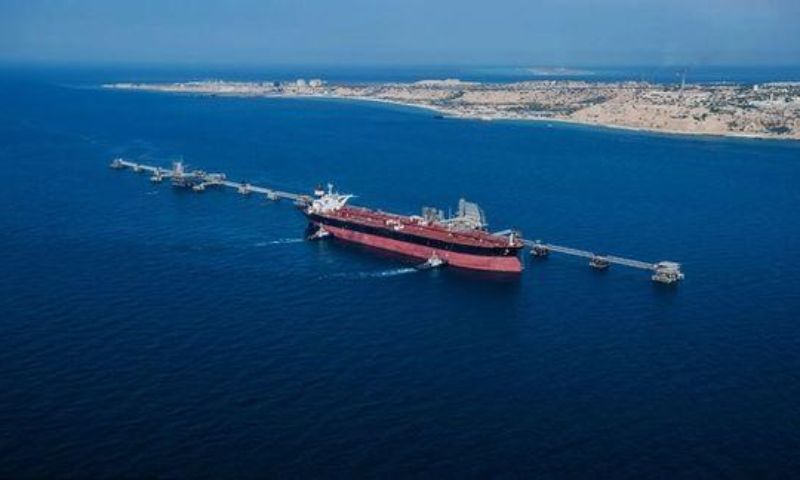
The Strait of Hormuz remains the key factor shaping the oil market outlook. The waterway connecting the Arabian Gulf with the Gulf of Oman is one of the world’s most important energy routes.
Any sustained disruption could affect shipments of crude oil, condensates and refined petroleum products to international markets.
The latest deterioration in US-Iran diplomacy has increased concerns that restrictions on shipping through the strait could become more severe.
Iran has also threatened strong retaliation against countries supporting additional US pressure.
At the same time, Iranian authorities have continued to signal that they are prepared to resist Washington’s economic campaign.
Iran’s new National Security Council head, Mohsen Rezaei, has warned that countries supporting fresh US sanctions could face serious consequences.
Iranian oil supplies under watch
Market participants are also watching Iranian crude exports, particularly shipments to China, which has remained a major destination for Iranian oil.
Trade sources have reported changes in Iranian crude offers to Chinese buyers as shipments have become more complicated.
Any significant reduction in Iranian exports could tighten global supply and provide support to prices, especially if disruptions through the Strait of Hormuz persist.
The situation creates a difficult balance for oil traders. Tougher sanctions could reduce Iranian exports and push prices higher over the medium term, but expectations of weaker demand or successful diplomatic efforts could limit the impact.
For now, traders are focused on Washington’s announcement and any indication of how broadly the new sanctions will be applied.
Oil market outlook
The latest decline does not necessarily signal a reversal of the recent oil rally. Brent remains around the $93-a-barrel level, significantly above the levels seen before the latest escalation in US-Iran tensions.
The market is likely to remain highly sensitive to developments surrounding the conflict, sanctions and shipping through the Strait of Hormuz. Any evidence of reduced Iranian exports or further restrictions on tanker movements could quickly revive buying pressure.
Conversely, signs of renewed diplomatic engagement between Washington and Tehran could ease concerns over supply disruptions and encourage further profit-taking.