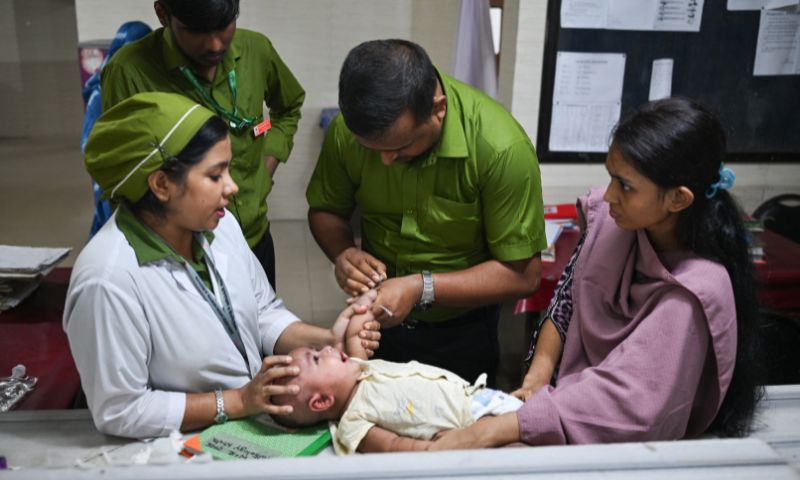
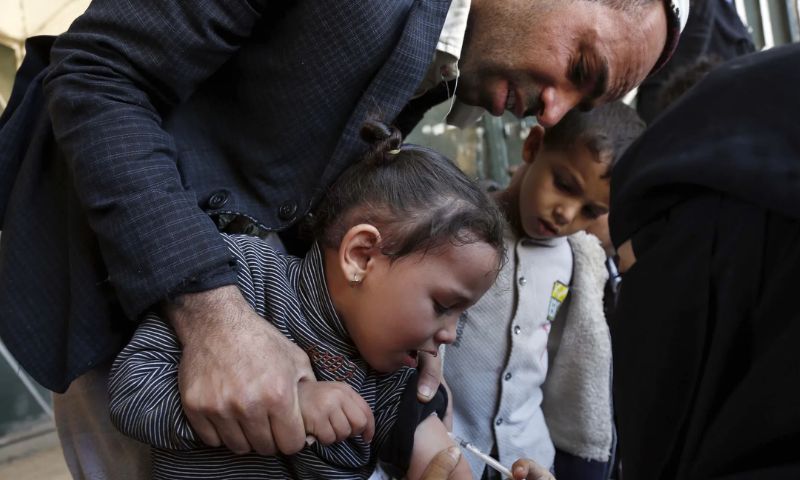
DHAKA: More than 1,000 children have died in Bangladesh’s worst measles outbreak in decades, with cases continuing to rise despite an emergency vaccination campaign that has already reached more than 19.8 million children, according to government and United Nations figures.
Around 1,000 new suspected measles cases are still being reported every day, highlighting the scale of the health crisis in the South Asian country.
According to UNICEF, Bangladesh’s government plans to move into an “intensified phase” of its vaccination campaign on September 26, targeting children who have not yet been immunised.
The outbreak marks a major setback for Bangladesh, which had made substantial progress towards eliminating measles.
The World Health Organisation (WHO) said that until March this year, the country had been making significant progress towards that goal. However, WHO data now shows that Bangladesh has recorded more measles cases than any other country so far this year.
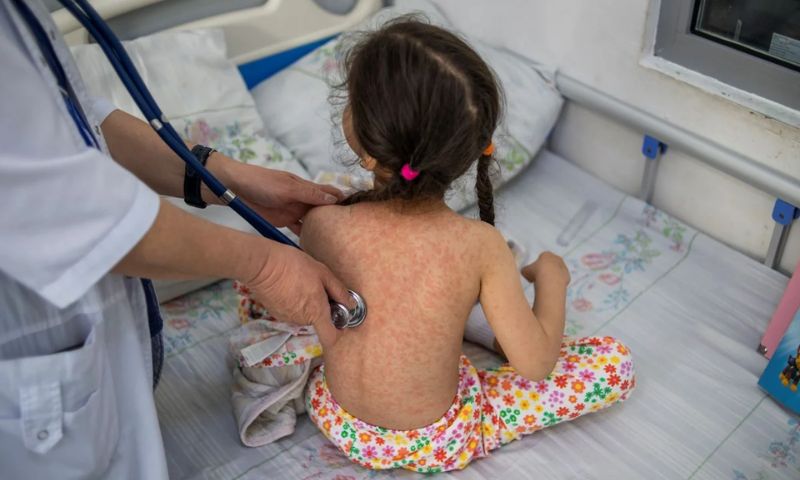
The latest government figures indicate that more than 194,000 suspected and confirmed cases have been recorded since the outbreak began to surge in March. Measles is highly contagious and spreads through respiratory droplets when an infected person breathes, coughs or sneezes.
Eight more people died with suspected measles on Tuesday alone, according to the latest figures cited in the report.
Multiple Factors
The measles outbreak intensified in March, with UNICEF describing the situation as a “perfect storm” involving several factors, including Bangladesh’s densely populated communities and disruption to routine childhood immunisation during the Covid-19 pandemic.
The country, home to about 178 million people, has also experienced years of political upheaval. Student-led protests in 2024 forced former Prime Minister Sheikh Hasina from power and were followed by an interim government led by Muhammad Yunus.
UNICEF has previously alleged that the interim government delayed ordering vaccines last year while considering new suppliers, contributing to shortages.
“We were worried about possible [vaccine] gaps increasing, and it’s unfolding into what we’re now seeing,” UNICEF spokesperson Miguel Mateos Muñoz told the BBC in June.
A former senior health ministry official under the Yunus administration, however, denied that the country had experienced a vaccine shortage.
Vaccination Campaign
Public health experts have criticised the initial emergency vaccination campaign, arguing that it did not reach enough children or cover a sufficiently wide geographical area.
According to public health expert Dr Mushtuq Husain, the campaign had left too many children unprotected and should have been expanded to more regions and age groups.
“There are no shortcuts when it comes to a response,” he said, adding that although the government had taken the decision to act, health workers needed to conduct wider door-to-door efforts to raise awareness about the urgency of vaccination.
The WHO has defended the campaign as successful while acknowledging that some target children were not reached.
“The outbreak spread nationwide before vaccination activities were implemented, creating extensive transmission chains that take time to fully interrupt,” the WHO said in a statement.
Children bear the brunt
The majority of measles cases are being recorded among children who have not been vaccinated.
According to the WHO, about 83 per cent of confirmed measles cases were among unvaccinated children. Infants younger than six months accounted for about 10 per cent of cases and are particularly vulnerable because they are generally too young to have completed routine measles vaccination.
Malnutrition is also increasing the risk of severe illness and death, with undernourished children more vulnerable to complications from measles.
The scale of the outbreak has placed Bangladesh’s already stretched healthcare system under severe pressure.
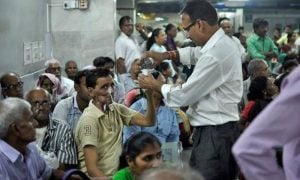
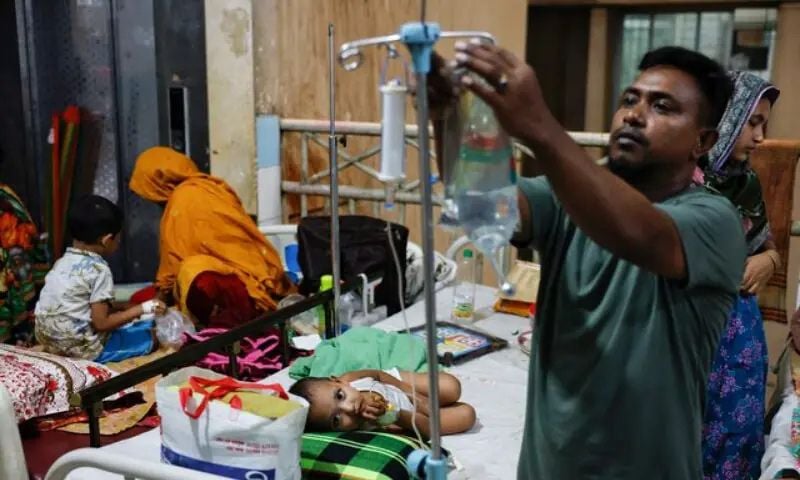
Hospitals have been overwhelmed, with families reportedly forced to wait or receive treatment in overcrowded conditions.
According to the BBC, when its reporters visited hospitals in June, dozens of families were seen lying on blankets on the floor, while one hospital said it was operating at more than twice its normal capacity.
READ ALSO: Measles Outbreak Kills More Than 500 Children in Bangladesh
At the time, the health minister acknowledged the pressure on the health system but said the government had already “met the challenge” as reported cases appeared to be declining. Since then, however, around 300 additional children have died, according to the latest figures.
Global Resurgence
Bangladesh is not the only country experiencing a measles resurgence this year, although the scale of its outbreak is particularly severe. The United Kingdom, which had previously been considered to have eliminated measles, lost that status this year following a rise in transmission. The United States has also recorded an increase in measles cases in recent years.
Public health authorities generally consider vaccination coverage of at least 95 per cent necessary to maintain herd immunity and prevent sustained measles transmission. In both the UK and the US, vaccination coverage among children under five remains below that threshold.
The developments in Bangladesh underline the continuing vulnerability of communities where routine childhood immunisation is disrupted or where large numbers of children remain unvaccinated.