NEW DELHI: Injuries sustained by several protesters during a violent crackdown on demonstrations in India’s capital are consistent with pellet gun fire, according to independent forensic and armament experts consulted by the BBC, despite the government’s refusal to confirm whether the weapons were used.
The findings follow clashes on July 20, when tens of thousands of demonstrators marched towards parliament demanding education reforms and the resignation of the education minister.
Police and paramilitary personnel used batons and tear gas to disperse protesters. Delhi Police said 60 protesters and 118 security personnel were injured, while protest organisers claimed the actual number of injured demonstrators was significantly higher.
Experts Assess Injuries
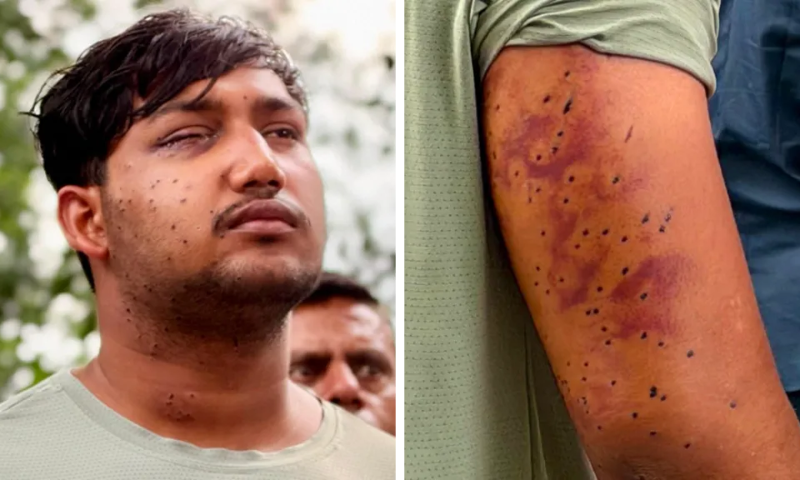
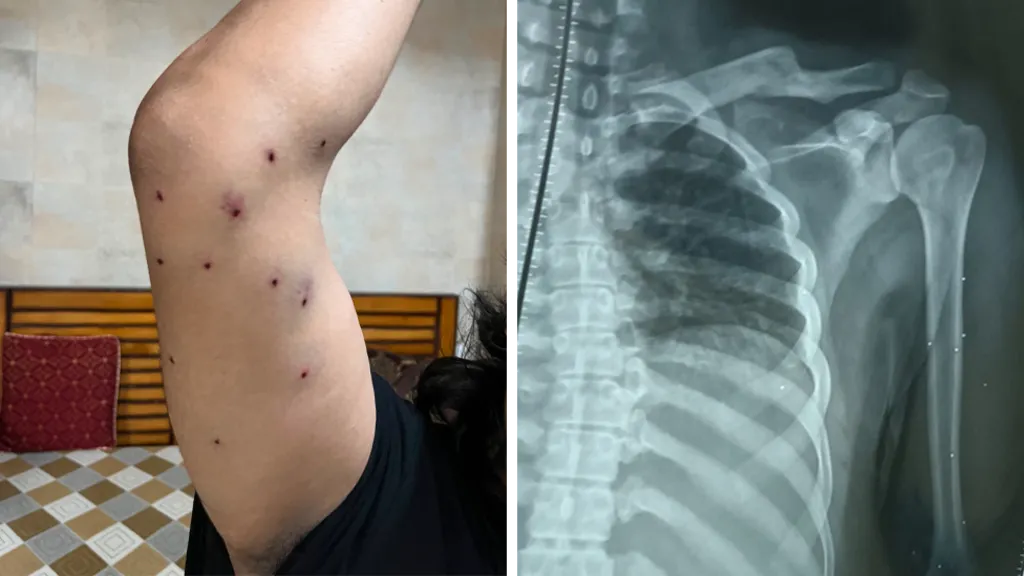
The BBC said it verified at least four cases in which protesters were treated at hospitals for injuries that experts described as consistent with birdshot fired from pellet guns.
Pellet guns fire cartridges containing hundreds of small metal pellets that spread over a wide area and can strike multiple people simultaneously. Their use for crowd control has been banned or restricted in several countries because of the risk of serious injury.
UK-based forensic ballistics expert Philip Boyce said photographs of the injuries were “definitely from a pellet gun”.
“The injuries depicted are definitely from a pellet gun,” he told the BBC.
“These pellet injuries can actually be quite devastating, especially at close range.”
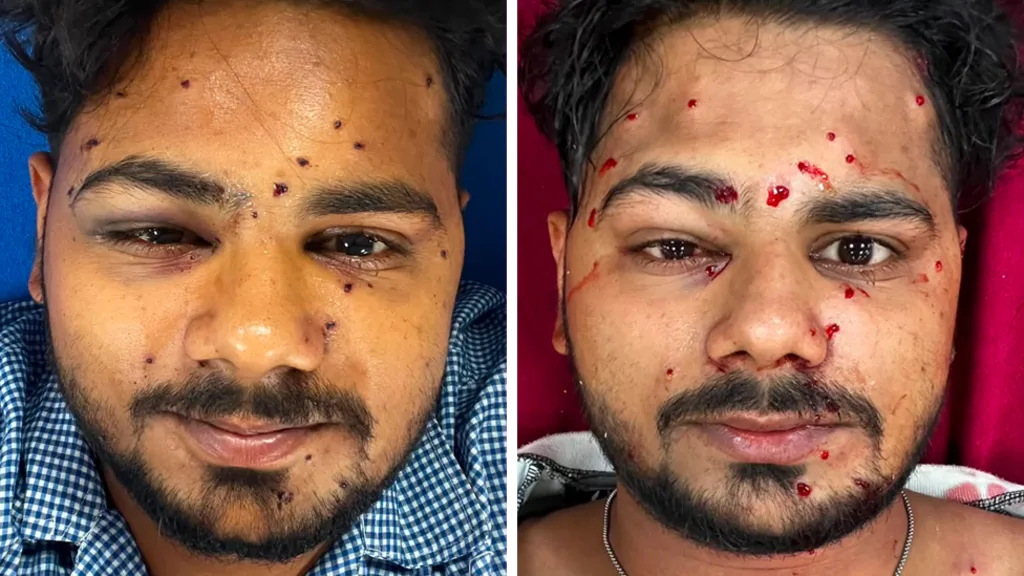
NR Jenzen-Jones, director of UK-based Armament Research Services (ARES), said photographs and videos reviewed by the BBC were “strongly consistent with the use of birdshot”.
“But these pellets are not safe. They can result in life-changing or, occasionally, life-threatening injuries,” he said.
Protesters Describe Injuries
One protester, identified only as Mohit, told the BBC he was struck while fleeing after seeing a security officer point a weapon towards demonstrators.
Medical records shared with the broadcaster showed he suffered 30 pellet wounds, while X-rays revealed several pellets embedded in his arm and upper body.
Another protester, Shaikh Irshad Mansoori, said scans showed more than 40 pellets lodged in his body after he was struck during the protest.
Doctors removed seven pellets during surgery but told him one embedded in his neck could not safely be removed.
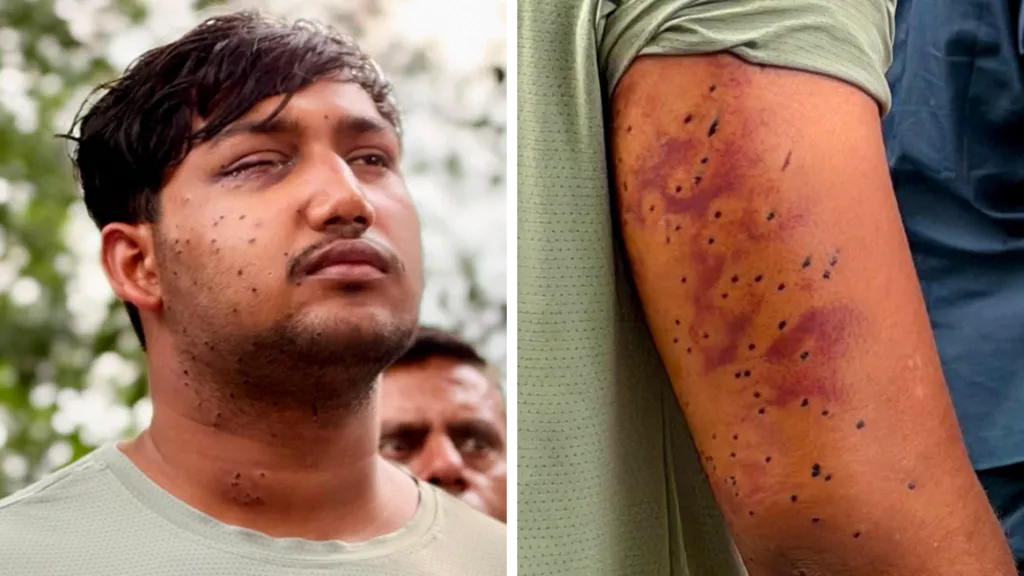
A senior hospital official confirmed Mansoori’s injuries were caused by “pellet-type small particles” but said forensic analysis would be required to determine exactly how they were fired.
Authorities Deny Using Pellet Guns
Delhi Police have dismissed reports that pellet guns were used, calling the claims “completely false and misleading” and saying the force does not possess such weapons.
Indian media have since reported that personnel from the Rapid Action Force (RAF), a unit of the Central Reserve Police Force (CRPF), may have fired the shots.
The BBC said it contacted CRPF chief Gyanendra Pratap Singh for comment but had not received a response.
Government minister Jitendra Singh later told parliament that no “bullets” were fired and that security forces had used only tear gas, but he did not specifically address allegations regarding pellet guns.
Political Fallout
Opposition leader Rahul Gandhi accused the government of using excessive force against peaceful demonstrators and demanded the dismissal of Home Minister Amit Shah, who oversees both the Delhi Police and the CRPF.
Gandhi also appeared alongside Sahil Lochab, a 19-year-old student who said he suffered severe facial injuries during the protest and could lose sight in one eye.
Lochab told the BBC he was marching with other demonstrators when he was struck by projectiles coming from the direction of security forces.
The July 20 demonstrations were organised to protest repeated examination paper leaks and demand reforms to India’s education system.