FIROZABAD, India: India’s centuries-old glassmaking hub of Firozabad is facing an unprecedented crisis as the ongoing conflict in the Middle East disrupts energy supplies and trade routes, casting a shadow over the country’s broader manufacturing ambitions.
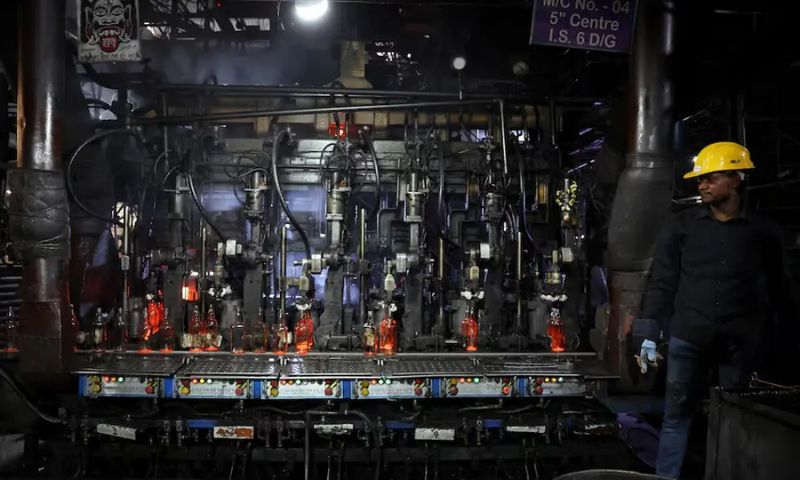
Known as India’s “Glass City”, Firozabad has long relied on uninterrupted gas supplies to power its furnaces, which must operate continuously at temperatures exceeding 1,000°C to maintain molten glass quality. However, recent gas shortages—triggered by instability in the Gulf region—have forced many units to scale down or shut operations altogether.
The consequences have been immediate and severe. Factories that once employed hundreds of workers are now operating with drastically reduced staff, while many smaller workshops have closed entirely. Workers who would typically be engaged during this peak production season are instead left idle, highlighting the human cost of the disruption.
According to Reuters, industry representatives warn that the situation could worsen if the conflict persists. A supply cut of just over 20% has already slashed production by nearly 40%, underscoring the sector’s heavy dependence on consistent energy access. Firozabad alone supports around 200,000 direct jobs, rising to half a million when ancillary roles are included.
The crisis extends beyond production. Export activity has also been hit hard, with shipments from the glass sector dropping sharply in recent weeks. Manufacturers report that orders for major international markets such as Europe and the United States are not being fulfilled, as both output and logistics face mounting challenges.
A key factor is India’s reliance on Gulf shipping routes. With rising geopolitical tensions, freight and insurance costs have surged, and some routes have become effectively inaccessible. Shipping a standard container to Europe now costs more than 60% above pre-conflict levels, while deliveries to Gulf countries have largely stalled. Goods are piling up at ports, unable to move efficiently.
The ripple effects are being felt across multiple industries. Textile exporters, machinery producers and automotive component manufacturers are all grappling with higher transport costs and disrupted supply chains. In some cases, freight charges have more than tripled, forcing businesses to suspend shipments or absorb significant financial losses to retain overseas clients.
Economists caution that India is particularly vulnerable due to its dependence on imported gas and Gulf trade corridors. Unlike oil, the country does not maintain substantial gas reserves, meaning industrial supply is often curtailed first during shortages.
The broader economic implications are concerning. India has been striving to raise manufacturing’s contribution to its GDP to 25%, up from roughly 17%. However, recent data indicates a slowdown in factory activity, with manufacturing sentiment weakening amid uncertainty and rising costs.
Industry groups estimate that a significant proportion of small and medium enterprises are now under pressure, with escalating energy, chemical and transport expenses threatening their viability. If conditions do not improve soon, the sector could face widespread closures and further job losses.
For now, manufacturers are attempting to weather the storm, often prioritising customer relationships over profitability. Yet with both energy supplies and logistics under strain, the path ahead remains uncertain—raising questions about the resilience of India’s manufacturing ecosystem in the face of global shocks.