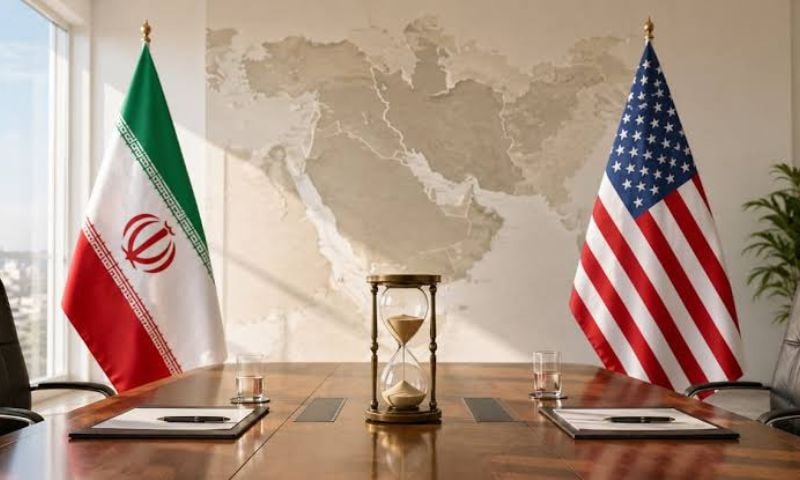
TEHRAN, Iran: The United States and Iran are currently not engaged in negotiations, but messages are being exchanged through intermediaries as mediators are trying to create conditions for a resumption of peace talks, Iranian Foreign Minister Abbas Araghchi said on Sunday.
“We currently have no negotiations with America,” Araghchi said. “Yes, messages are being exchanged through intermediaries.” “This is not called ‘negotiation’, it’s an ‘exchange of messages’,” he said.
Araghchi said intermediaries were continuing efforts to create the conditions for negotiations to resume, but Tehran would not agree to restart talks until US violations of the Islamabad Memorandum of Understanding (MoU) were addressed.
“In our view, until the violations of the Memorandum of Understanding are over and America compensates for what it has violated in the MoU, the possibility of starting negotiations again does not exist,” he said.
Iran’s Foreign Minister Abbas Araghchi:
We currently have no negotiations with America. Yes, messages are being exchanged through intermediaries.
This is not called “negotiation,” it’s an “exchange of messages.”
Intermediaries are still trying to create the grounds for… pic.twitter.com/1HfwBEyERd
— Clash Report (@clashreport) August 9, 2026
Pakistan and Qatar, which have been mediating between Tehran and Washington, have intensified diplomatic efforts to revive US-Iran negotiations under the Islamabad MoU to permanently end the conflict.
US-Iran talks making progress
On Saturday, US Vice President JD Vance said that negotiations between the US and Iran have progressed this week.
Vance said the conflict was not over, but Washington was using diplomatic, economic and military tools to secure what it considered the best outcome for the United States.
“I try to remind people we’re really in the middle of the game here. This thing is not over,” Vance said in an interview with Fox News.
“I feel quite confident we will get there, and some progress has been made in Iran talks over the last few days,” he added.
.@VP: We’re talking to the Iranians, of course. We’re trying to maximize the amount of oil and gas that is coming out of the Strait of Hormuz. We’re just trying to make sure that we get what we need out of this particular conflict. We’ve destroyed their nuclear program, we’ve… pic.twitter.com/Nqc6KHLL93
— Rapid Response 47 (@RapidResponse47) August 8, 2026
Vance said the current negotiations were focused in part on conditions that would allow the United States to “maximise oil and gas” flows through the Strait of Hormuz. He said Washington wanted Americans to benefit from lower fuel and energy prices.
“We don’t trust, we verify,” Vance said, adding that Washington expected oil and gas flows through the Gulf to return to levels seen before the geopolitical tensions.
Vance said Iran had indicated that it was prepared to allow such flows.
He rejected suggestions that Tehran was seeking to tighten its grip on the strait during the negotiations. He said active discussions were under way, including with other Gulf states, on ensuring the safe movement of shipping through the strategic waterway.
Iran, Oman close to Hormuz deal
Araghchi also said an agreement between Iran and Oman concerning the Strait of Hormuz was in its “final stages”. The agreement, however, would not immediately reopen the strategic waterway to shipping, he said.
In comments reported by Mehr news agency, Araghchi said the agreement would set out the new shipping lanes to be used once the US fulfils other conditions and the strait is reopened to traffic.
The Strait of Hormuz is a vital global energy route through which a significant share of the world’s oil and gas shipments pass.
On Saturday, Iran set preconditions for a reopening of the Strait of Hormuz, including compensation for war damages, complicating a potential deal to open the waterway essential to the world economy.
Tehran has imposed an effective blockade of the strait since the US and Israel struck Iran in late February, and wants to charge tolls for passage, attacking ships it accuses of attempting to circumvent its preferred route.
Continued attacks in the strait, which was free to transit before the war, led to the collapse of an April ceasefire. Mediators have since urged both sides to return to the terms of the Islamabad MoU signed in June between the US and Iran.
Tehran also demanded the lifting of a parallel US naval blockade of Iran, the end of sanctions, the release of frozen assets and compensation for wartime damage, Tasnim news agency reported.
Repeated Iranian attacks
The comments came as transit through Hormuz has dropped significantly, with Iran targeting ships it accuses of skirting its preferred route through Iranian waters.
The United Arab Emirates’ foreign ministry on Saturday condemned what it called a “hostile Iranian attack that targeted a tanker belonging to ADNOC (Abu Dhabi National Oil Company) with a missile while it was transiting the Strait of Hormuz, without causing casualties”.
Later on Saturday, the United Kingdom Maritime Trade Operations (UKMTO) said a ship was hit by a projectile off Oman in the Strait of Hormuz, causing a fire that was extinguished but no casualties. It was unclear whether they were referring to the same ship.
On Friday, ADNOC had put out a statement saying that since the start of the war, 15 of its vessels had been attacked in Hormuz, “including three vessels this week alone”.
Oman’s foreign ministry on Saturday condemned “repeated attacks on vessels transiting the Strait of Hormuz”, without naming Iran.
It also said that “ongoing negotiations regarding navigation arrangements in the Strait of Hormuz are proceeding in a positive and constructive atmosphere”, and urged against any actions that might jeopardise the progress.
Also Read: US-Iran Talks Making Progress as Tehran Sees ‘Best Time’ for Deal
The previous Iran-US deal — meant to serve as a jumping-off point for negotiations on a permanent settlement — had said Iran and Oman would hash out future arrangements for the strait in discussion with other Gulf countries and “in line with the applicable international law”.
International law generally forbids tolling in such waterways.
Pakistan, Qatar intensify mediation
Pakistan and Qatar had intensified exchanges of messages between Washington and Tehran.
The current pause in military operations had strengthened hopes that negotiations could resume after being derailed by fighting around the Strait of Hormuz, sources cited by Anadolu said.
Under the Islamabad MoU, the US and Iran committed to halt military operations, reopen the Strait of Hormuz to commercial shipping and negotiate a comprehensive agreement covering Iran’s nuclear programme, US sanctions and a permanent ceasefire within 60 days.
Pakistan and Qatar subsequently co-mediated the first round of high-level negotiations in Lucerne, Switzerland, on June 21.
The talks were attended by US Vice President JD Vance and Iranian Parliament Speaker Mohammad Bagher Ghalibaf.
Pakistan is the principal mediator between the US and Iran after it secured a ceasefire on April 08 and hosted the highest level of talks between the two nations on April 12 and 13 in Islamabad.
Pakistan, which brokered the ceasefire and has continued to mediate between Washington and Tehran, has urged all parties to honour the agreement.
The first round of Pakistan and Qatar mediated US-Iran talks, led by US Vice President JD Vance and Iran’s Parliament Speaker Mohammad Baqer Ghalibaf, was held in Switzerland, and Washington waived sanctions on Tehran.
After the talks, Pakistan and Qatar announced significant progress in diplomatic efforts between the US and Iran following the conclusion of the first round of high-level talks in Switzerland.