
Key points
- Kenya accuses Tata Chemicals of inadequate local investment
- Nairobi plans new investors for Lake Magadi operations
- Tata seeks regulatory resolution over disputed requirements
ISLAMABAD: Kenya has ordered Indian industrial giant Tata Chemicals to end its operations in the country over use of natural resources, local investment and the economic benefits generated by its mineral industries.
President William Ruto told Tata Chemicals Magadi to “pack up and leave”, saying the company was extracting and exporting soda ash from Lake Magadi without doing enough to develop local manufacturing, create jobs and mobilise investment for Kenya.
Ruto said the government had identified two new investors to take over the company’s operations. The action aims to develop industries that would process soda ash locally into products such as glass and chemicals.
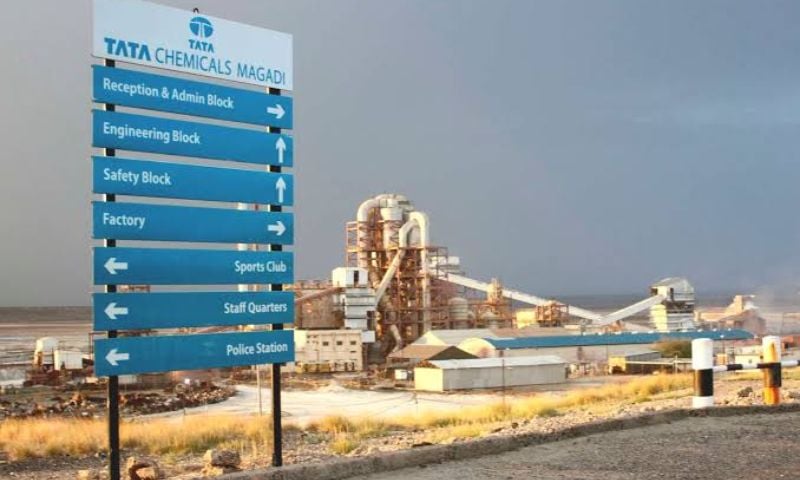
The move targets Tata Chemicals Magadi, part of India’s Tata Group, which operates at Lake Magadi about 120 kilometres southwest of Nairobi.
The company extracts trona from the lake and processes it into soda ash, a key industrial material used in glassmaking, detergents, chemicals, water treatment, textiles, paper and batteries.
Kenya demands greater local value
Ruto has made the case around an overall economic policy question: whether foreign companies extracting Kenya’s natural resources are providing enough benefits to the country and its communities.
Speaking during a visit to Kajiado County, where the Magadi plant is located, Ruto criticised Tata for operating in the area for decades without establishing significant downstream manufacturing facilities.
Kenya wanted investors to move beyond extraction and exports by establishing factories that would create employment and generate greater economic value locally.
READ ALSO: Tata Chairman’s Shocking Exit Endangers Technology Intensive Projects
The two new companies expected to take over Tata’s operations would be required to invest in downstream industries, including glass manufacturing, the president said.
“Tata Chemicals Magadi has had a contract for 100 years, and they have done nothing,” Ruto said, accusing the company of taking Kenya’s resources abroad instead of developing industries in Kajiado.
The government’s position reflects the rightful desire to increase local value addition in Kenya’s mining and natural-resource sectors, rather than relying primarily on exports of raw materials or intermediate products.
Tata’s export operation
The dispute involves a strategically important export business. Tata Chemicals Magadi is one of Kenya’s largest mineral exporters and Africa’s biggest soda ash producer.
The company exports more than 350,000 tonnes of soda ash annually to markets including India, Southeast Asia, the Middle East and other African countries.
Its 2024 accounts reported about 245,000 tonnes of soda ash sales and turnover of $78.7 million.
Kenya is the world’s fourth-largest producer of natural soda ash, accounting for about 1 per cent of global production, according to the US Geological Survey.
Soda ash, or sodium carbonate, is mainly produced from natural brines or the mineral trona.
It is an essential industrial input, particularly for glass manufacturing, and is also used in chemicals, detergents, batteries, water treatment, textiles and paper.
The scale of the Magadi operation means that an extended shutdown or change in ownership could have implications for Kenya’s mineral exports, employment, government revenues and international supply chains.
Tata Chemicals has rejected suggestions that it has failed to meet its obligations in Kenya, according to a company statement.
The regulatory dispute predates Ruto’s latest demand. About five weeks earlier, Kenya’s mining ministry directed Tata Chemicals Magadi to suspend operations, reportedly citing unpaid royalties and other regulatory requirements.
Century-old operation
The confrontation has added uncertainty to an operation with more than a century of history in Kenya.
Commercial activity at Lake Magadi dates back to 1911, and a major mining lease was signed with the Kenyan government in 1928.
Tata Chemicals took control of the operation in 2005 when it acquired Brunner Mond Group.