Key points:
- Pakistan seeks greater access to the global halal economy
- Islamic Chamber offers international business and market linkages
- Talks cover halal trade, tourism and Islamic finance
ISLAMABAD: Pakistan is seeking to expand its presence in the fast-growing global halal economy by identifying specific products, sectors and overseas markets where its businesses can compete, the Finance Division said on Friday.
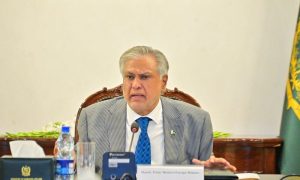
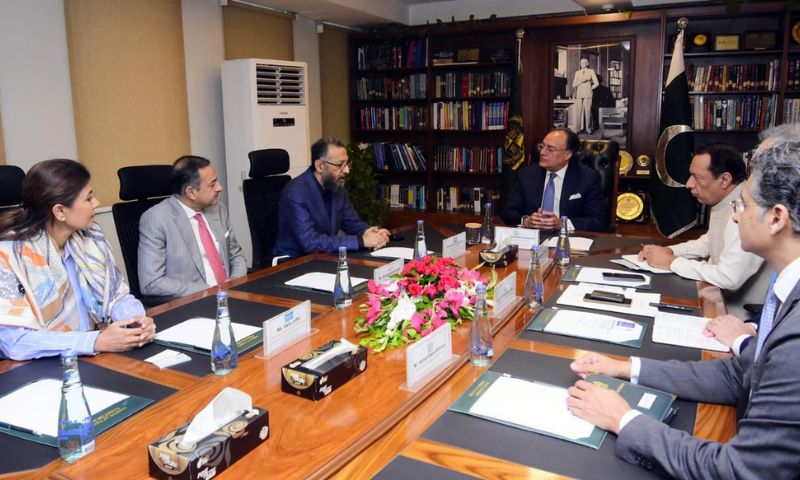
The issue was discussed during talks between Finance Minister Muhammad Aurangzeb and Shaikh Yousef Hassan Khalawi, Secretary-General of the Islamic Chamber of Commerce and Development (ICCD). Both sides intend to explore opportunities to strengthen Pakistan’s links with international business networks.
Aurangzeb said his country needed to move beyond a focus on the halal economy and identify commercially viable opportunities in specific sectors and markets.
He highlighted halal food, fashion, tourism, services and other consumer markets as areas with potential for Pakistani businesses.
Khalawi briefed the minister on the ICCD’s expanding international outreach and its engagement with business communities, including those in non-Organisation of Islamic Cooperation (OIC) countries.
He said the chamber was working to connect Muslim businesses with private-sector and institutional partners and promote greater halal economic cooperation.
READ ALSO: Halal Demand Drives 177% Rise in Pakistan’s Meat Exports to China
The global halal economy extends beyond food to pharmaceuticals, cosmetics, modest fashion, Muslim-friendly tourism and other consumer sectors.
Consumer spending across six major Islamic-economy sectors reached an estimated $2.6 trillion in 2024 and is projected to reach $3.56 trillion by 2029, according to the latest State of the Global Islamic Economy report.
Halal food remains the largest component, but demand is also expanding for halal-certified consumer products, Muslim-friendly travel and related services.
Governments and businesses are increasingly seeking to strengthen halal supply chains, certification systems and international market access.
Pakistan’s export diversification
For Pakistan, greater participation in these markets could provide an avenue for export diversification, particularly if domestic producers can meet international certification, quality and consumer-demand requirements.
The meeting also covered opportunities to strengthen the Islamic finance ecosystem and cooperation with international platforms working in Islamic economics and finance.
Khalawi shared international experiences in halal business development, sustainable tourism and Islamic economic cooperation, stressing the importance of understanding market demand and developing commercially viable offerings.
The participants also discussed international conferences, business forums and other ICCD platforms that could connect local companies with global business communities and facilitate investment, trade and exchange of ideas.
Aurangzeb welcomed the ICCD’s engagement with Islamabad and called for continued interaction with the business community to identify practical opportunities and improve connectivity between Pakistani businesses and international markets.
Global Halal economy
The global halal economy has expanded far beyond food to include pharmaceuticals, cosmetics, modest fashion, Muslim-friendly travel and media, creating a multi-trillion-dollar consumer market.
Muslim consumer spending across six halal-related sectors reached $2.6 trillion in 2024 and is projected to rise to $3.56 trillion by 2029, according to DinarStandard’s 2025-26 State of the Global Islamic Economy report.
Halal food remains the largest segment, with Muslim consumers spending an estimated $1.43 trillion on food and beverages in 2023, a figure projected to reach $1.94 trillion by 2028.
Pakistan, despite its large Muslim population, has captured only a small portion of this market. The country’s share of global halal food trade has been estimated at around 0.25 per cent, according to a government-backed report in 2025.
A Pakistan Small and Medium Enterprises Development Authority (SMEDA) sector study puts Pakistan’s share at about 0.4 per cent, concentrated largely in meat.
The gap reflects weaknesses in international certification, cold-chain infrastructure, processing and export-oriented halal value chains. Pakistan has therefore been seeking to expand halal meat exports and establish internationally recognised certification arrangements.