NEW DELHI: The ongoing Iran war has significantly widened India’s trade deficit, with rising oil prices and supply disruptions across the Middle East increasing pressure on the country’s economy and currency.
Official data released on Thursday showed India’s merchandise trade deficit climbed to $28.38 billion in April, compared to $20.67 billion in March.
Oil imports surge amid Middle East tensions
The sharp increase was mainly driven by rising crude oil imports as global energy markets remained volatile because of the prolonged Iran conflict.
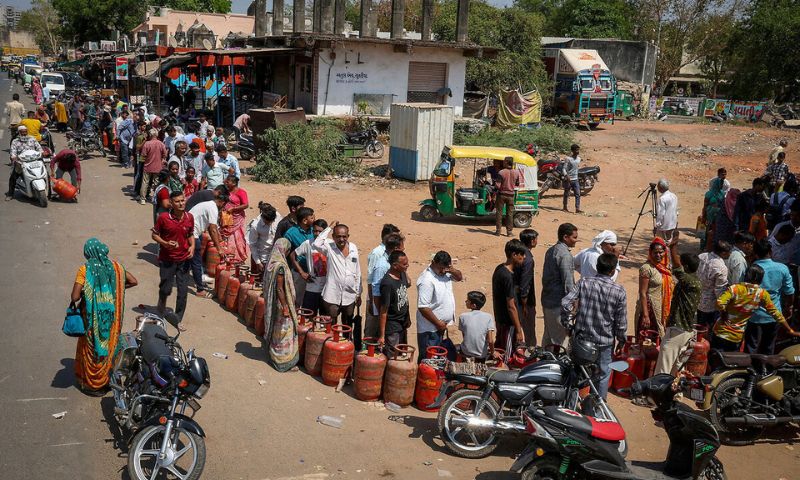
India, the world’s third-largest oil importer, relies on foreign supplies for more than 80 per cent of its crude requirements and around 60 per cent of its cooking gas needs.
Oil imports surged by 53 per cent in April, rising to $18.63 billion from $12.18 billion the previous month.
Global crude prices have climbed to nearly $120 per barrel since the war involving Iran intensified in late February.
The conflict has disrupted shipping routes and increased concerns over energy supplies passing through the Strait of Hormuz, a key global oil transit route.
Imports hit six-month high
India’s overall imports jumped to a six-month high of $71.94 billion in April, compared to $59.59 billion in March.
At the same time, exports rose to $43.56 billion, supported by strong shipments of electronics, engineering goods and petroleum products.
However, economists warned that export growth may not be enough to offset rising import costs.
Gold imports also increased sharply by 84 per cent to $5.63 billion despite tighter government regulations and higher tariffs on precious metals.
Rupee falls to record low
The widening trade gap added fresh pressure on the Indian rupee, which slipped past 96 against the US dollar for the first time.
Indian Prime Minister Narendra Modi has urged fuel conservation measures, restrictions on unnecessary travel and tighter control of imports to protect foreign exchange reserves.
State-owned fuel retailers also raised petrol and diesel prices this week for the first time in four years.
Analysts say prolonged instability in the Middle East could further weaken India’s economy by increasing inflation, raising import costs and putting additional pressure on public finances.