Key Points
- Air defences activated in both Israel and Kuwait to intercept incoming threats
- Iran warns escalation will turn the entire region into a “hell”
- Strait of Hormuz tensions raise fears of global oil supply disruption
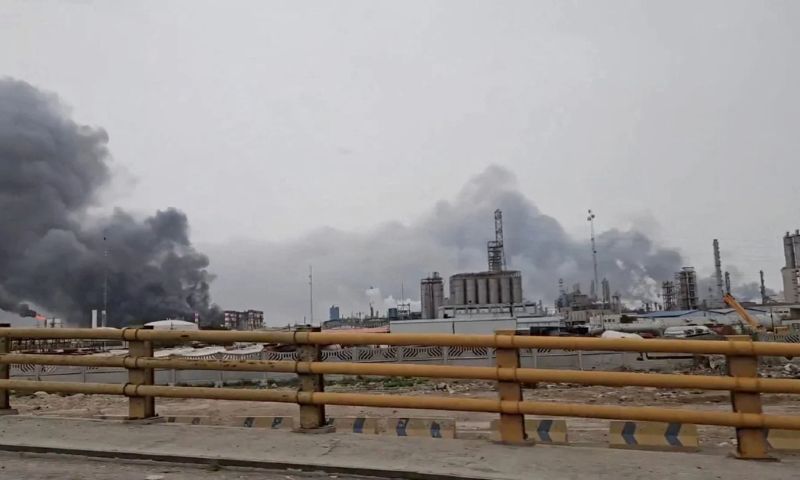
- Suspected US-Israeli strike kills five at Iranian petrochemical facility
- Conflict enters second month with widening regional spillover
- Diplomatic efforts stall as rhetoric intensifies on both sides
DUBAI: Iran launched a fresh wave of missile and drone attacks targeting Israel and Kuwait early Sunday, sharply escalating an already volatile regional conflict, just hours after Donald Trump issued a stark 48-hour ultimatum demanding Tehran strike a deal or face severe consequences.
According to AFP quoting officials in both Israel and Kuwait, air defence systems were activated to intercept incoming projectiles as the attacks unfolded. The latest strikes form part of a broader war that erupted more than a month ago following joint US-Israeli bombardments on Iranian targets, prompting sustained retaliation from Tehran.
The rapidly intensifying conflict has spread across the Middle East, destabilising multiple fronts and rattling global markets. Iran has maintained pressure on key economic chokepoints, particularly the strategically vital Strait of Hormuz, while continuing to target infrastructure in Gulf states it accuses of supporting US and Israeli operations.
In a sharply worded response to Washington’s ultimatum, Iranian military leadership rejected what it described as coercive diplomacy. Senior officials warned that any further escalation would trigger severe consequences, declaring that the “entire region will become a hell” for their adversaries.
President Trump, writing on his Truth Social platform, reiterated his warning, stating that time was running out for Tehran to comply. He referenced an earlier demand for Iran to reopen the Strait of Hormuz, adding that failure to act within 48 hours would result in overwhelming military action.
Meanwhile, retaliatory strikes have continued on both sides. An attack attributed to US or Israeli forces on a petrochemical facility in Iran’s southwestern Khuzestan province reportedly killed at least five people, underscoring the intensifying cycle of action and reprisal.
The conflict has increasingly drawn in neighbouring states, with Kuwait now directly impacted by Iranian strikes. Regional observers warn that the widening theatre of war risks engulfing additional countries, while also threatening global energy supplies due to disruptions in oil transit routes.
With no immediate signs of de-escalation, diplomatic efforts appear stalled, and fears are mounting that the confrontation could spiral into a broader regional war with far-reaching geopolitical and economic consequences.