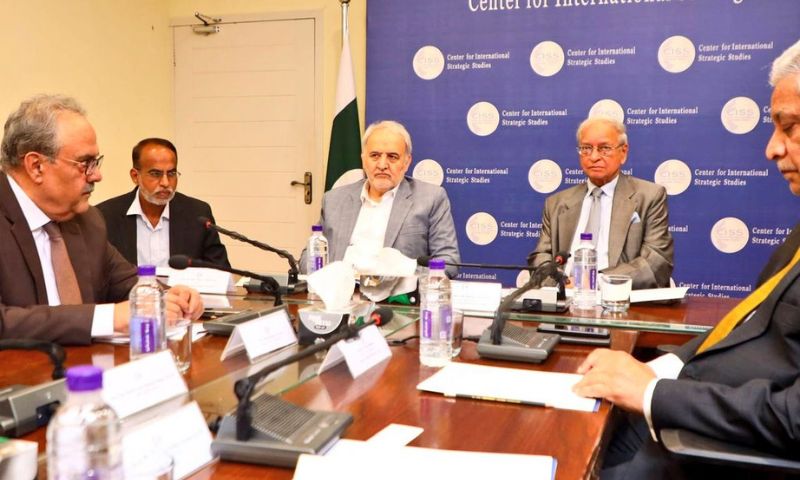
ISLAMABAD: Iran’s ambassador to Pakistan, Reza Amiri Moghadam, said the ongoing conflict involving the United States and Israel could lead to new political alignments in the region and potentially reshape the regional order after the war ends.
Speaking at a roundtable hosted by the Centre for International Strategic Studies in Islamabad, the envoy said Iran viewed its relationship with Pakistan as a priority despite maintaining ties with other regional countries, including India.
He said Tehran had consistently pursued friendly relations with neighboring states but believed the current war could weaken US influence in the region and deepen Israel’s isolation.
𝐂𝐈𝐒𝐒 𝐄𝐯𝐞𝐧𝐭 𝐇𝐢𝐠𝐡𝐥𝐢𝐠𝐡𝐭𝐬 | 𝐃𝐢𝐬𝐜𝐮𝐬𝐬𝐢𝐨𝐧 𝐨𝐧 𝐏𝐚𝐤-𝐈𝐫𝐚𝐧 𝐑𝐞𝐥𝐚𝐭𝐢𝐨𝐧𝐬 𝐰𝐢𝐭𝐡 𝐈𝐫𝐚𝐧𝐢𝐚𝐧 𝐀𝐦𝐛𝐚𝐬𝐬𝐚𝐝𝐨𝐫
The Center for International Strategic Studies (CISS), Islamabad hosted a roundtable discussion with 𝐇.𝐄. 𝐃𝐫. 𝐑𝐞𝐳𝐚… pic.twitter.com/USYfRwzKE1
— CISS (@CISS_Islamabad) May 8, 2026
The ambassador said Pakistan-Iran relations had strengthened significantly and raised the possibility of a broader regional alliance involving Iran, Türkiye, Saudi Arabia, Egypt, and Pakistan after the conflict ends.
Moghadam also thanked Pakistan for what he described as steadfast support during difficult times and for facilitating contacts between Washington and Tehran.
He reaffirmed that Iran would never allow its territory to be used against Pakistan.
𝐂𝐈𝐒𝐒 𝐑𝐨𝐮𝐧𝐝𝐭𝐚𝐛𝐥𝐞 | 𝐃𝐢𝐬𝐜𝐮𝐬𝐬𝐢𝐨𝐧 𝐨𝐧 𝐏𝐚𝐤-𝐈𝐫𝐚𝐧 𝐑𝐞𝐥𝐚𝐭𝐢𝐨𝐧𝐬 𝐰𝐢𝐭𝐡 𝐈𝐫𝐚𝐧𝐢𝐚𝐧 𝐀𝐦𝐛𝐚𝐬𝐬𝐚𝐝𝐨𝐫
The Center for International Strategic Studies (CISS), Islamabad hosted a roundtable discussion with 𝐇.𝐄. 𝐃𝐫. 𝐑𝐞𝐳𝐚 𝐀𝐦𝐢𝐫𝐢… pic.twitter.com/ngYea8IO7o
— CISS (@CISS_Islamabad) May 8, 2026
Former Pakistani ambassador Asif Durrani said the Chabahar and Gwadar ports should be treated as complementary projects rather than rivals.
He said Gwadar could serve as a “mother port” supporting broader regional connectivity and trade integration.
Durrani added that Pakistan’s diplomatic strategy aimed to maintain engagement with the United States while preserving close ties with Iran.
He described Islamabad’s policy as a calibrated effort focused on de-escalation, extending the ceasefire, and pursuing a lasting settlement while safeguarding regional stability and economic security.
Nazir Hussain is a Pakistani academic and foreign policy analyst, said Pakistan and Iran shared deep historical and cultural ties and had recently expanded coordination in border trade and institutional cooperation.
He added that significant untapped potential remained in energy, trade, and regional connectivity.
Earlier, Executive Director of CISS Ali Sarwar Naqvi said Pakistan played a constructive role in helping facilitate a ceasefire between the United States and Iran on April 7, followed by direct bilateral talks days later after decades of strained relations.
Naqvi said Pakistan continued mediation efforts following the extension of the ceasefire and remained committed to supporting regional peace initiatives.