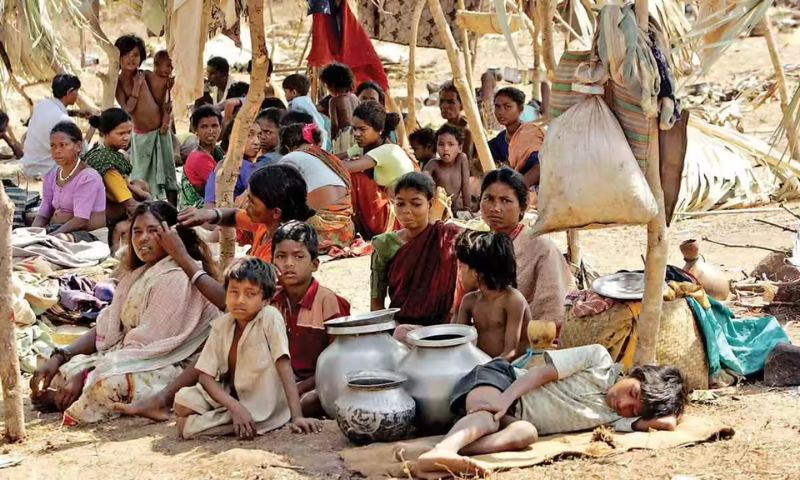
NEW DELHI: The conflict between the United States, Israel and Iran in West Asia could push up to 2.5 million people in India into poverty, as surging energy and food prices strain household incomes and public finances, according to a United Nations report.
The United Nations Development Programme (UNDP), in a report titled “Military Escalation in the Middle East: Human Development Impacts Across Asia and the Pacific”, warned that the conflict is widening economic pressures across the region.
“The shock is diminishing household purchasing power, raising food insecurity, straining public budgets, and weakening livelihoods,” the report said.
The preliminary assessment, issued on Tuesday, estimates that up to 8.8 million people globally could fall into poverty due to the crisis.
The UNDP report added that the economic cost to Asia-Pacific could reach as high as $299 billion.
India faces rising poverty
In India, poverty is projected to rise sharply. The report estimates that about 2,464,698 additional people could fall into poverty, increasing the poverty rate to 24.2 per cent from 23.9 per cent.
The total number of people living in poverty in the country could rise to around 354 million, compared with approximately 351.6 million before the crisis.
The UNDP noted that South Asia would account for the largest share of the global increase in poverty, ranging from about 1.7 million to over 8 million people across scenarios.
Heavy energy dependence increases risks
The report highlighted India’s reliance on energy imports as a key risk factor. India meets over 90 per cent of its oil demand through imports, with more than 40 per cent of crude oil and around 90 per cent of liquefied petroleum gas sourced from West Asia.
West Asian countries also supply over 45 per cent of India’s fertiliser imports, while about 85 per cent of domestic urea production depends on imported regasified liquefied natural gas.
Disruptions around the Strait of Hormuz could further drive up costs.
Raw material prices for medical devices in India are expected to rise by around 50 per cent, while wholesale medicine prices have already increased by 10–15 per cent, the report said.
Employment and growth under pressure
The economic shock is expected to affect employment, particularly in sectors dependent on imported inputs and Gulf-linked trade.
“In India, employment risks are likely to be especially pronounced in MSME-intensive sectors,” the report said.
The report noted that about 90 per cent of the workforce is employed in the informal sector.
Rising liquefied natural gas prices have also led several countries, including India, to increase reliance on coal-fired power generation.
Human development setback
The UNDP simulation indicates that India could lose between 0.03 and 0.12 years of Human Development Index (HDI) progress due to the crisis.
“Iran’s HDI could decline by an amount equivalent to roughly one to one-and-a-half years of human development progress,” the report said, adding that other regional economies would also face setbacks, though to a lesser extent.
Kanni Wignaraja, UN Assistant Secretary-General and UNDP Regional Director for Asia and the Pacific, said the crisis also presents an opportunity for long-term reforms.
“We see important opportunities for countries to accelerate long-term resilience through adaptive social protection, stronger local and regional value chains, and diversified energy and food systems,” she said.
Pakistan steps up diplomatic efforts
Amid the devastating impacts of the conflict, Pakistan has intensified diplomatic efforts to promote de-escalation and dialogue between the United States and Iran.
The US and Iran agreed to a 14-day ceasefire on April 8 at Pakistan’s request.
This was followed by Pakistan-mediated high-stakes historic direct talks between US and Iranian representatives in Islamabad on April 11.
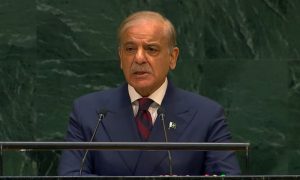
Prime Minister Shehbaz Sharif said Pakistan would continue its “earnest efforts” to support a negotiated resolution, emphasising that sustained dialogue remains essential to prevent further escalation.
He expressed hope that both sides would honour the ceasefire and move towards a comprehensive agreement, adding that a second round of talks is expected in Islamabad aimed at achieving a “permanent end” to the conflict.
Sources said efforts are underway to encourage Iran’s participation in the next round of talks in Islamabad while urging the United States to ease tensions.