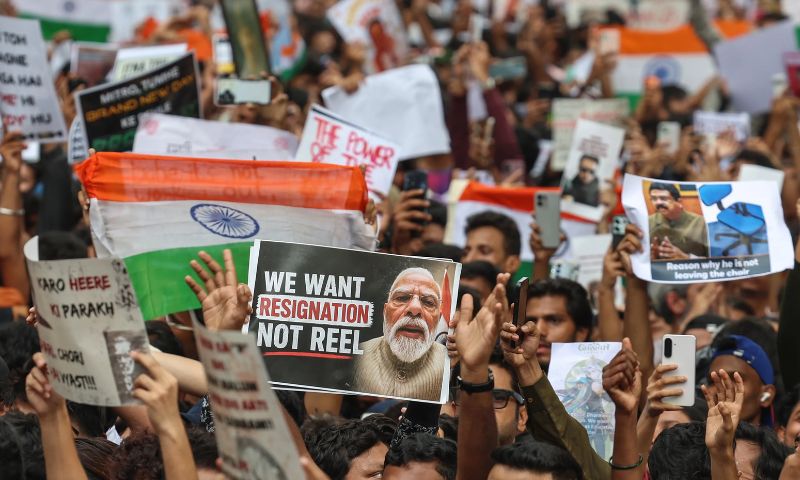
NEW DELHI: Youth-led protests over manipulation of India’s electoral rolls are mounting pressure on Prime Minister Narendra Modi’s government, with demonstrators continuing to challenge the authorities despite arrests, restrictions and a crackdown.
The protests have centred on a nationwide voter-registration review that has removed about 130 million names from electoral rolls. Opposition parties and activists say the exercise risks disenfranchising eligible voters to benefit Modi’s ruling Bharatiya Janata Party (BJP).
The Election Commission of India says the Special Intensive Revision (SIR) is intended to remove deceased, duplicate and otherwise ineligible entries, including voters officials could not trace. However, opposition questions whether the process has disproportionately affected poor and marginalised communities, including Muslims.
Demonstrators have demanded the resignation of Chief Election Commissioner Gyanesh Kumar. The youth-led Cockroach Janta Party (CJP) has emerged as a prominent voice in the campaign against Modi’s government.
The authorities have imposed restrictions on gatherings in New Delhi and detained protest leaders. A magistrate extended the detention of CJP activists Ashutosh Ranka and Saurav Das by two days on Monday.
Youth Movement Defies Crackdown
CJP founder Abhijeet Dipke had challenged Modi before joining a protest last week, saying he expected police might detain him but would not be deterred.
“I know that I can be picked up anytime tonight or tomorrow,” Dipke said at a press conference. “We aren’t afraid of this type of thing… come and get me.”
On October 10, police and paramilitary forces imposed tight security in parts of New Delhi to prevent youth-led demonstrations against the voter-roll revision. Police detained activists and movement leaders as they sought to join protests in the capital.
Despite the restrictions, demonstrators gathered in the streets. Thousands were detained and some protesters were beaten by police.
A march on October 12 brought together opposition politicians, student leaders and civil society activists.
The CJP began as an online joke in May after India’s Chief Justice Surya Kant likened unemployed young people to cockroaches. The movement subsequently developed into a youth-led protest group.
In July, the CJP helped lead a sit-in that ended with the resignation of Education Minister Dharmendra Pradhan on July 25. The movement’s earlier success gave it a prominent role in protests against the government.
Electoral Roll Review Under Scrutiny
The current campaign centres on the SIR, which has been conducted across much of India. The Election Commission says the review seeks to remove entries belonging to deceased people, those who have relocated, duplicate registrations and voters officials have been unable to trace.
Opposition parties and activists argue that the deletions could include eligible citizens and disproportionately affect disadvantaged communities. They have also questioned the process for restoring names to the rolls, particularly for people who lack older official documents.
The scale of the deletions has intensified scrutiny of the Election Commission’s independence. Critics have questioned the role of Kumar in favouring the BJP.
In an interview with TIME, historian and novelist Mukul Kesavan said the latest demonstrations differed from the CJP’s earlier protests because established opposition parties had helped organise a major march on October 12.
Kesavan said the earlier sit-in had created space for dissent by forcing the government to back down. He argued that the authorities had since shifted towards preventive detention to stop large groups of demonstrators gathering in public places.
He also questioned the Election Commission’s impartiality, arguing that changes to the process for appointing election commissioners had weakened confidence in the institution.
The protests began on October 2 and have continued despite restrictions on gatherings in New Delhi.
Major Challenge for Modi
The demonstrations have become a major challenge to Modi’s government, which has been in power since 2014. The BJP failed to secure a parliamentary majority on its own in the 2024 general election but retained power through a coalition.
Opposition leaders say the electoral-roll controversy goes beyond party politics and concerns citizens’ right to vote. They have called for Kumar’s removal and changes to the Election Commission.
Opposition leaders argued that the government had failed to provide clear figures showing how many deleted voters were foreign nationals. They questioned why the authorities had not published evidence to support claims that the revision was needed to remove illegal immigrants.
Questions Over Modi’s Political Standing
The protests have also prompted debate about whether the movement could weaken Modi’s political authority.
Kesavan told TIME that the demonstrations had challenged the image of authority surrounding the prime minister, particularly among younger protesters. He cautioned, however, that the political impact would be difficult to assess until the next election.
He said opposition parties would need to translate public mobilisation into votes if they wanted to turn the protests into a lasting political challenge.
The demonstrations have drawn people from different backgrounds, including students, professionals, families and established political activists. Supporters say the breadth of participation reflects concerns that extend beyond electoral procedures to jobs, education, civil liberties and the right to protest.