


ISLAMABAD: A former Indian Army officer has exposed Bollywood’s war films as “unreal” and “hugely one-sided” propaganda tools designed to manufacture hypernationalism and shield India’s military from scrutiny, as Pakistan’s ISPR simultaneously dismantles cinematic lies surrounding Operation Sindoor.
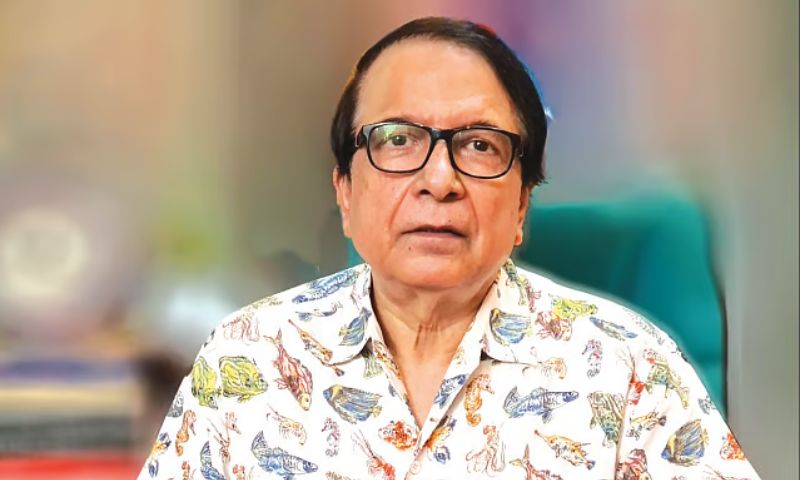
In a candid critique from within India’s own defence establishment, former Indian Army officer and defence analyst Pravin Sawhney has condemned Bollywood’s war films depicting India-Pakistan conflicts as “unreal” and “hugely one-sided,” arguing that they are systematically being used to manufacture hypernationalism and shield the military establishment from public scrutiny.
I don’t watch movies on India’s wars with Pakistan. However, I do read a few posts, reviews & video clips on X. For one who understands these wars, all such movies are unreal, hugely one sided with major shortcomings.
I do understand why they are made: to show Indian military is…— Pravin Sawhney (@PravinSawhney) August 18, 2026
His remarks have reignited a fierce debate about the weaponisation of cinema for political propaganda in India, as Pakistan’s military media wing separately exposes cinematic distortions surrounding the recent Operation Sindoor conflict.
Sawhney, whose X profile identifies him as a former Indian Army officer and author of several books on defense and security, said he does not watch movies based on India’s wars with Pakistan but follows posts, reviews and video clips related to them. “For one who understands these wars, all such movies are unreal, hugely one-sided with major shortcomings,” Sawhney wrote on X.
He said he understood why such films were being produced, arguing that they sought to portray the Indian military as superior to Pakistan’s armed forces, instill hypernationalism and indirectly convey that the military was above questioning. “To do so would tantamount to sacrilege,” he said.
Sawhney further argued that many Indians had been living in a “fantasy world” for the past 12 years, while those who challenged the prevailing narrative were now labelled “Dimagi Naxals”.
“Folks, wake up from slumber. Times are changing, & pretty fast,” he wrote, adding that he expected things to change “for GOOD, before 2029”.
Pakistan’s military has slammed an Indian documentary on “Operation Sindoor” as a highly dramatized and factually inaccurate account, calling it both a tragedy and a comedy at the same time. pic.twitter.com/tHb6d3KOld
— Pakistan TV Digital (@PakistanTVcom) August 18, 2026
Bollywood’s propaganda machine exposed
Sawhney’s critique comes amid growing international and domestic condemnation of Bollywood’s role in promoting jingoistic narratives through war films.
Academic research has documented how popular Hindi cinema has become integral to the political aesthetics of Narendra Modi’s India, with cinematic narratives increasingly mobilised to manufacture affect, stabilise nationalist truth claims, and pre-empt journalistic or historical scrutiny.
Read Also: India’s Cinematic Rewrite of Marka-e-Haq Cannot Alter Pakistan’s Battlefield Success
Similarly, film critic and author Anupama Chopra described the recent spy thriller Dhurandhar as an “exhausting” watch packed with “too much testosterone, shrill nationalism and inflammatory anti-Pakistan narratives”.
Indian journalist Arfa Khanum Sherwani also called out the film for what she described as heavy-handed political messaging, accusing the director of packing it with “Sangh propaganda”.
The film, loosely based on the Lyari gang war, depicts Pakistani politicians as corrupt and links them to gangster figures, while portraying Indian forces as heroic saviours. Pakistani content creators noted that while some elements of corruption were accurate, the broader narrative served as thinly veiled propaganda.
Critics have pointed out that Dhurandhar is part of a worrying trend where Bollywood has abandoned nuanced storytelling in favour of polarising narratives. As one user noted, the film “is the natural evolution of the many other propaganda films produced in recent years, but when propaganda starts looking like a spy blockbuster with catchy songs, people forget to question it”.
Historians and filmmakers speak out
The trend of cinematic distortion has not gone unnoticed within India’s own intellectual circles. Indian historian and filmmaker have previously criticised how mainstream Hindi films are largely reflective of state ideology, although to varying degrees and at times in spite of themselves.
A notable exception cited is the low-budget film Kya Dilli Kya Lahore, which completely subverts the dominant ideology through its sensitive but incisive critique of the border.
𝐓𝐡𝐞 𝐑𝐞𝐚𝐥𝐢𝐭𝐲 𝐚𝐛𝐨𝐮𝐭 #𝐃𝐡𝐮𝐫𝐚𝐧𝐝𝐡𝐚𝐫𝟐
𝐇𝐨𝐰 𝐭𝐡𝐞 𝐛𝐫𝐚𝐢𝐧𝐬 𝐨𝐟 𝐩𝐞𝐨𝐩𝐥𝐞 𝐢𝐧 𝐭𝐡𝐢𝐬 𝐜𝐨𝐮𝐧𝐭𝐫𝐲 𝐚𝐫𝐞 𝐛𝐞𝐢𝐧𝐠 𝐝𝐞𝐥𝐢𝐛𝐞𝐫𝐚𝐭𝐞𝐥𝐲 𝐭𝐚𝐢𝐧𝐭𝐞𝐝 𝐚𝐧𝐝 𝐰𝐡𝐢𝐭𝐞 𝐰𝐚𝐬𝐡𝐞𝐝!!!!
Listen for yourself, carry out basic searches and… pic.twitter.com/EdlY8oKHF0
— 𝐒𝐢𝐝𝐝 (@sidd_sharma01) August 17, 2026
Dhurandhar 2: The ugly face of hate propaganda
The sequel Dhurandhar 2 has drawn even sharper criticism for its overtly Islamophobic and hateful narrative. Critics note that such films not only incite communal hatred but also serve as political tools to legitimise the ruling Bharatiya Janata Party’s ideology. The director of Dhurandhar was even accused of “packing the film with Sangh propaganda” and told he might as well “join the BJP”.
Read Also: Beyond the Screen: How Bollywood’s Movie ‘Dhurandhar’ Exposes India’s Propaganda Machine
Dr. Shashi Tharoor, the Congress MP and noted author, has consistently criticised the rise of jingoism in India, including its manifestation through Bollywood films.
He has lamented that India is distracted by “celebrating cinematic fantasies” while losing on the world stage. His broader critique of this trend connects the hypernationalism seen in films like the blockbuster Dhurandhar 2 to a dangerous form of jingoism that he sees as a threat to India’s democratic and pluralistic fabric, arguing that patriotism cannot be forced.