KEY POINTS
- ‘Dhurandhar’ shatters box office records while peddling stylised violence and historical revisionism as patriotic truth
- The Economist confirms the film as undisguised propaganda, not for the government, but for Narendra Modi himself
- Pakistan is systematically dehumanised, reduced to a caricature of evil while its real sacrifices against terrorism are erased
- Indian cinema has abandoned art for propaganda, manufacturing consent for a worldview built on vengeance, not peace
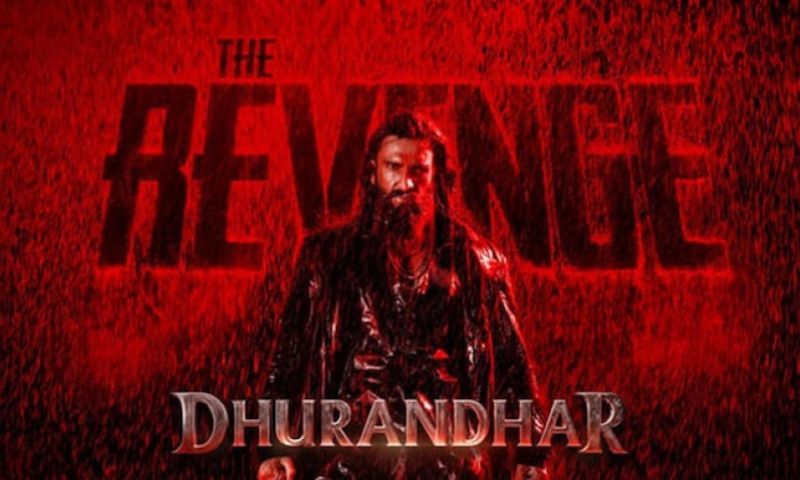
ISLAMABAD: What happens when a nation’s cinema stops reflecting reality and starts manufacturing it? “Dhurandhar: The Revenge,” a four-hour action spectacle now dominating Indian cinema screens, offers a troubling answer.
The film has become a cultural phenomenon, shattering box office records while peddling a vision of India that exists only in the realm of fantasy, one where historical grievances are settled with stylised violence and neighbouring Pakistan is reduced to a caricature of evil.
The Economist recently posed a provocative question about this cinematic sensation: Is Bollywood’s latest megahit propaganda for Narendra Modi? After watching the film, the answer appears to be an unequivocal yes.
Fever dream of violence and revisionism
Imagine a film that combines the body count of “John Wick,” the gleeful gore of “Kill Bill,” and the historical revisionism of “Inglourious Basterds.”
Add a soundtrack of remixed retro bangers, remove any trace of editorial restraint, and consume it under the influence of excessive caffeine, nicotine, and amphetamines.
That is The Economist’s description of watching “Dhurandhar: The Revenge.” The film is on track to become the highest-grossing Bollywood movie at the domestic box office, a testament to its resonance with Indian audiences.
The plot, stretched across a combined 7.5 hours, can be summarised in a single paragraph. In the first instalment, an Indian spymaster dispatches an undercover agent to infiltrate criminal gangs in Karachi, Pakistan’s largest city, portrayed as the epicentre of terrorism against India.
In the second, the agent enacts bloody revenge for a litany of historical grievances: the 1999 hijacking of an Indian Airlines plane, the 2001 Parliament attack, and the 2008 Mumbai siege. The message is clear: India has finally found its strength, and it is one built on retribution.
Dhurandhar is pure propaganda. Aditya Dhar twisted real life events to favor Modi. Even ignoring that, the film is a mess, full of sloppy direction in the second half, and adds nothing new to cinema. Not even close to the top 1,000 Indian movies. #Dhurandhar2 is a piece of shit https://t.co/1WpCzsfLVI
— ϯαηѵεεɾ (@KindaSabrful) March 25, 2026
Catharsis built on caricature
The film’s success, The Economist notes, is driven by two emotions: exhilaration at stylised ultraviolence and a deep sense of catharsis.
For a country that cannot even carry out an assassination in Canada without being exposed, “Dhurandhar” offers a fantasy of capabilities that would make Mossad look like amateur enthusiasts.
But this catharsis comes at a cost. It requires the dehumanisation of Pakistan and its people, reducing them to caricatures of villains in a simplistic morality play.
The trailer sets the tone with a Pakistani terrorist sneering that “Hindus are a very cowardly people.”
The film then spends four hours proving him wrong, not through nuanced storytelling, but through relentless bloodshed.
Pakistan is not merely the enemy; it is the canvas upon which India paints its newfound muscular identity.
Yet, what this film fails to acknowledge is that real-world Pakistan is not the lawless land of Bollywood imagination.
It is a nation that has suffered immensely from terrorism itself, having lost tens of thousands of its own citizens in the war against extremism, a fact conveniently erased from this narrative.
Bollywood’s journey from art to apparatus
The Economist traces Bollywood’s transformation from an apolitical but patriotic industry to a propaganda machine.
During Modi’s first term, the industry produced its usual fare of vapid romances and silly comedies.
But after 2020, a campaign to paint Bollywood as a den of drug-addled homosexuals cowed many in the industry.
The detention of Shah Rukh Khan’s son on bogus drug charges sent a chilling message: no one is safe.
Since then, Bollywood has embraced propaganda, churning out hits like “The Kashmir Files,” which dramatised the violent expulsion of Hindus from the Kashmir Valley, and “The Kerala Story,” which peddled fiction about Hindu girls being manipulated into converting to Islam.
“Dhurandhar,” however, represents something new. It does not simply depict a country overrun by horrible Muslims or dramatise the fiction of a religion under siege.
Instead, it offers a more uplifting, and perhaps more insidious, message: an India that finally controls its own destiny.
Unlike traditional jingoistic Bollywood films that cast Pakistan as the sole foe, “Dhurandhar” identifies enemies everywhere: Pakistanis, Indian opposition parties, Muslim butchers, Sikh separatists, NGOs, and leftists.
The spymaster laments India’s weakness, telling an underling that they must wait for a muscular leader before tackling Pakistan.
There is only one hero in this film, and it is not the undercover agent. It is Narendra Modi.
So I finally watched Dhurandhar 2. I found the first part gripping and was looking forward to the sequel. Have to say it was a disappointment: vulgar propaganda, poorly plotted, gratuitously violent, and lacking creative discipline. Rating: C. pic.twitter.com/HkI09g3EBe
— Sadanand Dhume (@dhume) March 29, 2026
A mirror, not a window
At a screening attended by The Economist’s Banyan columnist, the loudest cheers did not erupt during patriotic dialogues, nor when Pakistanis were dispatched in increasingly imaginative ways.
The loudest cheers came when the screen lit up with news footage of Modi himself. But to dismiss “Dhurandhar” as mere propaganda is to miss something crucial.
As The Economist observes, its genius lies not in convincing viewers of an alternate reality, but in reflecting the world many Indians, browbeaten by years of shrill pro-Modi messaging on television and social media, already believe to be real.
Pakistan: The real victim of India’s fantasy
For Pakistan, this cinematic trend is more than a cultural curiosity.
It is a direct threat. Films like “Dhurandhar” do not merely entertain; they normalise hostility, dehumanise neighbours, and lay the groundwork for real-world aggression.
While India indulges in fantasies of revenge, Pakistan continues to grapple with the consequences of regional instability, instability that such propaganda only exacerbates.
Meanwhile, Pakistan’s own cultural output remains rooted in a more grounded reality.
Pakistani cinema and television have long explored themes of love, loss, and resilience without resorting to the kind of hate-fueled jingoism now defining Bollywood.
Where Indian cinema increasingly trades in division, Pakistani storytelling often emphasises the shared humanity that transcends borders.
The irony is stark. India, with its grand cinematic ambitions, has reduced its art to propaganda, while Pakistan, despite facing far graver challenges, continues to produce content that reflects the complexity of human experience.
If “Dhurandhar” is indeed a mirror reflecting what many Indians believe, then it is a troubling reflection, one that celebrates strength built on hatred and heroism defined by violence.
Conclusion: A warning across the border
As “Dhurandhar” marches toward box office records, it is worth asking what this phenomenon says about India’s soul. A nation that finds catharsis in the fictional annihilation of its neighbour is a nation losing touch with reality.
For Pakistan, the film serves as a reminder of the narratives that must be countered, not with violence, but with truth.
Pakistan is not the enemy that Bollywood imagines. It is a country of over 240 million people, rich in culture, resilient in the face of adversity, and deserving of dignity, not demonisation.
In the end, “Dhurandhar” may be a hit in India, but its legacy will be one of division.
And while Bollywood celebrates its fictional revenge, the real work of building peace, understanding, and regional stability continues, work that Pakistan remains committed to, even as its neighbour indulges in fantasy.
India continues to feed its audiences a steady diet of dramatised narratives, with filmmakers now reportedly planning a movie on last year’s war with Pakistan following the Pehlagam incident.
Like “Dhurandhar,” this project is expected to be another jingoistic spectacle, triumphant in tone yet fictional in substance.
But will it show the nine Indian aircraft shot down by the Pakistan Air Force during that conflict, the world knows? Of course not.
India’s cinema has become a space where inconvenient truths are systematically erased.
This is no longer art; it is a calculated exercise in deception, engineered to normalise a mindset driven by revenge, not resolution, and built on fiction, not truth.