
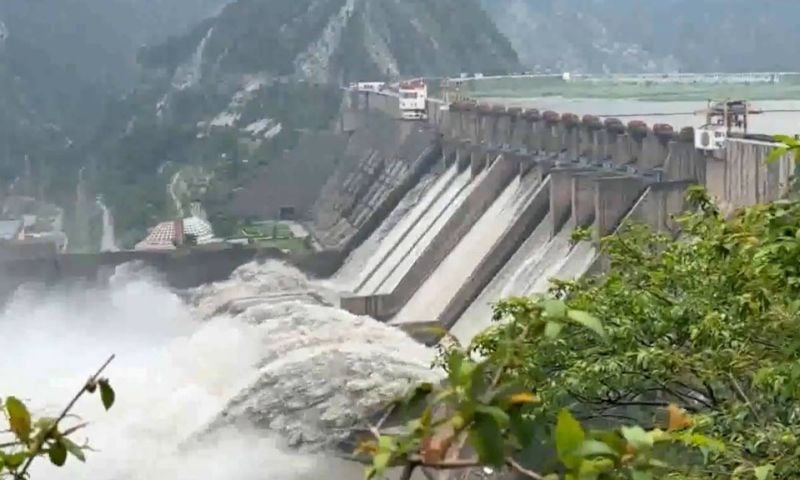



ISLAMABAD: India’s approval of the Rs 5,129 crore Sawalkot Hydroelectric Project on the River Chenab reflects expanding upstream infrastructure amid growing concerns over transboundary water governance and regional stability.
New Delhi’s continued withholding of critical hydrological data and lack of technical transparency could cause an agricultural crisis downstream by disrupting irrigation planning, threatening crop security and exacerbating water insecurity across the Indus Basin, analysts said.
The approval of the construction of the 1856 MW Sawalkot Hydroelectric Project on the River Chenab deepens concerns regarding the transparency, treaty compliance, and regional water security in South Asia, according to analysts.
The project, involving major dam infrastructure, tunnels, and associated engineering works, comes at a time when New Delhi continues to withhold critical hydrological data from Pakistan despite obligations under the Indus Waters Treaty (IWT) framework.
The Sawalkot Hydroelectric Project reinforces concerns that India is increasingly leveraging upstream control over the Chenab River to create hydro-political pressure on a lower riparian state dependent on predictable seasonal flows, analysts said.
India’s decision to advance large-scale upstream hydropower infrastructure while simultaneously holding the Indus Waters Treaty in abeyance reflects a dangerous erosion of rules-based transboundary water governance in South Asia, according to analysts.
By withholding critical hydrological data and reducing technical transparency, India is undermining downstream agricultural planning in Pakistan and intensifying risks to regional food and water security, analysts warned.
India’s continued refusal to fully cooperate under treaty mechanisms despite growing international concern demonstrates an irresponsible approach toward shared river management in an already climate-vulnerable region.
Manipulation of river flow information in the Indus Basin threatens irrigation reliability, crop productivity, and socio-economic stability for millions dependent on the Indus river system downstream.
New Delhi’s unilateral infrastructure expansion on western rivers, combined with the suspension of cooperative treaty obligations, risks transforming water from a shared resource into an instrument of strategic coercion.
In the context of accelerating climate stress, glacial melt, and hydrological uncertainty, India’s non-transparent water policies undermine regional resilience and increase the probability of long-term environmental and geopolitical instability.
India’s posture on the Indus Waters Treaty reflects a broader disregard for established international legal frameworks, weakening confidence in cooperative conflict resolution and threatening the sustainability of transboundary water governance in South Asia.