MUMBAI: India’s fast-growing aviation industry is facing mounting pressure as safety incidents, regulatory shortcomings, financial losses and geopolitical disruptions expose vulnerabilities in a sector long portrayed as a major symbol of the country’s economic rise.
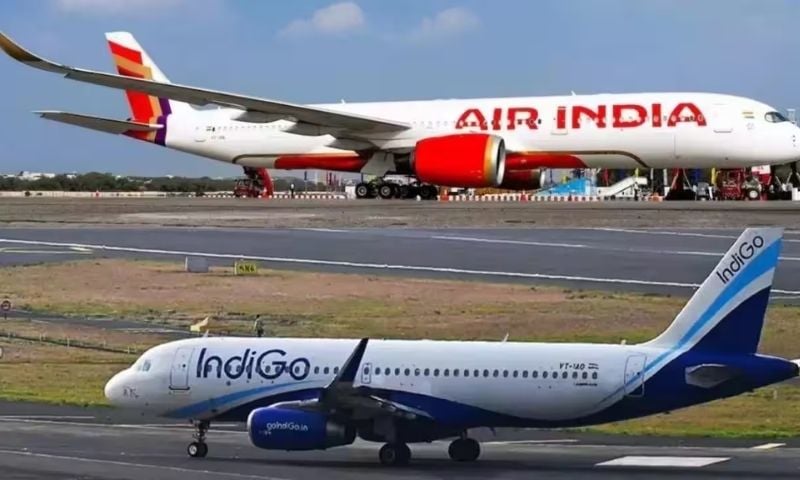
The latest concerns have centred on the country’s two dominant carriers, Air India and IndiGo, which together account for around nine out of every 10 seats in India’s domestic aviation market.
The difficulties have raised questions about whether the country’s aviation infrastructure, regulatory framework and safety standards have kept pace with the rapid expansion of passenger traffic and airline fleets.
The latest incident occurred earlier this month when an Air India flight travelling from Phuket in Thailand to New Delhi suddenly lost around 300 feet (91 metres) of altitude, leaving 24 passengers injured.
The incident attracted further scrutiny after reports that the captain tested positive for marijuana after landing. Air India subsequently ordered a one-off drug screening programme for all its pilots.
Investigators are expected to release initial findings in the coming weeks. The episode has intensified attention on Air India’s safety record, particularly following last year’s crash of a London-bound Boeing 787 Dreamliner, which killed 241 people.
A separate safety audit of Air India reportedly identified about 100 shortcomings. A parliamentary panel said seven of those findings required urgent corrective measures, while the review also pointed to recurring training deficiencies among pilots operating Boeing 787 and 777 aircraft.
Former airline operations chief Shakti Lumba described the safety culture at Air India as inadequate, arguing that repeated assurances about safety were not enough to establish effective safety practices.
Former Air India executive director Jitender Bhargava also questioned the level of managerial oversight following the reported drug-test incident.
Financial pressures deepen
Safety concerns have emerged at a particularly difficult time for India’s airlines, which are also struggling with sharply rising operating costs and weaker profitability.
The prolonged closure of Pakistani airspace following heightened tensions between India and Pakistan has forced carriers to take longer routes on a number of international services, increasing fuel consumption and operating expenses.
Higher jet-fuel prices, partly linked to the conflict in the Middle East, have added further pressure. Ratings agency ICRA has estimated that Indian airlines could collectively lose almost $4 billion during the current financial year.
Air India’s losses more than doubled to about $2.3bn in the previous financial year, while IndiGo has recorded losses for two consecutive quarters. The financial strain is also beginning to affect expansion strategies.
IndiGo recently suspended its wide-body operations, while Air India is reportedly considering postponing deliveries of as many as 500 aircraft. The developments represent a significant setback for an industry that has expanded dramatically over the past decade.
Indian airlines carried roughly 167 million passengers last year, more than twice the number recorded a decade earlier. More than 70 airports have been added during the same period, while Indian carriers have placed orders for approximately 1,500 aircraft.
Industry experts, however, argue that the problem is not the pace of growth itself but the inability of other parts of the aviation system to develop at a similar speed.
Harsh Vardhan, chairman of Starair Consulting, said India’s aviation ecosystem had failed to keep pace with the industry’s expansion, creating pressure on infrastructure, regulation and airline operations.
Regulatory concerns
Questions over regulation have also intensified. Last year, IndiGo cancelled large numbers of flights after struggling to comply with newly introduced pilot fatigue and rest requirements.
Parts of the new regulations were subsequently suspended temporarily, prompting criticism from industry specialists who viewed the episode as evidence of shortcomings in regulatory planning and implementation.
Former airline operations chief Lumba criticised the Directorate General of Civil Aviation (DGCA), India’s aviation regulator, arguing that it had become more focused on facilitating the industry than on enforcing regulations. The dominance of Air India and IndiGo presents another challenge.
Several major Indian airlines have collapsed or been sold over the past two decades, leaving the domestic market heavily concentrated in the hands of the two leading carriers. Analysts say this concentration makes effective regulatory enforcement more difficult.
Consultant Mark Martin described the situation as a highly concentrated market in which the two dominant airlines wield considerable influence.
The government has previously said India needs at least five large airlines to create a healthier and more competitive aviation market. Regulators have since approved plans for two new carriers. New proposals could also alter the competitive landscape.
READ ALSO: India Regulator Seeks Training Records of Pilots After Air India Plane Crash
The government is examining a possible relaxation of restrictions that prevent airport operators from owning airlines, a move that could potentially allow large business groups such as the Adani Group to enter or expand their presence in the airline sector.
However, industry analysts caution that increasing the number of airlines alone will not resolve the sector’s structural problems. High operating costs, expensive aviation fuel, infrastructure constraints and intense competition have historically made it difficult for new carriers to establish themselves and remain profitable.
Vardhan said India’s aviation industry was caught between ambitious expansion plans and an underlying cost structure that remained unfavourable to sustainable profitability.
India’s aviation sector may therefore continue to expand in terms of passengers, airports and aircraft, but experts warn that growth without stronger regulation, safety oversight, infrastructure and financial sustainability could leave the industry increasingly vulnerable to disruption.