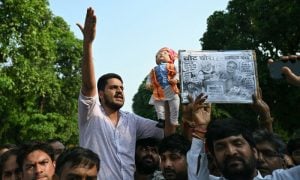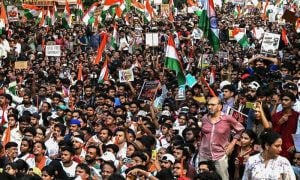
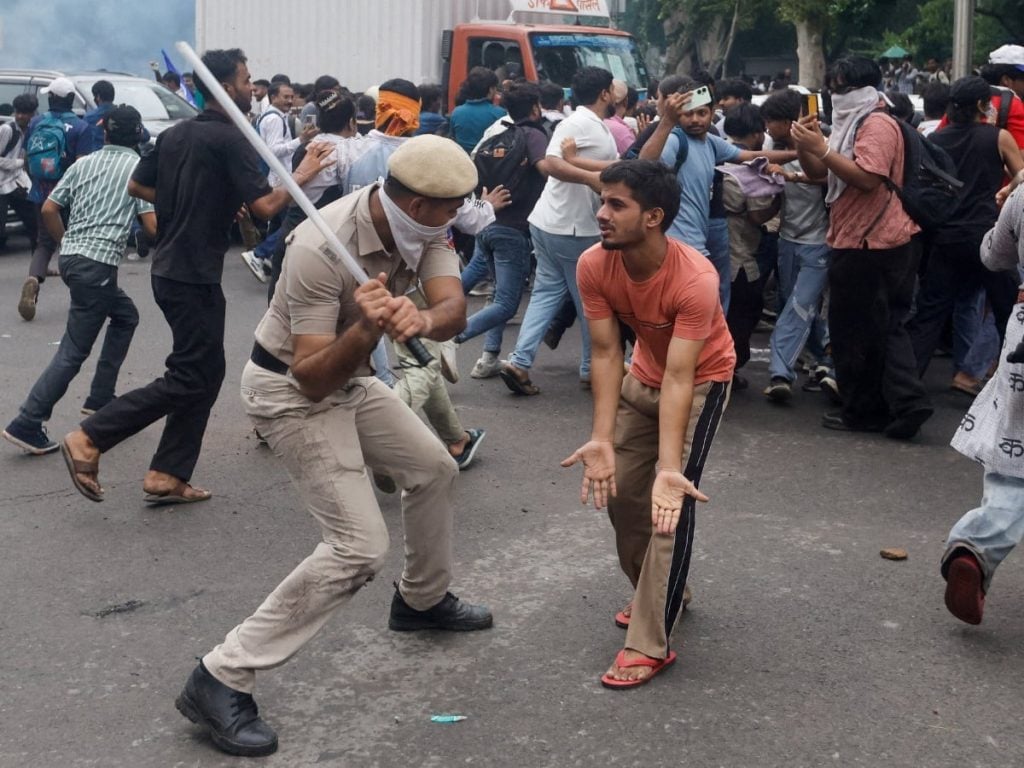
NEW DELHI: Indian police used excessive force against youth-led protesters during demonstrations that rocked the country last month, deploying pellet guns, electric shock devices and other weapons, Amnesty International said on Monday.
The rights group’s findings challenge the police account that force was used only after demonstrators became violent during protests that eventually forced India’s education minister to resign.
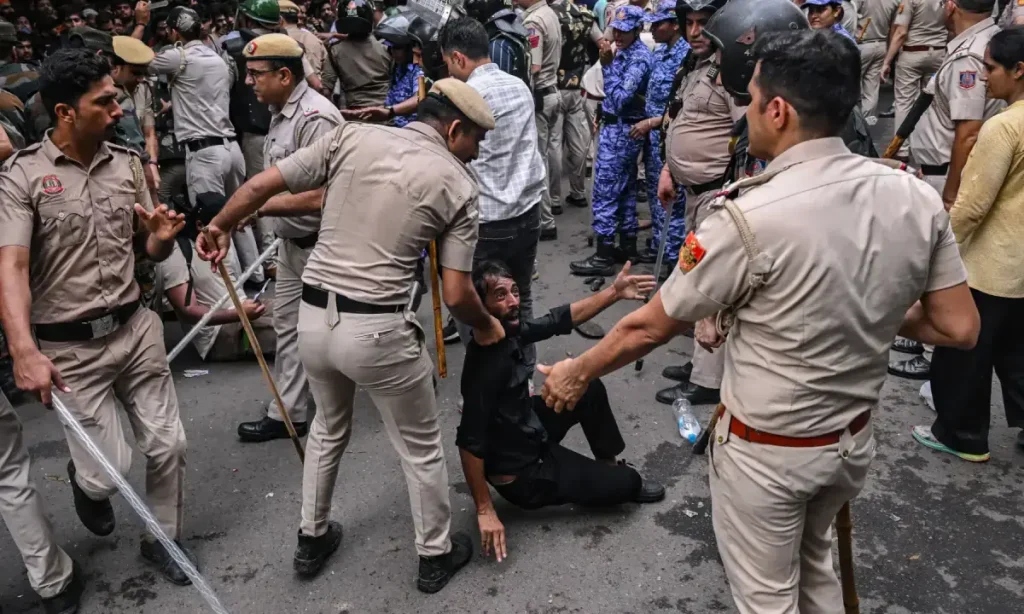
The demonstrations erupted over the leak of a national medical entrance examination and escalated on July 20 when thousands of protesters attempted to march towards parliament in New Delhi.
Amnesty details weapons used
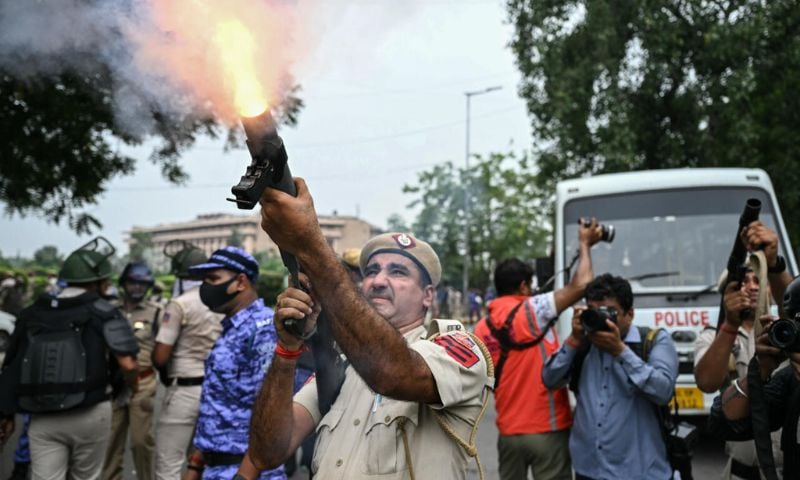
Amnesty said witness accounts and verified visual evidence showed police using “pellet-firing shotguns, tear gas launchers, grenades, batons and electric shock devices” against demonstrators in Delhi and the eastern state of Bihar.
The organisation said the weapons were deployed in ways that breached international standards, as well as domestic policing guidelines.
ALSO READ: India’s Youth Movement Warns of Fresh Protest over Modi Govt’s ‘Betrayal’
In Bihar’s Siwan district, Amnesty said it verified two instances in which a police officer unlawfully used lethal force against a crowd. No deaths were reported in those incidents.
While acknowledging isolated cases of protesters throwing stones, Amnesty described the overall police response as disproportionately heavy-handed.
It characterised the crackdown as “state-sanctioned violence masked as crowd control”.
Police stance
Delhi Police have disputed the use of excessive force. During a Supreme Court hearing last week, police said officers acted only after protesters “resorted to violence”.
Authorities alleged that anti-social elements posing as aggrieved students were involved in the unrest and caused serious injuries to security personnel.
India’s Supreme Court on Thursday established a panel to investigate violence involving both police and protesters.
Indian police used excessive force, including electric shock devices and pellet guns, against youth-led protests that forced the education minister to resign last month, Amnesty International said Monday.
Read more here: https://t.co/AOCDnWP4zX#India pic.twitter.com/7HX0vlDvg5
— The Daily Star (@dailystarnews) August 24, 2026
Opposition leader Rahul Gandhi also staged a sit-in outside a Delhi police station on Friday alongside a 19-year-old protester who said he suffered pellet injuries during the July 20 demonstrations.
Gandhi demanded an investigation, after which police registered a case over the complaint.
Protests expand beyond exam leak
The demonstrations were led by the online Cockroach Janta Party and initially centred on irregularities in the medical entrance examination.
However, the movement quickly expanded to include broader concerns among young Indians over unemployment, education and economic opportunities, while protesters also raised criticism of Prime Minister Narendra Modi’s government.
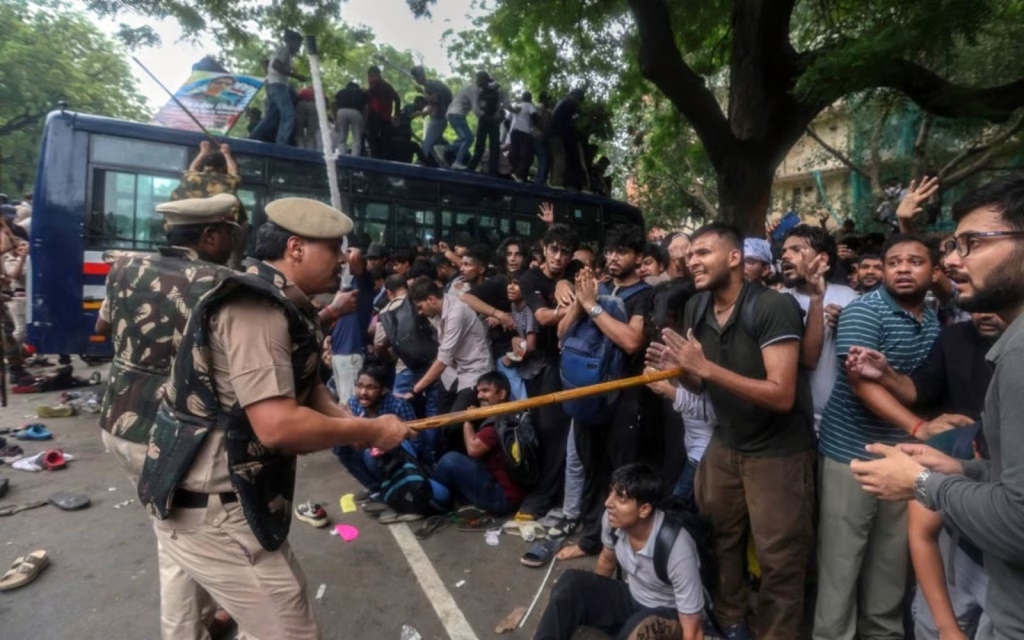
The demonstrations became one of the most significant political challenges faced by Modi since securing a third term in office in 2024.
The unrest also intensified scrutiny of policing tactics in India and the authorities’ handling of large-scale demonstrations.
The Supreme Court-appointed panel is now expected to examine the conduct of both security personnel and demonstrators during the unrest, while Amnesty’s findings are likely to add further pressure for accountability over the use of force.