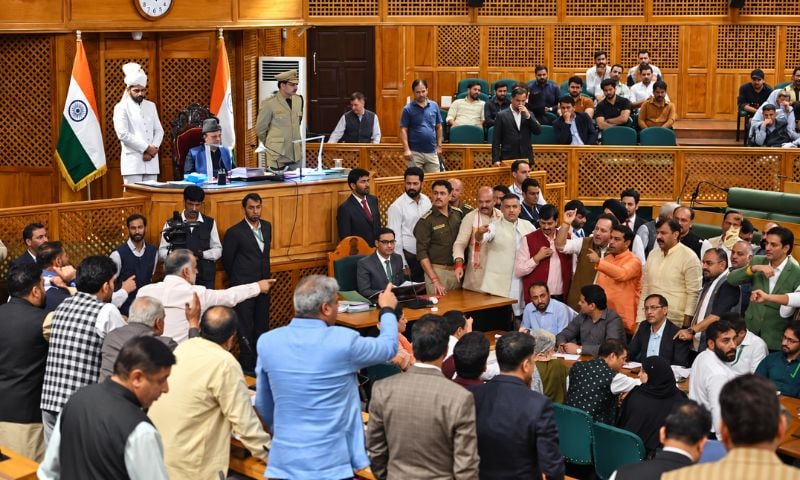
SRINAGAR: The Indian-Occupied Jammu and Kashmir Legislative Assembly on Monday passed a resolution calling for the immediate and urgent restoration of full statehood to Jammu and Kashmir, after heated exchanges with BJP legislators who opposed references to the region’s earlier constitutional status.
The resolution calls upon the Government of India for the “immediate and urgent restoration of full statehood” and says it should be forwarded to the Centre.
The resolution, moved by Chief Minister Omar Abdullah, was passed by voice vote after several members withdrew amendments seeking explicit references to Article 370, Article 35A and restoration of special status.
In a major development, on 5 August 2019, India scrapped the special status of the Indian Illegally Occupied Jammu and Kashmir (IIOJK) and bifurcated it into two ‘Union Territories’ to alter its internationally-recognised disputed status and undermine the right to self-determination of the Kashmiri people.
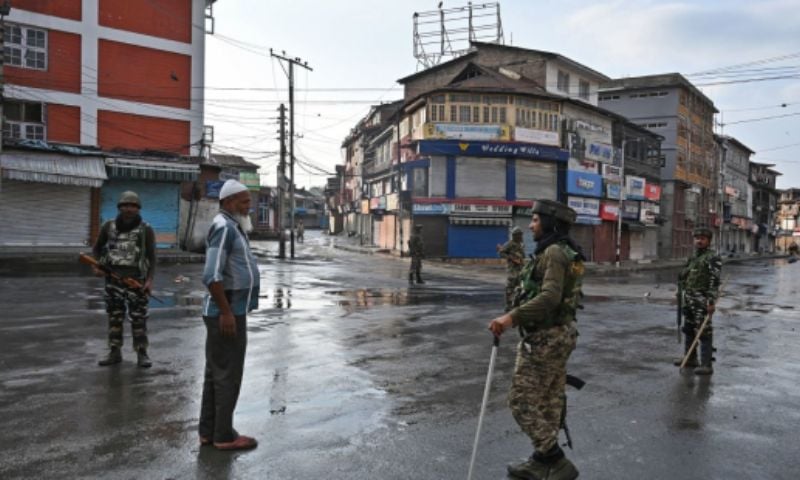
These measures were in blatant violation of the UN Security Council resolutions and international law, including the 4th Geneva Convention.
BJP legislators continued their protest during the proceedings and later staged a walkout. The party said it supported restoration of statehood but objected to the language of the resolution and its references to earlier resolutions on autonomy and special status.
Statehood Demand
The resolution calls upon the Government of India for the “immediate and urgent restoration of full statehood” to Jammu and Kashmir and says the resolution should be forwarded to the Centre.
It also refers to two earlier resolutions passed by the Assembly — one in June 2000 and another in November 2024.
The 2000 resolution, passed during the National Conference government led by Farooq Abdullah, sought restoration of greater autonomy as it existed before August 9, 1953.
The November 2024 resolution called for the restoration of Jammu and Kashmir’s special status.
Amendments Withdrawn
At least 10 amendments were proposed to Omar Abdullah’s resolution, with several seeking to explicitly include demands for restoration of the special constitutional provisions that existed before August 2019.
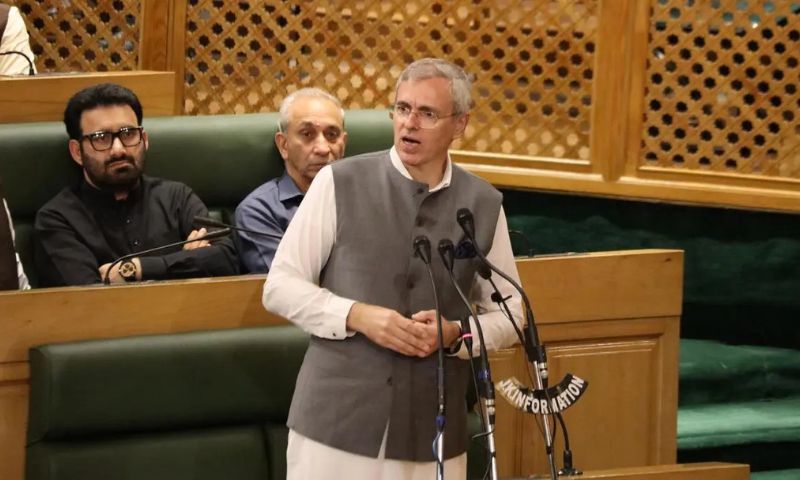
Omar Abdullah appealed to members not to press the amendments, arguing that the Assembly had already passed separate resolutions on special status.
He said adding the demand again would allow the BJP to oppose the statehood resolution.
Following his appeal, the members who had proposed the amendments agreed to withdraw them, allowing the original resolution to be put to a vote.
BJP Protest
BJP legislators objected particularly to references to the Assembly’s earlier autonomy resolution and Jammu and Kashmir’s pre-August 2019 constitutional position.
Opposition leader Sunil Sharma said the BJP supported statehood but rejected what he described as unacceptable and unconstitutional language in the resolution.
BJP members raised slogans and entered the well of the House during the debate before eventually walking out as the resolution was passed.
The Jammu and Kashmir dispute
The Jammu and Kashmir dispute is one of the longest pending disputes on the agenda of the United Nations Security Council (UNSC). A number of UN Security Council resolutions, inter alia, affirm the right of Kashmiris to self-determination and the manner in which the Jammu and Kashmir dispute would be resolved.
They categorically state that the final disposition of the state of Jammu and Kashmir will be made in accordance with the will of the Kashmiri people expressed through the democratic method of a free and impartial plebiscite conducted under the auspices of the United Nations.
India has been taking different steps to strengthen its occupation of Jammu and Kashmir since 27 October 1947, when it forcibly took over control of the erstwhile princely state of Jammu and Kashmir.
However, in a major development, on 5 August 2019, India scrapped the special status of the Indian Illegally Occupied Jammu and Kashmir (IIOJK) and bifurcated it into two ‘Union Territories’ to alter its internationally-recognised disputed status and undermine the right to self-determination of the Kashmiri people. These measures were in blatant violation of the UN Security Council resolutions and international law, including the 4th Geneva Convention.
India has since started a process to change the demographic structure and political landscape of IIOJK. The ultimate aim is to transform the Kashmiri people into a disempowered minority in their own land.
Notwithstanding the solemn commitments made by India to the people of Jammu and Kashmir, the Security Council, and Pakistan to abide by and implement relevant Security Council resolutions, India has progressively reneged on these commitments at every stage. However, India’s prevarication cannot change the facts of history and law.