


TEL AVIV: An Indian journalist reporting from Israel has described scenes of confusion, fear, and limited access to information during missile and drone attacks amid the ongoing war in the region.
“People often say bunkers are very safe, but I saw people dying even in bunkers that were 100 feet deep,” he said. “And you are never told what the real situation actually is,” said Brij Mohan, an Indian journalist who recently returned to India after reporting from Israel during a period of intense conflict.
He has shared his observations about conditions on the ground, describing the uncertainty people face during attacks.
According to his accounts, he witnessed missile attacks and raised questions about the effectiveness of defense systems against Iranian strikes, while also highlighting what he described as strict controls on information related to casualties and damage.
Mohan’s comments and experiences have been widely circulated on social media platforms, including YouTube, X (formerly Twitter), and Instagram, where videos and posts feature him discussing the challenges he faced while reporting from the region.
Speaking about his experience on the ground, the journalist said that during bombardments, civilians often have no way of knowing the origin of incoming weapons or the scale of destruction.
“When the bomb explodes, they don’t even see if it’s an Indian or an Israeli bomb.”
He added that being caught in the middle of missile strikes leaves civilians with little protection.
“If there are bullets around you, you might survive with injuries. But when missiles hit, there is no safety,” he said.
بریکنگ اسرائیل سے بھارت واپس پہنچنے والے صحافی کے چشم کشا انکشافات
ایرانی حملوں کے سامنے اسرائیلی ٹیکنالوجی فیل ہے۔
سخت سنسر شپ ہے، لاشوں اور اسپتالوں کی وڈیوز بنانے کی اجازت نہیں
100فٹ نیچے زمین میں چھپے اسرائیلی بھی حملوں میں مارے گئے pic.twitter.com/STO2rc1EZS— Shahid Hussain (@ShahidHussainJM) March 6, 2026
According to him, another major challenge during the conflict is the difficulty in verifying what actually happens after an attack.
“And you can’t be told what the reality is, because no one told us,” he said, suggesting that information reaching the public is limited.
He also described restrictions faced by journalists attempting to report from affected areas.
“You can’t take visuals of corpses there. You can’t go to the hospital,” he said, explaining that media access to key locations is restricted.
Moha said that even identifying the exact site of an incident can be difficult for reporters.
“When an incident happens, we don’t even know which place it is,” he said. “For example, we know that we have to go to Ghor city. We don’t even know which place we have to go to because who is going to tell us?”
He also described discrepancies between official statements and what residents claim to have witnessed.
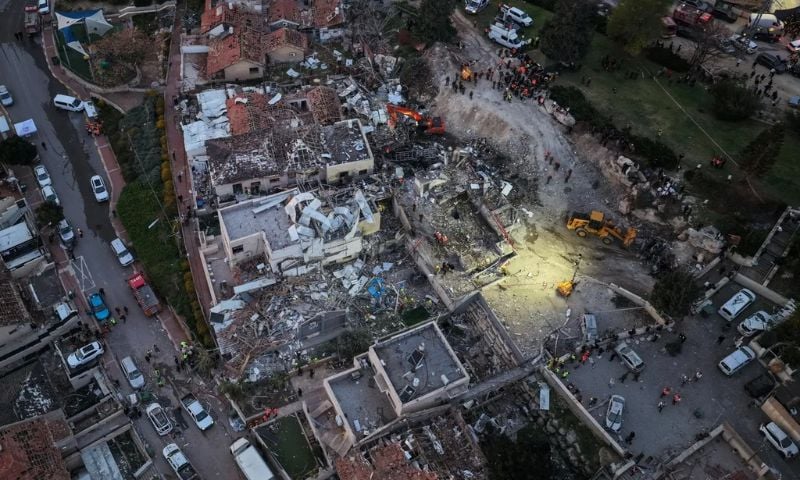
“It is being said that only one casualty, one person, died,” he said. “But the locals there told us that there were four houses, and nobody is alive.”
According to Mohan, such accounts suggest that the scale of destruction may sometimes be larger than initially reported.
He also spoke about Israel’s early-warning systems, which are designed to alert residents before incoming attacks.
Mohan said that in most cases, alarms sound before strikes, allowing civilians to seek shelter.
However, he recalled one incident where the system appeared not to function.
“One day at 5 in the morning, the alarm did not go off. Only the sound of blasts was coming,” he said.
“We found out that things came without an alarm,” he added, suggesting that the warning system may not always detect incoming threats.
He also described the difficulty civilians face in determining how close they are to the impact zone when missiles or drones strike.
“When drones and especially missiles hit, we don’t know whether we are even 200 meters away from the impact,” he said.
Mohan further suggested that several strategic sites may have been targeted during the attacks.
“Now you will find out that especially in the Middle East, they have targeted all American MSCs,” he said, adding that strikes may have reached areas around Tel Aviv.
“It is possible that it has been targeted by Tel Aviv. So we don’t even know,” he added, reflecting the uncertainty surrounding some of the incidents.
His account offers a glimpse into the experiences of journalists and civilians attempting to navigate a rapidly evolving conflict environment where access to information, safety, and verification remain major challenges.