
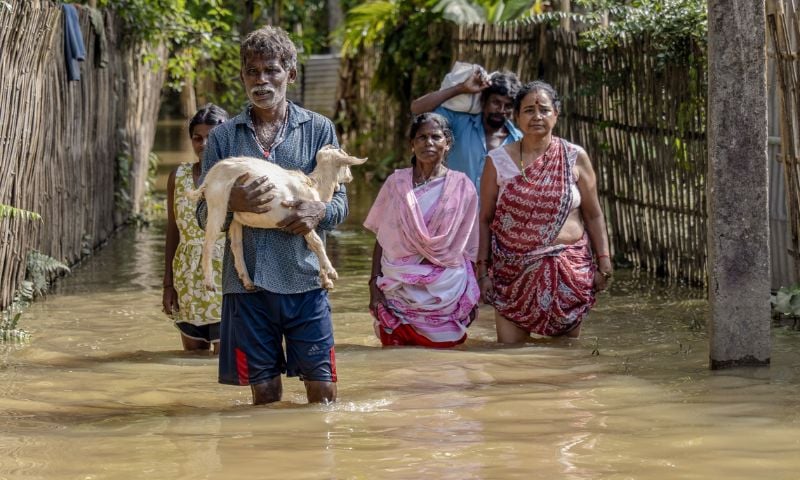
ASSAM: Severe flooding across India’s northeastern state of Assam has killed more than 100 people, displaced thousands and devastated homes and farmland, leaving communities struggling to recover from widespread destruction.
Official figures showed at least 101 people had died as of August 11 after floods affected around 2,690 villages across 25 districts and more than one million residents.
Sivasagar, Charaideo and Jorhat are among the worst-affected districts, where floodwaters from rivers connected to the Brahmaputra inundated villages following heavy rainfall.
Residents described rapidly rising water forcing families onto rooftops, highways and other higher ground. Contaminated wells also left some communities without safe drinking water for days.
ALSO READ: Tata Chairman’s Shocking Exit Endangers Technology Intensive Projects
In Nepalikhuti village in Sivasagar district, at least 10 people were reported dead, while others remained missing. Homes, vehicles, livestock and agricultural land were destroyed as water carried mud and debris through communities.
Farmland devastated
Floodwaters have now receded from several villages, leaving thick layers of mud and silt. However, some low-lying areas remain inundated.
Himadrijyoti Dutta, who works with farmers through non-profit organisation Krishak Nyas, estimated that floods had damaged 95 percent of farmland across Sivasagar.
Experts warned the destruction could increase migration from rural Assam as families lose agricultural livelihoods and seek employment elsewhere.
Assam is among India’s most flood-prone regions, with around 40 percent of its territory vulnerable to flooding from the Brahmaputra, Barak and smaller rivers.
Environmental experts said heavier rainfall combined with deforestation, mining, quarrying and changes to the landscape had increased the region’s vulnerability to severe flooding.
Relief operations continue
Authorities said government departments were coordinating rescue operations, distributing food, drinking water, medicines and livestock fodder, while relief camps remained operational.
Local charities, volunteers and community groups have also distributed food, clothes and other essentials to displaced families.
Hundreds of residents whose houses were destroyed are sheltering under plastic sheets and tarpaulins on roads and higher ground as recovery efforts continue.