
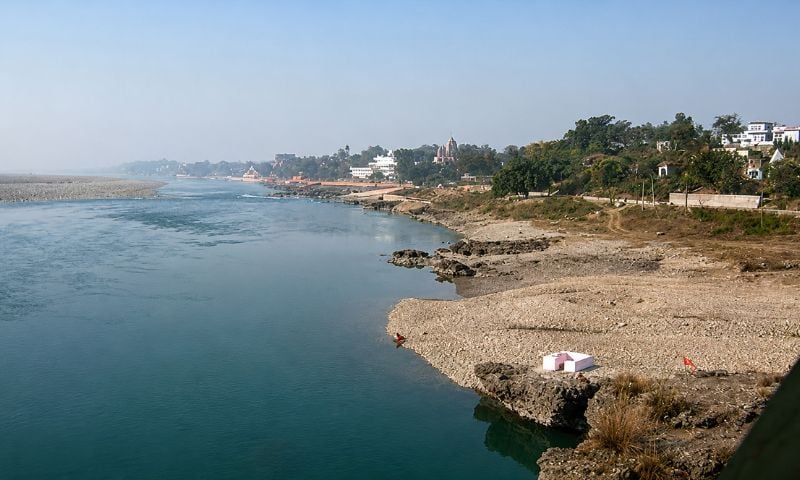
LAHORE: India drastically curtailed the flow of the Chenab River towards Pakistan on Saturday, with water levels at Marala falling sharply within hours following upstream impounding.
The Chenab’s inflow at Marala stood at around 74,000 cusecs at 6am and was showing a rising trend. However, the flow subsequently dropped to approximately 31,000 cusecs by the afternoon.
By 6pm, only around 21,000 cusecs were recorded at Marala, representing a decline of about 53,000 cusecs from the morning level.
According to reports, the sharp reduction followed the impounding of Chenab waters at India’s Salal and Baglihar hydroelectric projects upstream.
The development has renewed concerns in Pakistan over the management of rivers governed by the Indus Waters Treaty (IWT), which has long regulated the distribution and use of the Indus river system between the two neighbouring countries.
Treaty concerns
Under the 1960 Indus Waters Treaty, the waters of the western rivers — the Indus, Jhelum and Chenab — are primarily allocated to Pakistan, while India retains specified rights, including certain agricultural and hydroelectric uses.
ALSO READ: India’s Shrinking Space for Protest Raises Democratic Concerns
The reduction in Chenab flows is being viewed in Pakistan as a serious treaty concern, particularly because of the scale and speed of the decline recorded at Marala.
The Chenab is an important component of Pakistan’s irrigation network, supplying water to agricultural areas through an extensive system of canals and link canals.
Sudden variations in river flows can therefore have implications for irrigation management and downstream water availability, particularly during periods of high agricultural demand.